

72-hour survival guide to beat the Arctic Cold
Weather expert says Texans should stay indoors to beat the icy cold


Ahead of this weekend’s icy-cold Arctic conditions set to grip Texas, the man who has seen the worst of weather over three decades, the National Weather Service (NWS) meteorologist Kurt Van Speybroeck, has offered practical survival tips to beat the icy chill.
“If you don’t want any inconvenience, it is best to spend the weekend warm at home,” he said, adding that Texans should stock up and stay indoors for at least 72 hours.
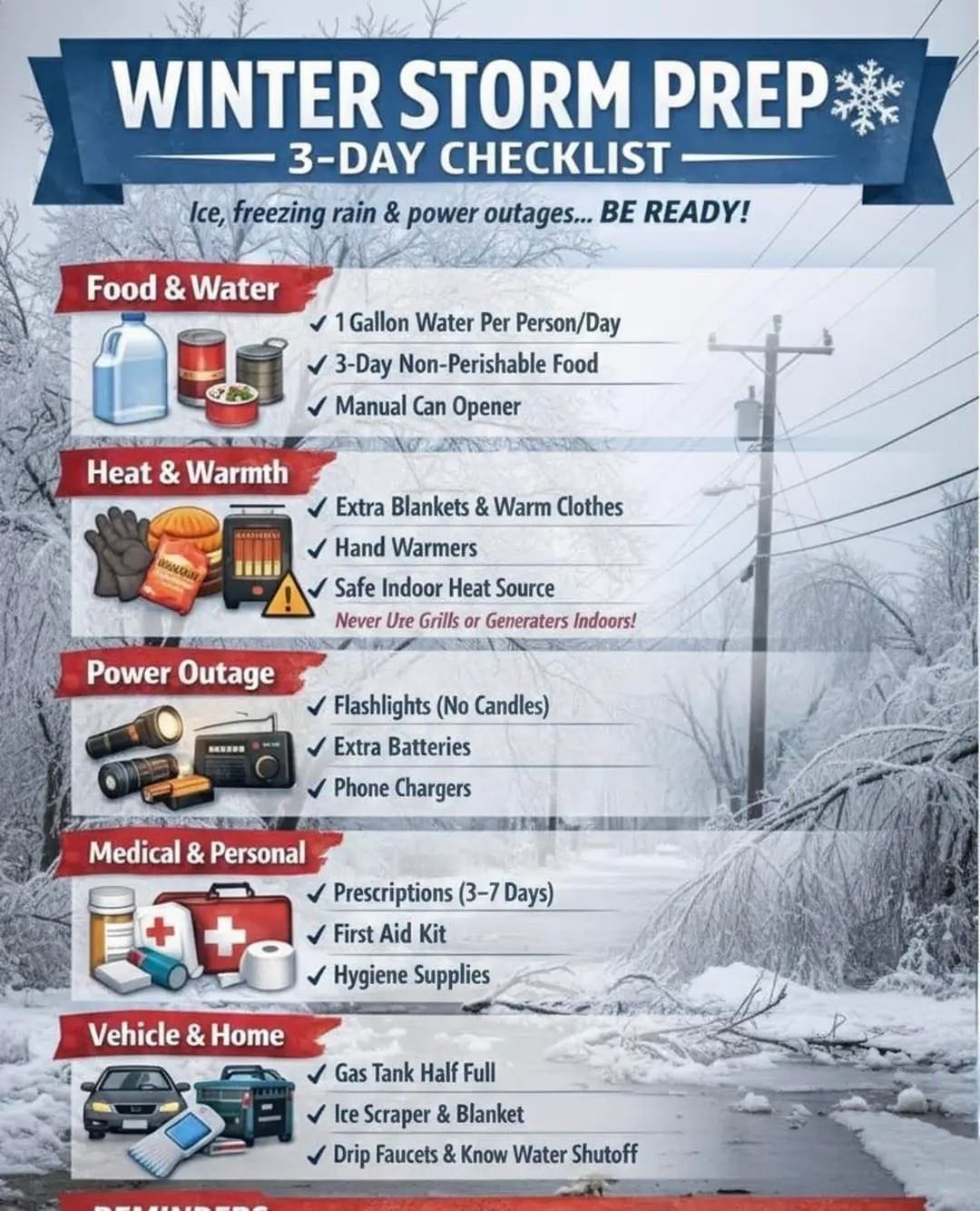
Residents should stock food and water (at least one gallon per person) and ensure alternative heating supplies, such as a generator, to stay warm should weather conditions put pressure on the grid. However, it is not expected to cause severe disruption.
As part of the 72-hour survival checklist, Texans were urged to keep extra blankets, hand warmers and a safe indoor heat source. Flashlights, extra batteries and phone chargers should be part of the kit.
Prescription medication for 3 to 7 days should be on hand, along with a first-aid kit and hygiene supplies. An ice scraper is also necessary.
On Tuesday, Speybroeck warned that Texas is about to experience a significant Arctic outbreak, with freezing air rushing down from northern Canada, pushing through the plains and backing up against the Rocky Mountains. This sub-freezing Arctic air is expected to reach as far south as the Gulf Coast, creating challenges for regions unaccustomed to severe cold, said Speybroeck.
Residents in areas such as Wichita Falls, Lubbock, and Amarillo were warned to prepare for snowy conditions expected to begin late on Friday. The cold air and precipitation will move south on Saturday, and by Sunday morning, even Brownsville will see temperatures drop below freezing. Every part of the state, from El Paso to Houston, is expected to experience a hard freeze during this storm.
“We saw in 2023 that the duration does not seem to be as long as the one we went through in 2021, when it was more like 5 to 7 days, and there were prolonged periods of below-freezing temperatures.
“Although expected to last three days, it definitely will be a significant event with the potential for freezing rain and sleet making roads very dangerous,” he said.
Speybroeck, who worked for the National Spaceflight Program out of Houston, Texas, before joining the NWS as an Emergency Response Specialist out of the NWS Southern Region Operations Centre in Fort Worth, says inclement conditions make it challenging to drive, and people usually go faster than they should.
Not adhering to the conditions results in multiple car pileups and death.
“I know that the Texas Department of Transportation would appreciate it if you got in your vehicles, you will drive super slow,” he added.
“There is no need for anyone to be on the road, unless driving to a hospital,” he said.
Speybroeck also urged people who experienced power cuts and did not have alternative heating to contact their local city government for assistance in reaching a warming station or another location with more reliable heating for the short term.
He said the local City Hall would also have emergency management in place, urging citizens to reach out for help. “We have really solid plans, and everybody’s doing a lot to make this as comfortable as possible,” he said.
On Thursday, Texas Governor Greg Abbott said he had activated state emergency resources as the Arctic blast would bring dangerously cold temperatures and winter precipitation to the state.
A disaster declaration was issued for 134 counties, with the northern two-thirds of the state — from the Panhandle to potentially as far south as the San Antonio region — expected to be hit the hardest.
State officials are also helping set up teams of firefighters, state patrol agents, and the National Guard. At the same time, the Texas Department of Transportation began treating roadways on Wednesday to prevent it from icing over.
Their message to Texans, reiterated by Speybroeck, was clear: “Stay home, keep warm!”