

A Nation on Edge: How War Abroad Fuels Hate, Spreads Hostility, and Fear at Home
A new CSOH study warns that the US–Israel war on Iran is driving a dangerous surge in hate incidents against Muslim Americans

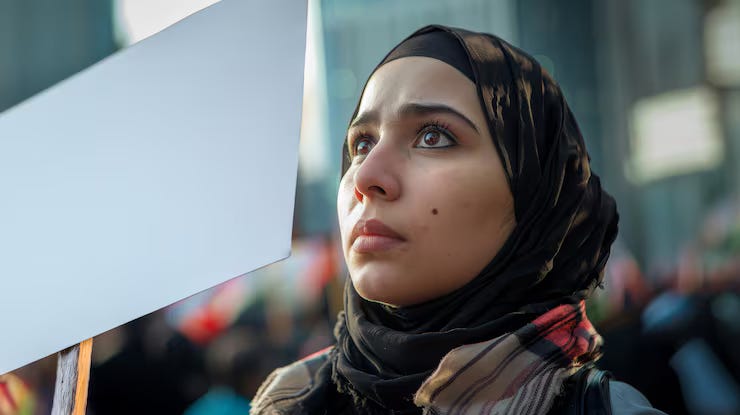
A new study warns that the US–Israel war on Iran is driving a dangerous surge in hate incidents against Muslim Americans.
The war may be unfolding thousands of miles away, but its shockwaves are being felt in the quiet suburbs, bustling campuses, and everyday workplaces of the United States.
According to the report released on 9 March 2026 by the Center for the Study of Online Hate (CSOH) in Washington, the US–Israel conflict with Iran has triggered a sharp rise in anti‑Muslim hostility—both online and in the streets.
For families like the Alis in Dearborn, Michigan, the shift has been swift and unsettling. “We’ve lived here for 25 years,” says Fatima Ali, a school administrator. “But suddenly, people look at us as if we’re responsible for a war we didn’t start and a government we don’t belong to.” Last month, her teenage son found a note taped to their front door: “We know what side you’re on.”
The CSOH study paints a grim picture. Hate incidents targeting Muslim Americans have spiked dramatically since the first airstrikes. Online harassment has tripled. Conspiracy theories linking American Muslims to Iranian military operations have spread across fringe platforms and seeped into mainstream discourse. The report warns that this digital hostility is translating into real‑world harm.
One of the most alarming findings is the speed at which misinformation travels. Within hours of major military developments, false claims circulate widely—accusing mosques of harboring spies, suggesting Muslim charities are funding Iran, or implying that Muslim students are celebrating attacks. None of these claims hold up under scrutiny, yet they fuel suspicion and embolden extremists.
For 19‑year‑old college student Amina Siddiq, the consequences have been personal. After she posted a call for peace on her social media page, anonymous users flooded her inbox with threats. “They told me to ‘go back’ and accused me of supporting terrorism,” she says. “All because I said civilians shouldn’t be bombed.”
Civil rights groups say the pattern is painfully familiar. After 9/11, after the rise of ISIS, after the US withdrawal from Afghanistan—each geopolitical flashpoint has triggered a domestic backlash against Muslim communities. But this moment feels uniquely volatile. The war involves two close US allies, a long‑standing adversary, and a deeply polarized American public primed for outrage.
Yet amid the fear, there is resilience. Mosques are partnering with churches and synagogues to host community dialogues. Legal organizations are offering rapid‑response support. Young Muslim activists are leading teach‑ins, insisting that patriotism includes the right to dissent.
“Muslim Americans are not a foreign policy proxy,” says CSOH researcher Dr. Leila Mansour. “They are teachers, doctors, students, neighbors. When we allow global conflicts to justify domestic hate, we erode the very fabric of our democracy.”
“Beyond dehumanization,” the study, “ found posts that cross the line from hatred into explicit incitement to violence, including direct calls to exterminate Muslims. Some posts frame the elimination of Muslims as an act of self-defense or civilizational survival, lending a veneer of patriotic duty to the genocidal rhetoric.”
As the war continues, the CSOH report urges policymakers, tech companies, and community leaders to act swiftly. The stakes are not only geopolitical—they are deeply human.
Mosques in the US have long been targets of arson, vandalism, threats, and shootings. The circulation of content that frames them as legitimate targets increases the risk of violence against Muslim communities and religious institutions.”
“We also found posts advocating the destruction of mosques, treating Muslim houses of worship as enemy infrastructure. These posts frame mosques as “mini military bases” and “terrorist centers.”
And for millions of Muslim Americans, the question is no longer abstract: Will their country protect them when fear becomes weaponized?