


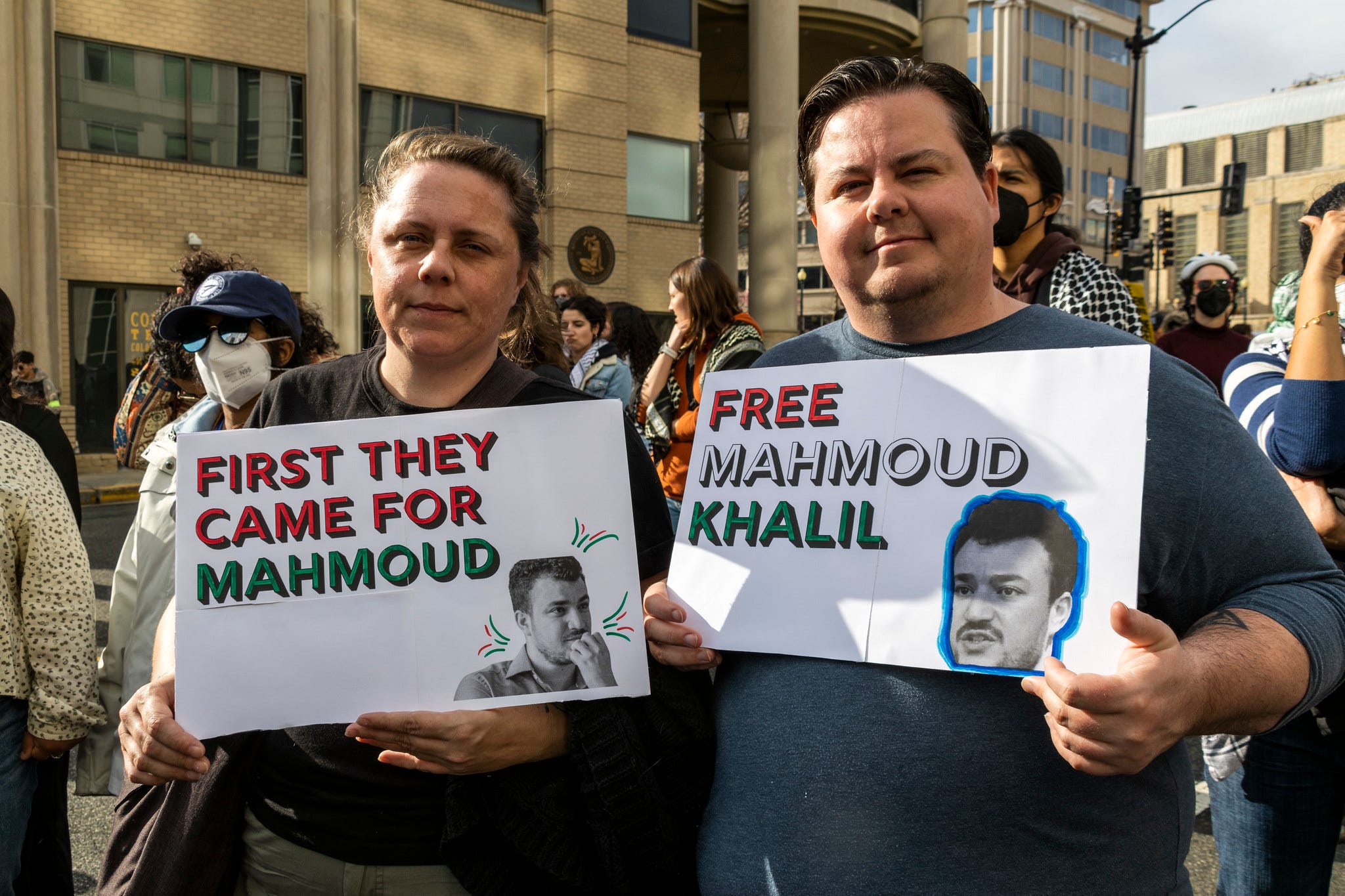
A federal appeals court ruled Thursday that a judge lacked authority to release pro-Palestinian activist Mahmoud Khalil from immigration detention, delivering a significant victory to President Donald Trump’s deportation campaign and potentially paving the way for Khalil’s re-arrest.
The Philadelphia-based 3rd U.S. Circuit Court of Appeals issued a 2-1 decision that overturned a June 2025 ruling by U.S. District Judge Michael Farbiarz, who had ordered Khalil’s release from a Louisiana detention center. The appeals panel determined that federal district courts lack jurisdiction to intervene in immigration detention cases before individuals exhaust all administrative remedies, including appeals of final removal orders from immigration judges. This technical but consequential ruling effectively dismisses Khalil’s habeas corpus lawsuit challenging his detention as unconstitutional retaliation for protected speech.
Jurisdiction Limits Federal Court Power
Circuit Judges Thomas Hardiman and Stephanos Bibas, both appointed by Republican presidents, wrote in an unsigned majority opinion that Congress designed immigration proceedings to channel challenges through a specific appellate framework. “The scheme Congress enacted governing immigration proceedings provides Khalil a meaningful forum in which to raise his claims later on—in a petition for review of a final order of removal,” the judges stated. They emphasized that this structure ensures petitioners receive “only one chance to contest their situation—not none or two.”
The majority rejected arguments that Khalil’s case warranted immediate federal court intervention, despite his legal team’s claims that the government was weaponizing immigration law to punish political speech. The ruling means Khalil must first proceed through the immigration court system—which has already ordered his deportation—before seeking relief in the federal appeals court. Dissenting Judge Joseph Greenaway Jr., appointed by President Barack Obama, warned that the decision creates a “catch-22” where individuals can be detained for extended periods without access to federal constitutional review.
From Campus Negotiator to Deportation Target
Khalil, a Columbia University graduate student from Syria who holds Algerian citizenship and U.S. permanent resident status, emerged as a prominent negotiator during pro-Palestinian campus protests against Israel’s military actions in Gaza. Immigration agents arrested him March 8, 2025, in the lobby of his Manhattan university residence, making him the first target of Trump’s promised crackdown on foreign students participating in demonstrations the president labeled antisemitic.
The Trump administration initially sought Khalil’s deportation under a rarely invoked provision of the Immigration and Nationality Act that allows removal of individuals whose presence might cause “potentially serious adverse foreign policy consequences.” After a federal judge questioned this justification, the government shifted its strategy, alleging Khalil committed green card fraud by failing to disclose his involvement with the United Nations Relief and Works Agency for Palestinian Refugees (UNRWA) and the Columbia University Apartheid Divestment movement on his immigration application.
September Deportation Order and Ongoing Legal Protection
On September 12, 2025, Immigration Judge Jamee Comans ordered Khalil deported to Syria or Algeria, finding he “willfully misrepresented material fact(s) for the sole purpose of circumventing the immigration process.” The judge specifically cited his failure to disclose UNRWA affiliation and CUAD involvement, writing that “the evidence indicates the Respondent was aware of the possible immigration ramifications stemming from his participation in protests organized by various campus groups.”
Despite this ruling, Khalil remains protected by Judge Farbiarz’s separate federal court order prohibiting his removal while his constitutional challenge proceeds. The ACLU, which represents Khalil, emphasized this point in a statement following Thursday’s appeals court decision. “Today’s order does not weigh in on the core First Amendment arguments in his case but holds that the district court did not have subject matter jurisdiction,” the civil liberties organization stated, adding that “the government has no legal authority to re-detain him until the appeals process is fully concluded.”
Hundreds of Visas Revoked
Khalil’s case exemplifies a systematic Trump administration campaign targeting pro-Palestinian activists. Secretary of State Marco Rubio has personally signed off on hundreds of visa revocations, publicly boasting in March 2025 that he had canceled “more than 300” student visas. “We do it every day. Every time I find one of these lunatics, I take away their visa,” Rubio told reporters in Guyana, defending his policy of screening applicants’ social media for anti-U.S. or anti-Israel content.
Government documents revealed in federal court show Immigration and Customs Enforcement created a specialized “tiger team” in March 2025 dedicated to expelling pro-Palestinian university students, systematically reviewing nearly 5,000 profiles compiled by the controversial Canary Mission website. The administration has removed 157,948 people from the country since October, including 72,179 during Trump’s first 100 days, according to ICE data reported by Al Jazeera.
Multiple Appeal Options Remain
Khalil’s legal team can pursue several avenues to challenge Thursday’s ruling. They may request an en banc review by the full Third Circuit bench or appeal directly to the U.S. Supreme Court. Simultaneously, they can continue fighting the underlying deportation order through the immigration appeals process while maintaining the federal court protection against immediate removal.
The case raises profound constitutional questions about the limits of executive power and the protection of political speech for non-citizens. As the legal battle continues, campus free speech advocates warn that the administration’s tactics create a chilling effect on university discourse, with students and faculty reporting self-censorship to avoid being placed on watchlists used by government agencies.
The appeals court’s jurisdictional ruling does not resolve the fundamental question of whether the government can deport lawful permanent residents for their political activism. That issue will likely require resolution by higher courts as Khalil’s case continues to wind through the complex immigration and federal court systems, with implications extending far beyond one activist’s fate to the broader boundaries of First Amendment protections in an era of heightened political polarization.