


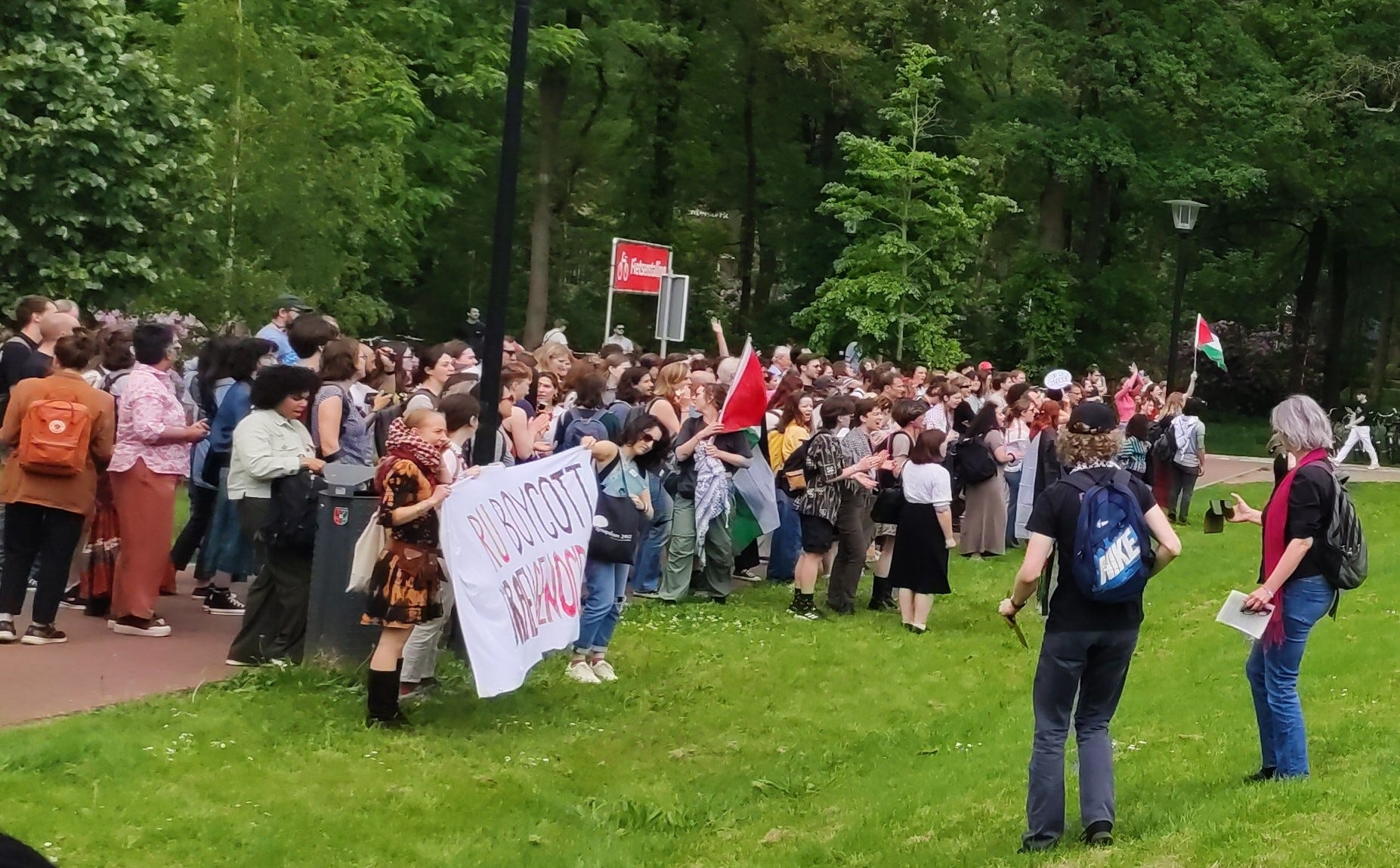
The Council on American-Islamic Relations’ New York chapter has designated the City University of New York system as a “Hostile Campus,” citing systematic repression of students and faculty advocating for Palestinian human rights since October 2023, according to a statement released by CAIR-NY on December 22, 2025. The designation follows a series of incidents, including violent arrests of student protesters, the termination of four faculty members who supported Palestine, and what CAIR characterizes as institutional censorship of anti-genocide voices across multiple CUNY campuses.
CUNY joins a growing list of 28 American universities CAIR has designated as hostile environments for students and faculty expressing criticism of Israel’s military actions in Gaza, including Columbia University, New York University, and Cornell University within New York State. The designation reflects escalating tensions on U.S. college campuses over Palestinian rights activism and free speech protections for political expression related to the Israel-Gaza conflict.
Pattern of Suppression Across the CUNY System
CAIR-NY Executive Director Afaf Nasher stated that CUNY’s actions have “crossed every conceivable line of institutional responsibility,” describing “an escalation into outright retaliation, censorship, and the violent suppression of dissent,” according to the organization’s press release. Nasher emphasized that “when Arab and Muslim students are brutalized for peaceful protest, when faculty are fired for advocating against genocide, and when entire campuses rewrite policies simply to silence one political viewpoint, it becomes undeniable: The CUNY system has created a hostile campus for anyone who dares to defend Palestinian life”.
Censorship of pro-Palestinian speech has been documented at Brooklyn College, the City College of New York, Hunter College, and Queens College, according to CAIR-NY. The organization notes that this includes a Department of Education Office of Civil Rights Title VI investigation, a lawsuit filed by CUNY Law students, and systematic cancellation of educational events featuring Palestine.
Brooklyn College Arrests and Faculty Terminations
On May 8, 2025, multiple Brooklyn College students who participated in establishing the “Hassan Ayad Liberation Zone” were brutalized, hospitalized, and arrested by the New York Police Department, according to CAIR-NY’s statement. The New York Times reported that the demonstration descended into disorder when police moved in to make arrests after demonstrators left college grounds, with officers punching some students and slamming others to the ground. The NYPD confirmed seven arrests and seven summonses issued, according to CBS News.
In July 2025, four adjunct faculty members at Brooklyn College who were publicly supportive of Palestine were dismissed from their positions without explanation from the administration, CAIR-NY reported. The Intercept confirmed the dismissals on July 15, 2025, reporting that the affected professors stated the university fired them because of their Palestine activism. “We’re filling in the blanks because they’ve told us nothing,” one professor told The Intercept on condition of anonymity. “The only reason we know it’s related to Palestine is that that’s the only thing we have in common”.
The Professional Staff Congress, CUNY’s main labor union for faculty, and the CUNY chapter of Faculty for Justice in Palestine stated that the removals violated due-process and free-speech rights, according to The Intercept. PSC President James Davis sent a June 30 letter to CUNY Chancellor Félix V. Matos Rodríguez demanding the professors’ reinstatement and describing their non-reappointment as “highly irregular,” particularly because the classes remained scheduled even after the instructors were terminated.
“The decision made by our departments was to hire us. The decision made by the Administration was to fire us,” one terminated professor told The Intercept. “It’s just sending a message that no one’s job is safe”.
More than 100 Jewish CUNY faculty and staff signed a separate letter to Chancellor Matos Rodríguez condemning the removals and arguing that the decision violated academic autonomy within departments, according to The Intercept.
IHRA Definition and Free Speech Concerns
CAIR-NY’s designation statement specifically criticized CUNY Chancellor’s support for the International Holocaust Remembrance Alliance definition of antisemitism, warning that this framework “chills protected political speech”. The organization released a factsheet titled “Voices of Resistance Against the IHRA Definition and the Antisemitism Awareness Act” alongside the hostile campus designation.
The IHRA definition has sparked controversy among civil liberties advocates and some scholars who argue it conflates legitimate criticism of Israeli government policies with antisemitism. In November 2022, Al Jazeera reported that 128 scholars asked the United Nations not to adopt the IHRA definition, expressing concerns about its impact on free expression. However, IHRA Chair Lord Eric Pickles defended the definition in October 2024, stating that “any allegation that the IHRA working definition of antisemitism is incompatible with international standards on freedom of expression is simply wrong” and emphasizing that it “expressly states that criticism of Israel is compatible with the definition”.
Broader Pattern at New York Universities
CUNY’s designation adds to CAIR’s list of hostile New York campuses. Columbia University was designated after protesters at a Palestine solidarity event in early 2024 were sprayed with a chemical agent, resulting in at least 10 students requiring medical care, according to Islamic Horizons. In April 2024, hundreds of NYPD officers in riot gear stormed Columbia’s campus to clear protesters, with students beaten, kicked, and thrown down flights of stairs, the publication reported. Renowned Middle Eastern Studies Professor Dr. Rashid Khalidi resigned from his university chair at Columbia in protest, according to the report.
At Cornell University, 22 students were arrested during a non-violent protest in March 2024 demanding divestment from weapons manufacturers tied to Israel, and four students involved in a peaceful encampment in April were suspended and banned from campus, Islamic Horizons reported. NYU also appears on CAIR’s hostile campus list, though the organization cited different incidents at that institution.
Mondoweiss reported in July 2025 that CUNY administrators appeared to be targeting organizers individually as “part of CUNY’s broader strategy to silence the movement for Palestine, whether it be suspending students, brutalizing CUNY workers and students who are protesting on our campuses, or firing our workers who have expressed support for Palestine,” according to suspended student activist Malik.
CAIR’s National Campaign
CAIR’s Hostile Campus Rating Framework evaluates universities by assessing institutional policies, campus climate, civil rights violations, and restrictions on free speech and political expression, according to Islamic Horizons. The framework examines whether universities suppress lawful dissent through arrests, sanctions, surveillance, or by collaborating with federal agencies.
Beyond New York institutions, CAIR has designated universities including Harvard, Stanford, Johns Hopkins, UC Berkeley, University of Chicago, University of Texas at Austin, Northwestern, and Emory as hostile campuses, according to the December 2025 Islamic Horizons report. The organization invites students and community members to report campus incidents through its “Unhostile Campus Campaign” website at islamophobia.org/report campus.
“Our students and educators deserve an environment where academic freedom is protected, not one where fear and intimidation are deployed as administrative tools,” Nasher stated in CAIR-NY’s announcement. She affirmed that “CAIR-NY stands with every member of the CUNY community demanding safety, dignity, and the basic right to speak the truth without being punished for it”.
CUNY officials have not issued a public response to CAIR’s hostile campus designation. The designation comes amid ongoing debates about the balance between protecting Jewish students from antisemitism and preserving free speech rights for political activism on American college campuses, particularly regarding criticism of Israeli government policies.