

Diwali in Texas: Fireworks over Greg Abbott’s Old Greeting Goes Viral Again over Visa Spat
A warm message to the Indian community at a 2024 Diwali celebration is being recirculated amid a fresh U.S. fight over H-1B visas

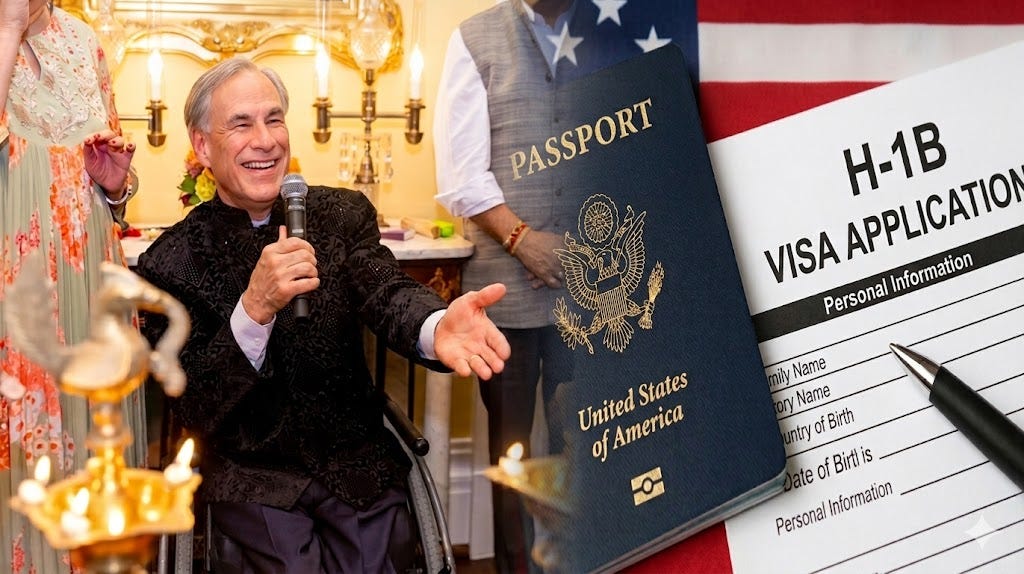
A video from a Diwali gathering at the Texas Governor’s Mansion is trending again—this time not for the diyas, sweets, or speeches, but for the political firestorm it has been pulled into.
The clip is from November 3, 2024, when Gov. Greg Abbott welcomed South Asian guests to Austin for Diwali, according to a report by The Dallas Express.
In early April 2026, it resurfaced across social media alongside arguments about H-1B visas, Indian immigration, and the cultural politics that often follow both.
In the video, Abbott says: “As long as I’m governor of this great state, Texas will be a land for the Indian community… and we will continue to celebrate Diwali here in the great state of Texas.”
Supporters shared it as a sign of inclusion. Critics recirculated it as a jab at leaders they link—fairly or not—to foreign-worker hiring and the H-1B system.
The renewed attention comes as the U.S. visa program once again becomes a proxy battleground for bigger questions: skills and wages, corporate hiring, and who benefits from global mobility. Against that backdrop, Abbott’s press office was asked whether the governor’s Diwali remarks amounted to support for the very system his critics blame.
In a statement on April 7, Abbott Press Secretary Eduardo Leal said the anger is misdirected because visa policy is controlled by Washington, not state governors. “Any criticism towards Governor Abbott about immigration visa issues are misdirected,” Leal said. “Let’s be clear: the federal government has exclusive purview and is solely responsible over immigration visa policy, including H-1B visas.”
Leal added: “The Governor does not have the authority to approve or deny visas for any private business.” That distinction matters for Indian professionals who follow U.S. immigration debates closely: state leaders can shape the tone of community outreach, but they do not run the federal pipeline that issues H-1B approvals.
At the same time, Leal said Abbott has tried to limit H-1B use where Texas does have leverage—inside state government. He pointed to a January directive ordering Texas agencies and public universities to freeze new H-1B petitions. “What Governor Abbott has done is take decisive action within Texas’ authority,” Leal said, arguing the private sector should “prioritize American workers for American jobs.”
Others in local Texas politics have made the same point. Frisco City Councilman Burt Thakur has previously described H-1B as “a USCIS issue,” outside local government authority—underscoring how quickly diaspora celebrations can be swept into national policy fights decided far from state capitols.
Federal numbers help explain why this debate lands so sharply with Indian audiences: USCIS data show more than 70% of approved H-1B petitions in fiscal year 2023 were for beneficiaries born in India. Leal said Abbott is urging Congress and the White House to tighten federal rules and crack down on abuse. But the viral Diwali clip shows a parallel truth: in the U.S., a festival built around light can be replayed online as political ammunition—long after the lamps have gone out.