

Freed After a Year in ICE Detention, Leqaa Kordia’s Case Becomes a Flashpoint Over Gaza Protest and Justice
The Palestinian New Jersey resident, detained after a Columbia protest-related arrest and an alleged visa overstay, was freed Monday after a judge granted bond for a third time.

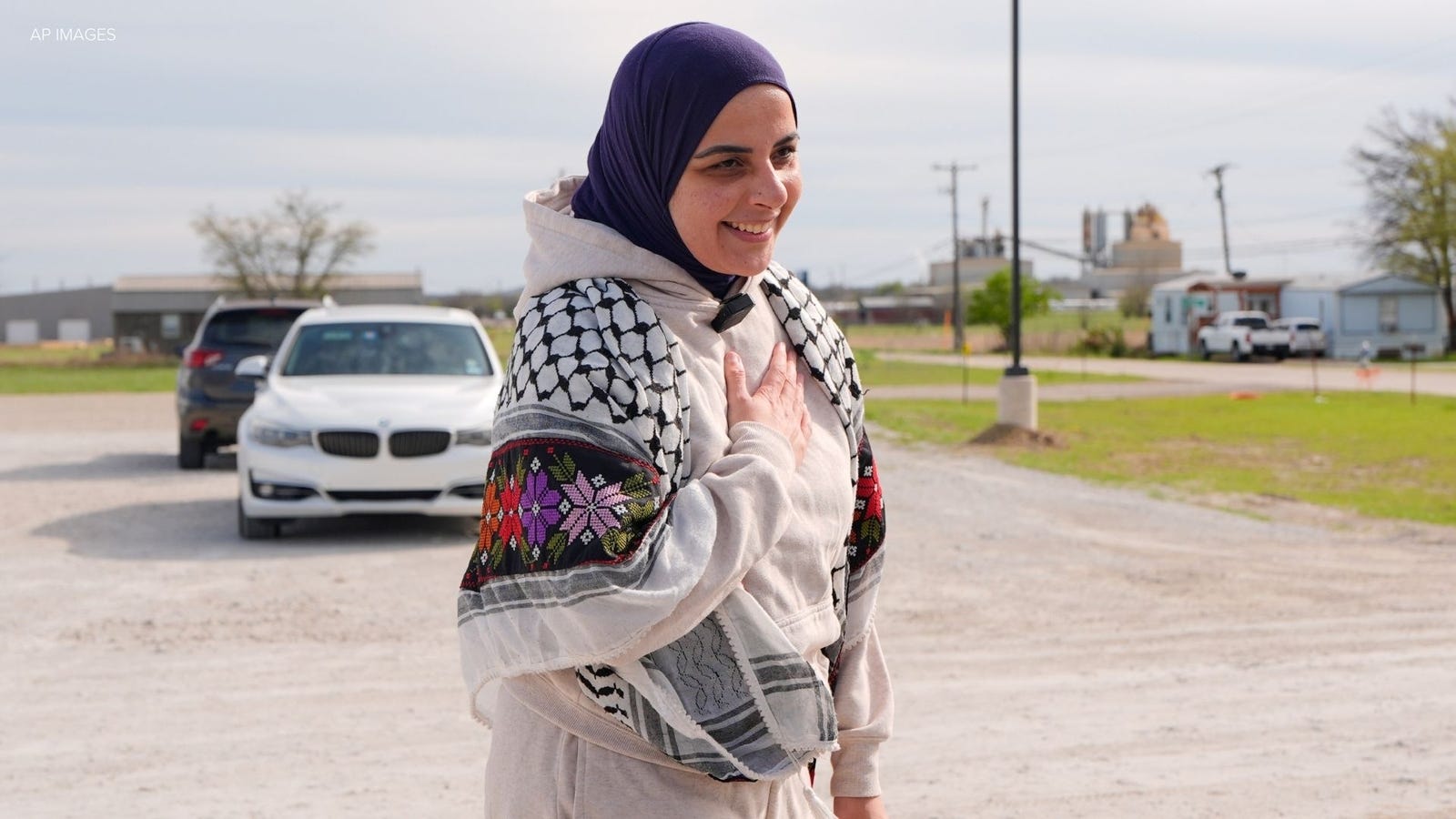
Leqaa Kordia, a 33-year-old Palestinian woman from the West Bank who has lived in New Jersey since 2016, was released Monday from the Prairieland Detention Center in Alvarado, Texas, after spending more than a year in ICE custody. An immigration judge granted her a $100,000 bond at a third bond hearing; the government had challenged her first two release orders but did not block the third.
Kordia was detained on March 13, 2025, during an ICE check-in in New Jersey. Federal officials say she overstayed a student visa. Her case drew added scrutiny because she had previously been arrested during a 2024 protest outside Columbia University against Israel’s war in Gaza, though those local charges were later dismissed and sealed. AP reported that details about that arrest were later shared with the Trump administration, and Kordia has said she joined the protest after losing many relatives in Gaza.
Her release closes one of the most closely watched detention cases tied to the administration’s crackdown on pro-Palestinian campus activism. Reuters reported that civil rights groups, including CAIR, argued the broader campaign fueled Islamophobia and blurred the line between support for Palestinian rights and support for extremism. For many Muslim Americans, Kordia’s case came to symbolize a deeper fear: that Palestinian advocacy, Muslim identity and immigration status can collide in ways that leave basic due process protections dangerously thin.
Health concerns intensified the urgency in recent weeks. KERA and Reuters reported that Kordia was hospitalized for about 72 hours after suffering a seizure last month, while family members and attorneys said they received limited information about her condition. At Friday’s hearing, her lawyers argued that a worsening neurological condition increased her seizure risk in detention. The judge said she had reviewed extensive evidence from Kordia’s side and very little from the government.
After her release, Kordia said she was finally free and eager to return home to her mother, while also pledging to keep speaking for people still held in detention. That is what gives this story its weight for a Muslim audience in the U.S.: her release is a relief, but it also underscores how quickly a protest over Gaza can become an immigration, civil liberties and Islamophobia story all at once.
Sources: AP, KERA News, Reuters.