

Iranian Strikes Hit Gulf States as Regional War Rapidly Escalates
Attacks on Dubai, Bahrain, Kuwait and Jordan spread conflict beyond Iran and Israel, triggering fear, flight cancellations and regional condemnation.

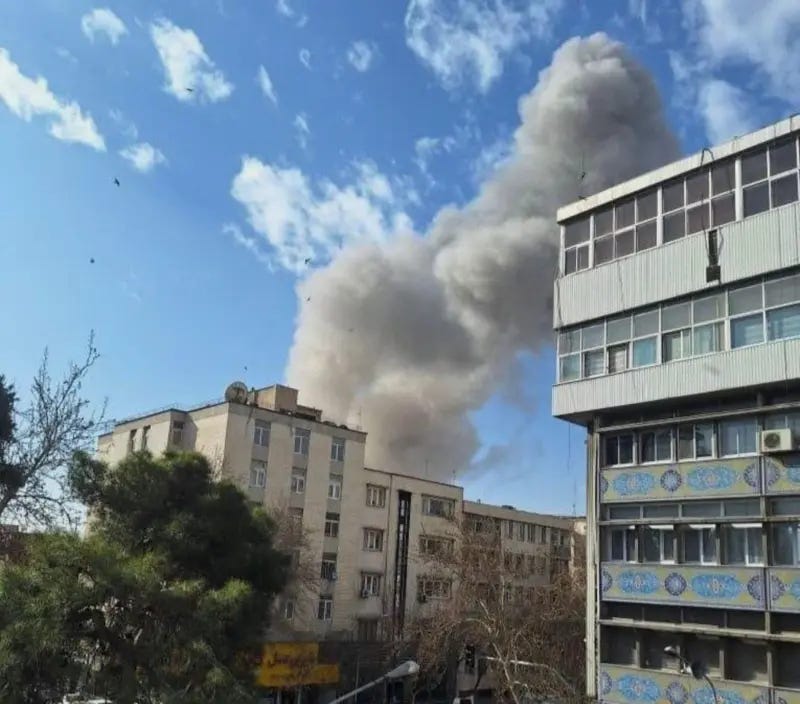
Iranian strikes hit multiple countries across the Middle East on Saturday, setting buildings ablaze in Dubai and Bahrain and shattering a sense of security in Gulf states long considered insulated from regional conflict, as the war launched by the United States and Israel on Iran rapidly escalated.
In Dubai, an Iranian missile struck the world‑famous Fairmont hotel on the Palm Jumeirah, igniting fires near the entrance of the five‑star property and injuring at least four people. Residents watched in shock as flames spread, with social media videos showing missile interceptions over the city, reports The Guardian.
“Everyone is very scared,” one resident said. “There is footage of interceptions all over the city. I am packing a suitcase just in case — not that we can leave, because the airspace is closed. This is what we have all been frightened of, and now it has happened.”
Elsewhere in the Gulf, the publication said scenes once thought unimaginable unfolded within hours of the first US and Israeli strikes. Iran launched a wide‑ranging retaliatory campaign targeting more than six countries, drawing previously untouched states into the conflict.
In Bahrain, an Iranian drone slammed into a high‑rise building in what appeared to be a targeted attack, exploding on impact and engulfing the skyscraper in flames. Earlier, an Iranian missile struck the country’s national security agency, while footage circulating online appeared to show a missile hitting the US naval base in the kingdom.
In Kuwait, a drone crashed into the country’s main airport, wounding several employees and damaging infrastructure. A missile was also reported to have fallen in Qatar, prompting warnings from Gulf states that they reserve the right to respond.
As Iran bombarded the Gulf and Israel, its regional proxies joined the conflict. Bases belonging to the Iran‑backed Popular Mobilization Forces in Iraq were struck by either the US or Israel, killing at least two members of the armed group Kataib Hezbollah. The group, along with Yemen’s Houthis, warned they would join attacks on US military bases across the region.
Just hours into what Washington has dubbed Operation Epic Fury, the fighting had already expanded far beyond the scope of the previous war in June 2025, which was largely confined to Israel and Iran, according to The Guardian.
Across the Middle East, civilians reacted with alarm. In Lebanon, petrol stations were quickly overwhelmed, with queues stretching up to 10 cars deep within an hour of the strikes. At Beirut airport, passengers watched as commercial flights were cancelled, while grocery stores filled with people stocking up on essentials, memories of the 2024 war with Israel still fresh.
Attention quickly turned to Hezbollah, the Iran‑backed group that had previously warned that the killing of Iran’s supreme leader, Ayatollah Ali Khamenei, would constitute a red line. In a statement on Saturday afternoon, Hezbollah did not commit to entering the conflict but condemned what it called a violation of the UN charter by the US and Israel.
Iran’s foreign minister, Abbas Araghchi, said in an interview with NBC that Tehran had told Gulf states it did not intend to attack them directly, insisting Iran was targeting American bases in what he described as self‑defence.
Targeting Gulf states marks a significant escalation for Iran, which had largely avoided such attacks in previous rounds of conflict. Analysts warn the strategy risks alienating regional powers that had been urging Washington to reconsider its military campaign, potentially deepening instability across a region already on edge.