

Islamic private schools that sued state officials accepted into Texas’ voucher program
“We are so happy to see it finally be applied fairly and to be a part of the whole program,” said Ehsan Sayed from the Islamic Services Foundation

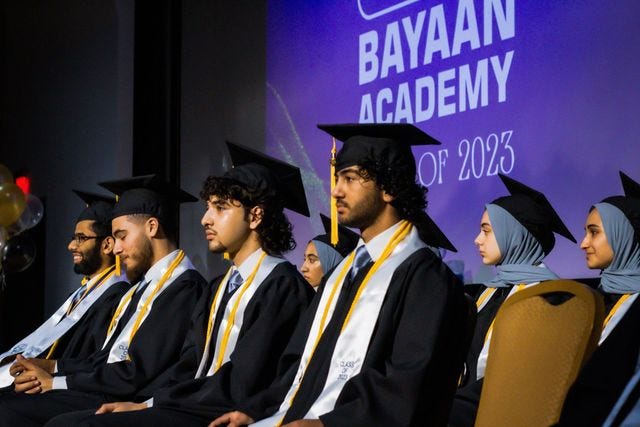
Months after they first applied to participate in Texas’ new $1 billion school voucher program, Brighter Horizons Academy, Bayaan Academy and some other Islamic private schools were admitted Wednesday, according to the Texas comptroller’s office.
“We are so happy to see it finally be applied fairly and to be a part of the whole program,” said Ehsan Sayed from the Islamic Services Foundation, one of the plaintiffs in ongoing litigation against state officials over their exclusion from Texas Education Freedom Accounts.
The news came one day after U.S. District Judge Alfred Bennettordered families’ application window for the program to be extendedan additional two weeks, until 11:59 p.m. March 31, the Houston Public Media News reported.
In doing so, he granted a temporary restraining order requested by a group of Muslim parents and Islamic private schools that filed civil rights lawsuits claiming they faced discrimination on the basis of religion.
Muslim groups in Texas have come under fire by the state’s top Republican leaders, and anti-Islam rhetoric was a theme of GOP election campaigns leading up to the March primary.
Brighter Horizons Academy, a Dallas-area school affiliated with the Islamic Services Foundation, and Bayaan Academy, an online school based in the Houston-area suburb of League City, are part of the lawsuit.
The judge’s order on Tuesday did not require the voucher program, which is administered by the Texas Comptroller of Public Accounts, to admit any Islamic schools. It required that the plaintiff schools be given the opportunity to apply for the program and extended the deadline for families to apply as the litigation plays out in court.
The voucher program, approved by Texas lawmakers last summer, allows taxpayer money to be spent on private school tuition and home-school expenses.
Mary Katherine Stout, program director of the Education Savings Account Division of the comptroller’s office and a defendant in one of the lawsuits, stated in court records that Bayaan Academy was initially approved because it had listed its accreditor as Middle States Association, but was later pulled from the list and flagged for further review.
By Wednesday night,Bayaan was backon the list.
Travis Pillow, a spokesperson for the comptroller’s office, confirmed the schools in the lawsuit had been invited to join the program Wednesday afternoon.
Sayed said that some parents, after not seeing Brighter Horizons Academy on the list of approved schools, told him they might have to consider transferring their children to another private school to access at least $10,500 in annual funding. That’s the per-student allotment for Texas Education Freedom Accounts, while students with disabilities can receive up to $30,000 and families can get $2,000 for home-school expenses.
Other parents, Sayed added, worried that the school’s exclusion signaled potential academic concerns.
“They were very honest with us,” Sayed said. “There are other families who are new to the school who were wondering, ‘Why is our school not on the list? Is there something wrong with the school? Is it not meeting the standards of education [or] the requirements of the state?’ So it was, again, it was leading to a lot of confusion.”
A group of Islamic schools has pushed back in federal court, and for Sayed, the lawsuit is personal. He attended Brighter Horizons Academy himself, his son is in the first grade there, and this fall his daughter will begin kindergarten at the school.
“[Our] schools are like any other Catholic school, Jewish day schools or any other religious private schools,” Sayed said. “Most of our students are born and raised here in the United States, in Texas and grew up here. Many of them are second-generation or third-generation Americans just like you have in any other school,” he told the publication.