

Keller Council Backs Constitution-Focused Resolution After Muslim Community Mobilizes Against Sharia “Ban”
Bj Lewis

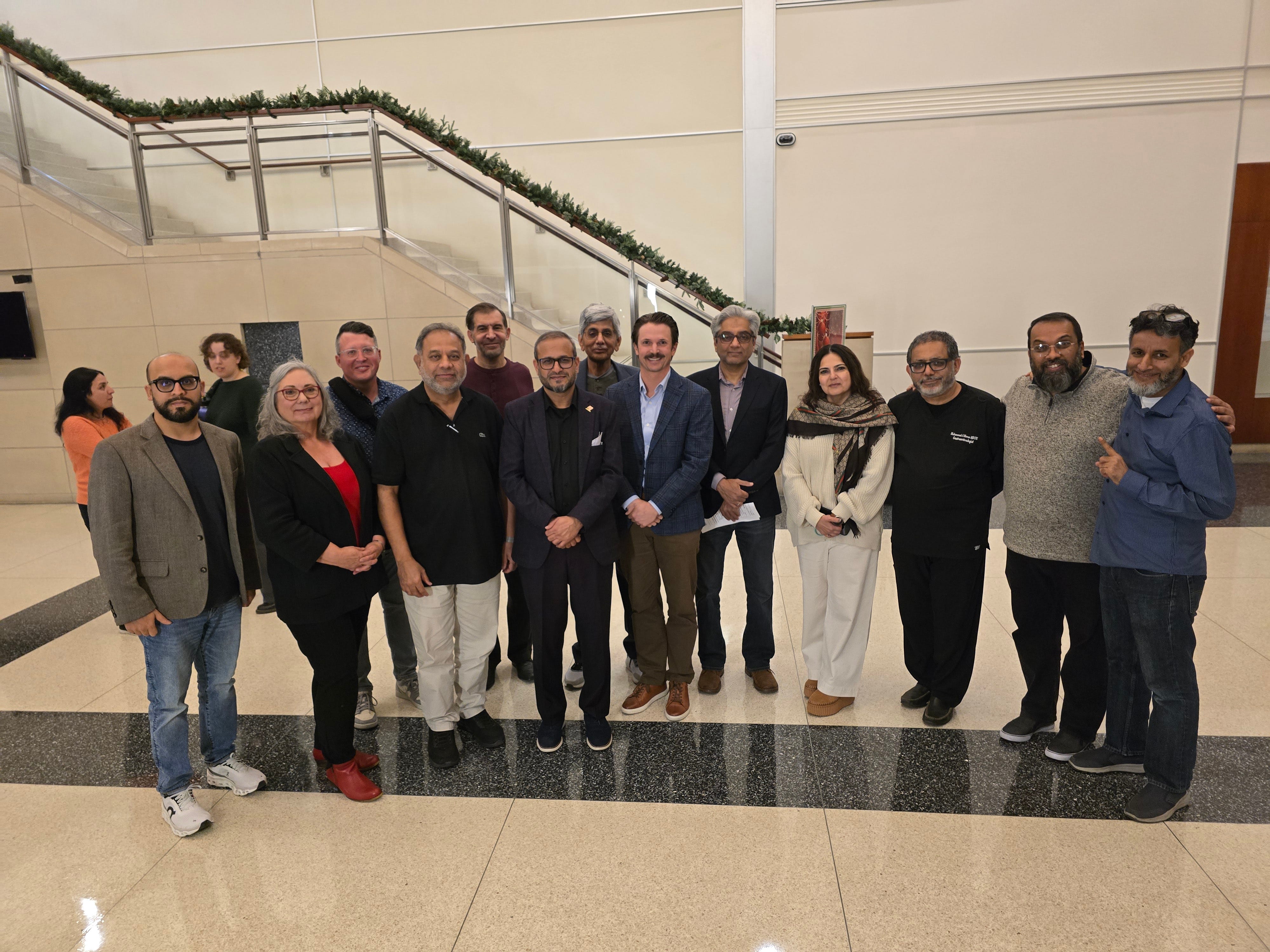
The Keller City Council on January 6, 2026, in Keller, Texas, approved a revised resolution affirming the supremacy of the U.S. and Texas constitutions and state courts in municipal and residential matters, after an hours-long public hearing in which Muslim residents urged officials to drop language explicitly targeting Sharia law and “foreign legal systems.” The final measure, framed as a general statement of constitutional governance and consistency with Texas House Bill 4211, replaced an earlier proposal that singled out Islamic law, following organized testimony led by North Texas Islamic Council president Mujeeb Kazi and other community members.
From Sharia “Ban” to Constitutional Governance
The adopted resolution, titled “A Resolution Affirming Constitutional Governance, Equal Application of the Law, and the Exclusive Authority of Texas and United States Courts in Municipal and Residential Matters,” declares that the City of Keller “is governed by the Constitution and laws of the United States and the State of Texas” and that these are “the sole sources of legal authority” over municipal affairs, housing, property rights and dispute resolution.
Section 1, “Supremacy of Law,” affirms that only U.S. and Texas law governs city matters. In contrast, Section 2, “No Parallel Legal Systems,” states that “no foreign, religious, or alternative legal system shall be recognized or enforced by the City, its courts, boards, commissions, or administrative bodies.” Section 3 requires residential developments and business entities to comply with state and federal fair-housing, property, and consumer-protection laws, and Section 4 mandates that disputes be resolved in Texas or U.S. courts, consistent with state law.
By contrast, the earlier proposal reported by Yahoo News and local outlets was described as a resolution “rejecting Sharia law” and “foreign legal systems,” building on Mayor Armin R. Mizani’s December proclamation declaring “NO SHARIA LAW IN KELLER.” In that proclamation, Mizani wrote on social media: “In Keller, we are governed by American law, NEVER foreign legal systems like Sharia law or Sharia courts,” describing the step as affirming “one U.S. Constitution, one legal system, and equal justice under the law,” according to coverage by the Fort Worth Star‑Telegram and The Center Square.
Muslim Residents Push Back at Public Hearing
Ahead of the vote, Keller’s Muslim residents and allies packed the council chambers to challenge what they saw as a stigmatizing and unnecessary measure, arguing that it conflated private religious practice with civil law and echoed statewide campaigns against “Sharia courts.” Mujeeb Kazi, a longtime Keller resident and president of the North Texas Islamic Council, delivered one of the evening’s central speeches.
Addressing the council, Kazi said Muslims in Texas are saying “here we go again with the boogie man and Sharia law, which doesn’t even exist,” adding that “politicians are using Sharia law as a political football to gin up hatred of Muslims to galvanize their bases for the coming election,” according to. He described himself as “a proud American, proud Texan.” He argued that Texas has been strongest “when it has protected liberty not by targeting communities but by upholding the Constitution for everyone.”
“Let me be very clear: Muslims in America live under the Constitution, the U.S. Constitution, just like everyone else.” Mujeeb Kazi, public hearing remarks.
Kazi’s comments echoed his earlier statements to the Fort Worth Star‑Telegram, in which he said he has “yet to see Sharia law in practice” in the United States and described the original Sharia-focused resolution as feeling “like a political maneuver.”


HB 4211 and the Statewide “Sharia Compounds” Debate
The Keller resolution repeatedly cites Texas House Bill 4211, a 2025 state law that created a regulatory framework for “business entity‑owned residential arrangements” and barred such arrangements from imposing dispute‑resolution forums outside Texas courts. The bill requires entities selling interests in shared residential properties to disclose that buyers are acquiring an ownership interest in a business entity rather than traditional real property and extends anti‑discrimination protections similar to those in the Texas Fair Housing Act.
Governor Greg Abbott promoted HB 4211 as a way to stop so‑called “Sharia compounds,” explicitly referencing the Muslim‑oriented EPIC City (now The Meadow) development northeast of Dallas, according to a June 2025 KERA News report and a news release from the governor’s office. Abbott said the law “bans residential property developments, like EPIC City, from creating their own religious legal systems,” framing it as a defense of Texas sovereignty and religious freedom for all residents.
The Keller resolution’s Section 6, “Consistency with State Law,” states that the measure “is intended to be interpreted and applied in a manner consistent with all applicable state and federal law, including Texas House Bill 4211,” underscoring how local debates over Sharia law have become intertwined with statewide property and religious‑liberty policy.
Community Relations and Political Stakes
Muslim civil rights advocates argue that such measures send a harmful signal even when, as in Keller’s final language, they avoid naming Islam directly. In earlier comments about the proposed Keller resolution, a representative of the Council on American‑Islamic Relations’ Texas chapter described Sharia‑focused campaigns as “tiresome,” saying Muslims have been used as a “political football” since 9/11 and emphasizing that “Sharia law indicates that Muslims should follow the laws of the land,” according to Yahoo News’ report on the controversy.
Mayor Mizani, who signed the original “No Sharia Law” proclamation and is now running in the March 2026 Republican primary for Texas House District 98, has defended his initiative as a straightforward affirmation of constitutional supremacy rather than an attack on religious freedom. He told reporters that while Keller “acknowledges and supports freedom of religion,” the city “will not recognize any development, foreign entity, or organization that attempts to establish its own standards and rules,” saying that developments catering exclusively to one religion “contradict our Constitution, according to Yahoo News and local coverage.
Implementation and Trust Building
The resolution, signed by Mayor Armin R. Mizani and attested by City Secretary Kelly Ballard and City Attorney L. Stanton Lowry, leaves some implementation details such as enforcement mechanisms and how it will interact with private mediation or religious counseling largely to existing state and federal law. Supporters say the measure reiterates that disputes over housing and property must be resolved in Texas and U.S. courts. At the same time, critics contend that the political framing around Sharia law could still chill Muslim civic participation even after the text was broadened.
In the coming months, attention is likely to focus on whether Keller’s adopted language becomes a template for other North Texas cities navigating HB 4211 and related debates over “parallel legal systems,” or whether community backlash and continued dialogue, like the public testimony led by Kazi and other residents, steer local leaders away from explicitly religiously framed resolutions. For now, Keller’s decision illustrates how organized civic engagement can reshape controversial proposals, turning an explicit “Sharia ban” into a broader affirmation of constitutional governance while leaving unresolved broader questions about rhetoric, intent, and community trust.