


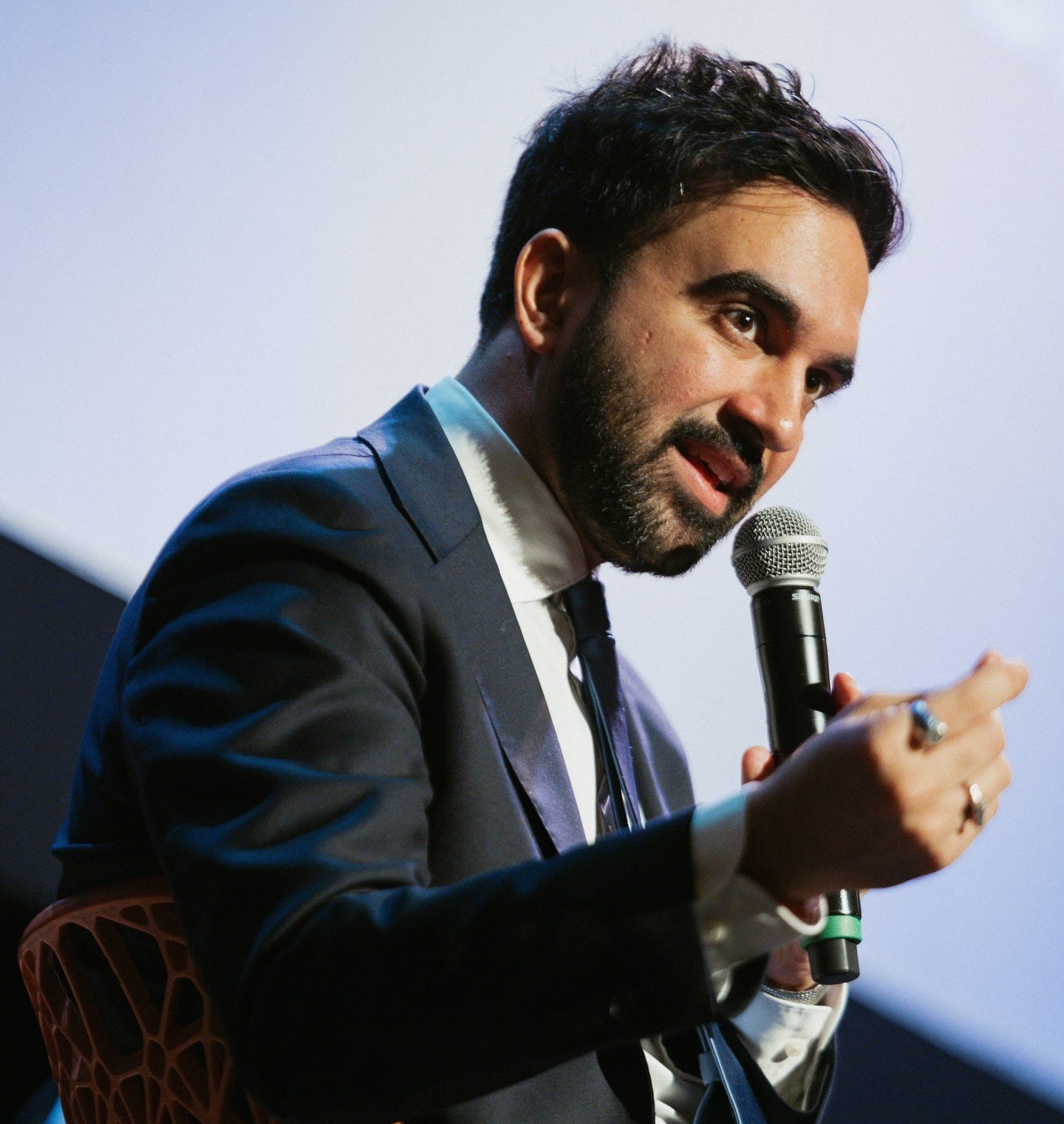
Muslim New Yorkers have emerged as a decisive political force in the nation’s largest city, helping elect Zohran Mamdani as New York’s first Muslim mayor and reshaping the city’s political landscape at the start of 2026, according to reporting by the Washington Post and other outlets. Their growing demographic weight, community organizing, and focus on issues such as Gaza, affordability, and civil rights have turned a once-marginalized population into a key constituency in citywide politics. Mamdani’s victory and inauguration on January 1 crystallize years of political work undertaken in mosques, community centers, and tenant unions across the five boroughs.
A New Mayor, A New Electorate
Mamdani, a 34‑year‑old democratic socialist and former state assembly member from Queens, was sworn in just after midnight at the historic, decommissioned City Hall subway station, where he took his oath over a Quran, Anadolu Agency and the Times of Israel reported. The ceremony, held at an underground station near the symbolic heart of city government, underscored both his outsider roots and his arrival at the center of power.
According to Anadolu Agency, Mamdani is one of New York’s youngest mayors and the first Muslim and first South Asian to lead the city. BBC News has noted that his platform centers on tackling the cost‑of‑living crisis through policies such as rent freezes, free buses, and city‑run grocery stores funded by higher taxes on corporations and the wealthy.
“We will build a City Hall that stands steadfast alongside Jewish New Yorkers … where the more than 1 million Muslims know that they belong, not just in the five boroughs of this city, but in the halls of power,” Mamdani said in remarks quoted by Anadolu Agency.
From Margins to Power Brokers
The political rise of Muslim New Yorkers predates Mamdani’s win. Still, it has accelerated in the post‑9/11 era, as communities that once faced intensive surveillance and Islamophobic policing began investing more heavily in electoral politics. The Guardian has reported that Muslim New Yorkers—roughly 4 percent of the electorate—have built sophisticated networks linking mosques, advocacy groups, and labor movements, with organizers like Desis Rising Up & Moving (DRUM) playing a key role in mobilizing turnout.
Associated Press polling cited by Al‑Estiklal and Religion News Service found that about nine in ten Muslim voters backed Mamdani, despite their relatively small share of the overall electorate. Political scientist Noora Siddiq told Al‑Estiklal that his election “energized Muslims who had lost faith in the political establishment” and showed that state‑level officeholders could move quickly into big‑city leadership.
Identity, Policy, and Backlash
Analysts stress that Mamdani’s appeal extends beyond identity politics. BBC News and Politico both describe his campaign as rooted in affordability, public transit, and housing, with his Muslim identity intersecting with, rather than replacing, a broad economic message. At the same time, his election has coincided with intense scrutiny of his anti‑Zionist positions and vocal support for Palestinian rights, as reported by the Times of Israel and Anadolu Agency.
The Times of Israel noted that some Jewish organizations, including the Anti‑Defamation League, have announced initiatives such as a “Mamdani Monitor” to track his administration, citing concerns over appointees linked to pro‑Palestinian activist groups. Mamdani and his allies reject accusations of antisemitism, insisting that criticism of Israeli government policy is distinct from hostility toward Jews.
National Ripples of a Local Victory
Commentators see Mamdani’s win as part of a broader wave of Muslim political gains. Anadolu Agency and Al‑Estiklal have linked his election to a growing roster of Muslim officeholders nationwide, arguing it may encourage more candidates from historically marginalized communities to run. London Mayor Sadiq Khan told Politico Magazine that observers will “see the ripples of the Mamdani effect,” drawing parallels between Islamophobic attacks he faced in London and those Mamdani confronted in New York.
Khan said it was “heartbreaking” to see old anti‑Muslim tropes resurface, but emphasized that Mamdani’s victory showed “voters are willing to look beyond scaremongering and judge leaders on what they deliver.”
Governing Under a National Spotlight
Mamdani begins his term under intense national scrutiny and open tension with President Donald Trump, who has repeatedly threatened to cut federal funding to New York if the city pursues progressive policies on immigration and taxation. In response, Mamdani has cast himself as a defender of immigrant communities and economic equity, describing himself as “Donald Trump’s worst nightmare,” Anadolu Agency reported.
As Muslim New Yorkers consolidate their political power, experts say their influence will likely extend beyond one mayoral term. Scholars quoted by Al‑Estiklal and the Guardian predict that Mamdani’s administration will serve as a test case for how Muslim communities, once treated primarily as security concerns, can shape policy at the heart of American urban governance.