


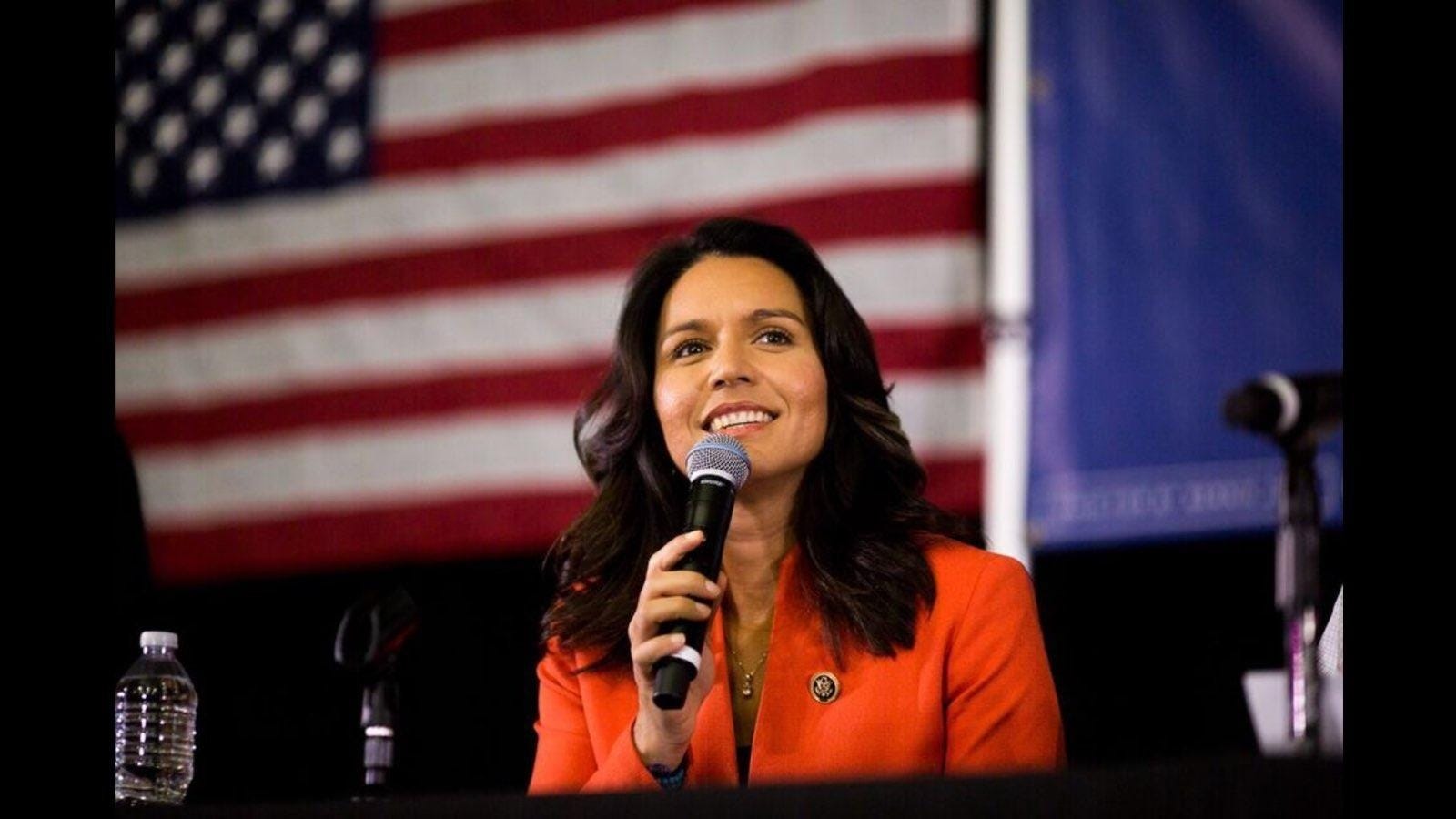
The Council on American-Islamic Relations (CAIR), the nation’s largest Muslim civil rights organization, has condemned recent statements by US Director of National Intelligence Tulsi Gabbard regarding American Muslims and Islam, calling her remarks “delusional and disqualifying”. The controversy erupted after Gabbard linked a deadly terrorist attack in Australia to what she described as the “Islamisation” of Western nations and warned of similar threats within American cities.
Controversy Sparked by Sydney Attack Comments
Gabbard’s controversial statements began on December 17, 2025, when she posted on social media platform X about the Bondi Beach terrorist attack in Sydney, Australia, that killed 15 people and wounded over 40 others during a Hanukkah celebration two days earlier. Writing from her position as America’s top intelligence official, Gabbard declared the attack “should not come as a surprise to anyone,” attributing it to “the massive influx of Islamists to Australia”. She added a stark warning: “It is probably too late for Europe—and maybe Australia” while asserting it is “not too late for the United States of America”.
Australian Prime Minister Anthony Albanese confirmed the attack “appears to have been motivated by Islamic State group ideology,” with investigators discovering improvised explosive devices at the scene. The shooting, perpetrated by a father-son duo, has been designated a terrorist incident by New South Wales Police Commissioner Mal Lanyon.
Alarming Claims About American Cities
At a recent public appearance, Gabbard expanded her warnings to include American territory, making claims about US cities that have drawn particular scrutiny. According to India Today, she stated, “Patterson, New Jersey is proud to call themselves the first Muslim city,” and claimed that “Islamic principles” were being “forced on people either through laws or violence”. “This is already underway in places like Houston. This is not something that may possibly happen. It is already happening here, within our borders,” Gabbard asserted.
The intelligence chief emphasized her position by declaring, “The bottom line is this: when we talk about the threat of Islamism, there is no such thing as individual freedom or liberty,” describing what she termed “Islamism” as “fundamentally incompatible with our American foundation of freedom”.
CAIR’s Response and Growing Backlash
CAIR’s condemnation of Gabbard’s statements comes amid mounting criticism from civil rights organizations and lawmakers. The organization characterized Gabbard’s “rant against the American Muslim community and ‘Islamic principles’” as both “delusional and disqualifying” for someone holding the nation’s highest intelligence position.
The controversy occurs in an already tense environment for Muslim Americans. In November 2025, Texas Governor Greg Abbott signed a proclamation declaring CAIR itself as a foreign terrorist organization in Texas, a move CAIR described as having “no basis in fact or law”. He accused Abbott of “advancing anti-Muslim bigotry”. “By defaming a prominent American Muslim institution with debunked conspiracy theories and made-up quotes, Mr. Abbott has once again shown that his top priority is advancing anti-Muslim bigotry, not serving the people of Texas,” CAIR stated in response to The Texas Tribune.
Gabbard’s Confirmation and Controversial Track Record
Gabbard was confirmed as Director of National Intelligence in February 2025 by a 52-48 Senate vote, with only Republican Senator Mitch McConnell opposing her nomination. McConnell expressed concerns that “the President should not have to worry that a Director of Intelligence taints the intelligence he receives with a history of alarming judgments,” calling Gabbard an “unnecessary risk”.
Her appointment placed her in charge of overseeing the nation’s 18 intelligence agencies and serving as the primary intelligence advisor to President Donald Trump. However, critics have pointed to her lack of experience within intelligence agencies and what The Nation described as her “Islamophobia, one of the few consistent commitments in her volatile political career”.
The Intercept previously reported that Gabbard received “hundreds of thousands of dollars” in campaign donations from supporters of Hindu supremacist ideology, which is “known for their hostility to Islam, particularly in India, where Muslims constitute a significant and persecuted minority”.
Broader Immigration Policy Context
Gabbard’s statements align with the Trump administration’s expanded immigration restrictions. In December 2025, President Trump announced a sweeping expansion of travel bans affecting 39 countries, many of them Muslim-majority nations, adding Syria and Palestine to the full ban list. Gabbard defended these restrictions, stating that “Islamists and Islamism pose the most significant threat to the security and prosperity of the United States and the entire globe”.
The expanded policy has drawn condemnation from civil rights advocates and lawmakers, including Congresswoman Rashida Tlaib, who called it evidence of “racist cruelty” targeting “African and Muslim-majority nations, including Palestinians fleeing a genocide”.
Questions About Intelligence Leadership
As Director of National Intelligence, Gabbard holds one of the most sensitive positions in the federal government, with extensive access to classified information and responsibility for coordinating all federal intelligence efforts. Her public statements linking immigration policies directly to terrorism and characterizing entire religious communities as security threats have raised questions among former intelligence officials and civil rights advocates about whether such rhetoric undermines the objectivity required for the role.
The Australian National Imams Council and the Council of Imams NSW issued statements condemning the Bondi Beach shooting, declaring that “these acts of violence and crimes have no place in our society” and urging “all Australians, including the Australian Muslim community, to stand together in unity, compassion, and solidarity”. This response underscores the concern that broad characterizations of Muslim communities can undermine counterterrorism efforts by alienating the very communities whose cooperation intelligence agencies require.