

Muslim Families Oppose Texas Voucher Program They Say Targets Islamic Schools
Parents and faith-based educators say the state’s exclusion of Islamic schools denies Muslim children equal access to public education funds

Four Muslim parents and three Islamic private schools have filed federal lawsuits against Texas officials, alleging that the state’s new private school voucher program unlawfully excludes Islamic schools and discriminates against Muslim families on the basis of religion.
The lawsuits argue that Texas leaders are blocking Islamic schools from participating in the state’s education savings account program, effectively denying Muslim parents the same financial support offered to families choosing other private or home‑school options, reports The Texas Tribune.
The first lawsuit, filed March 1 by a Houston father acting on behalf of his two children, names Texas Attorney General Ken Paxton, Acting Comptroller Kelly Hancock, and Education Commissioner Mike Morath as defendants. A second suit, filed March 11, was brought by three Muslim parents and three Islamic schools, naming Hancock and Mary Katherine Stout, the program’s education savings account manager.
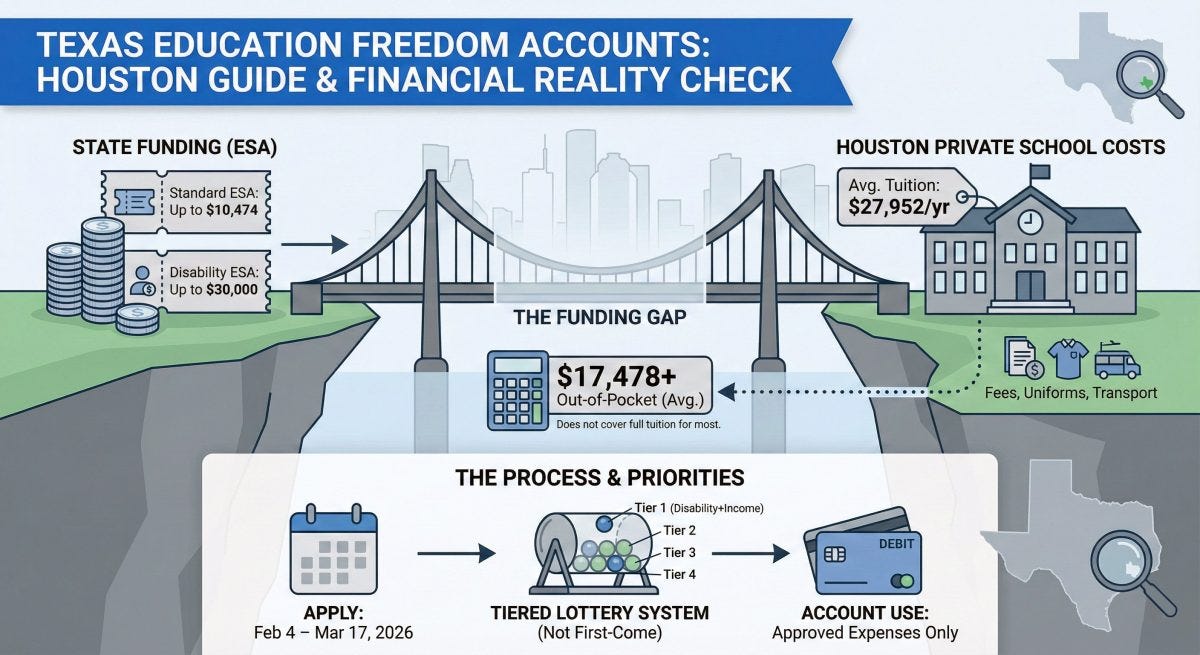
At the center of the dispute is Senate Bill 2, signed into law in 2025 by Gov. Greg Abbott, which created a statewide voucher program allowing families to use public funds for private or home‑school education. Applications for families opened Feb. 4 and run through March 17, while private schools may apply on a rolling basis if they meet accreditation and operational requirements.
More than 143,000 students have applied to the program, and over 2,100 private schools have been approved. However, according to the lawsuits, no Islamic schools are known to have been accepted.
The controversy escalated after Hancock, who oversees the voucher program, sought a legal opinion from Paxton on whether schools could be excluded based on alleged connections to foreign terrorist organizations or foreign adversaries. Hancock cited concerns about schools accredited by Cognia that had hosted events involving the Council on American‑Islamic Relations (CAIR), a national Muslim civil rights organization.
Abbott has publicly labeled CAIR a terrorist organization — a claim CAIR has strongly denied and challenged in court. Notably, the U.S. State Department has not designated CAIR as a terrorist group.
Following Paxton’s January opinion asserting that the comptroller has authority to block schools allegedly tied to terrorism, Hancock excluded hundreds of Cognia‑accredited schools from the program. Those schools serve a wide range of students, including Muslim and Christian families and children with disabilities, but Islamic schools have been particularly affected.
One of the plaintiffs, Mehdi Cherkaoui, a Muslim father and attorney, says the policy has placed an unfair financial burden on families like his. He pays nearly $18,000 a year in tuition for his children at Houston Qur’an Academy Spring and hoped to use the program’s roughly $10,500 per child in voucher funding. Because Islamic schools are excluded, he says, Muslim parents are effectively shut out of the program.
The lawsuits argue that the state’s actions rely on broad stereotypes rather than evidence. “The exclusion is not based on individualized findings of unlawful conduct,” the complaint states, but on assumptions that Islamic schools are inherently suspect due to their religious identity or community ties.
The plaintiffs are asking the court to order Texas to admit all Islamic schools that meet program requirements and to stop delaying or denying approval based on religion or generalized associations with Muslim civil‑rights organisations.
For Muslim families, the case represents more than a policy dispute — it is a fight for equal treatment, religious freedom, and the right to access public education resources without fear of discrimination.