

Muslim-hate dominates Murphy City Council meeting
Community leader calls out ‘blatant religious discrimination’

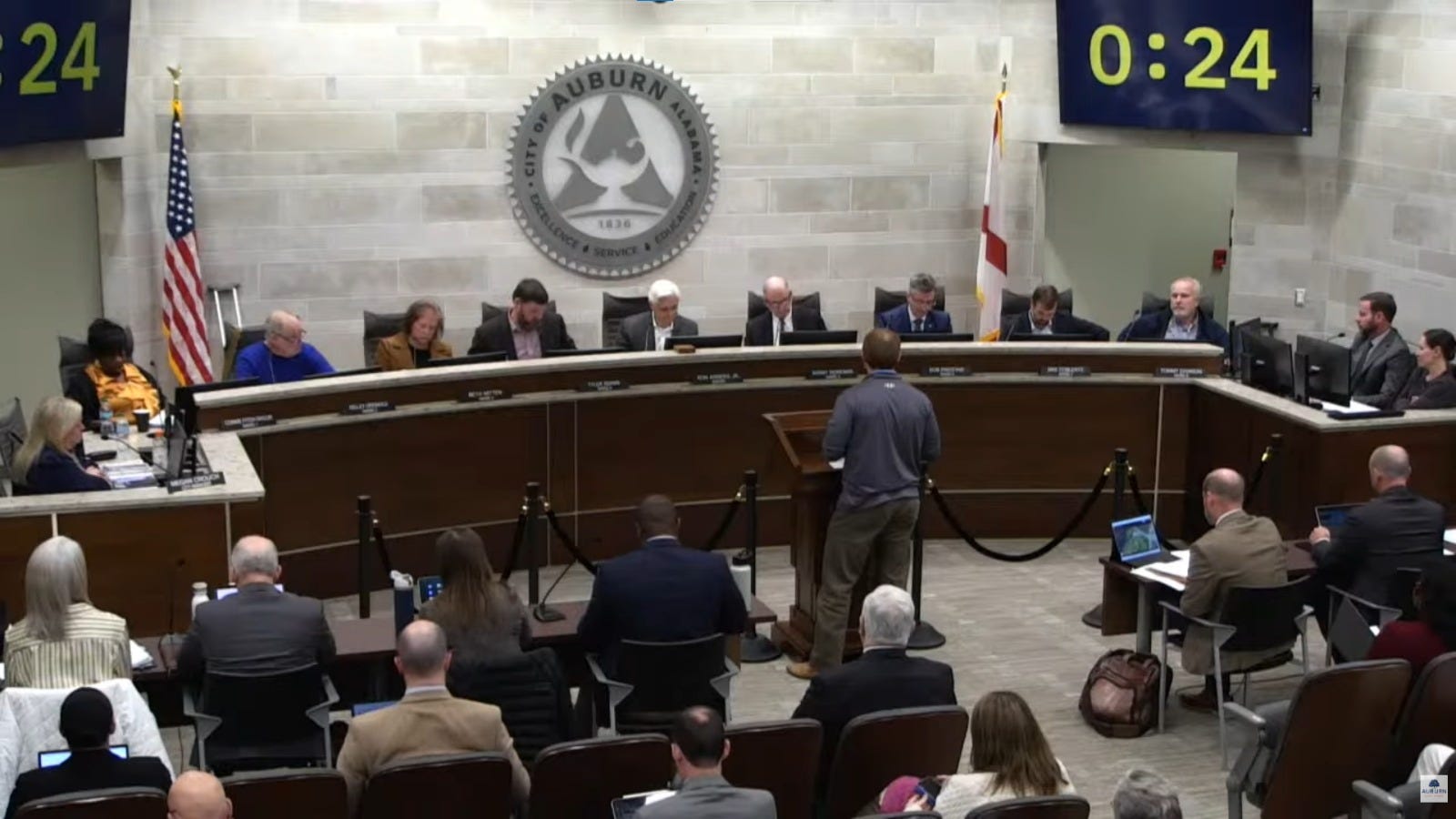
The Murphy City Council convened for what was expected to be a routine evening of public comments, but the meeting quickly transformed into a display of escalating fear, frustration, and overt Islamophobia as residents lined up to voice concerns about recent developments—particularly a new mosque and the proposed Center of Islamic Knowledge.
While some speakers offered practical worries about traffic, infrastructure strain, environmental impacts, and zoning transparency, these themes were repeatedly overshadowed on Wednesday evening by a stream of comments that targeted Muslim residents directly, questioned their place in the community, and invoked conspiracy-laden portrayals of Islamic life.
From the outset, Mayor Scott Bradley reminded attendees that these topics were not on the agenda and could not be formally discussed. But once the floor opened, speaker after speaker framed their objections around the arrival of Muslim institutions—often blending legitimate city‑planning concerns with sweeping claims about Muslims as a group.
Several residents began with remarks about rapid development and infrastructure fatigue, focusing on road deterioration, possible drainage issues, and environmental effects near local creeks and wildlife habitats.
But even these presentations frequently pivoted to the mosque as a symbol of cultural change they feared. One resident, for example, argued that the mosque posed risks to threatened species—before shifting to accuse the developer of discriminatory real‑estate practices, claiming that Muslims were refusing to sell property to non-Muslims.
Another speaker distributed material that they said came from an “FBI raid,” asserting that Islamic centres serve not as places of worship but as hubs for “political resolution,” “battalions of men,” and “domestic legal operations.”
They insisted their concerns were not about religion, just moments before declaring Islam incompatible with the U.S. Constitution and urging council members to “say no” to the presence of Islamic institutions.
The rhetoric intensified when one masked speaker, claiming to fear for his life, recounted alleged childhood abuse in an Islamic school overseas before reading selective Quranic verses to portray Islam as inherently violent. He asserted that Muslims “do not assimilate,” that their dress code “is from the 7th century,” and urged the city to adopt restrictions like France’s hijab bans. Council members had to intervene as his remarks veered into derogatory and inflammatory territory.
Several residents then echoed the allegation that Muslims in Murphy were creating “Muslim-only compounds,” claiming they had been denied property purchases—statements presented without evidence but repeatedly referenced throughout the meeting.
Others warned of cultural incompatibility, with one saying Islam threatens “the heritage, legacy, and bloodline” of local families.
A candidate for Texas governor took the floor to urge the council to declare Murphy—and Texas—a “Christian state,” arguing that Muslim culture “clashes” with American life and that allowing Islamic centers would burden future generations. His speech drew applause from some attendees.
Residents also invoked Murphy’s identity as a historically small, tight-knit town, claiming that Muslims “do not integrate” and that their presence violated the original spirit of the city charter. One resident complained about Muslim neighbors converting a barn into a community space, framing it as part of a larger threat to the neighborhood’s cohesion.
Across nearly every comment, the development of the mosque functioned not only as a planning issue but as a flashpoint for more profound anxieties about religion, culture, and demographic change.
References to constitutional clauses, foreign conflicts, childhood trauma, and unfounded claims of political infiltration created a narrative in which Muslim institutions were portrayed as dangerous, deceptive, or fundamentally un-American.
By the time the mayor paused the meeting, the underlying message of the night had become unmistakable: while some residents were genuinely concerned about infrastructure and zoning, the dominant energy in the room reflected a growing wave of Islamophobia—one that fused misinformation, personal fears, and cultural hostility into the public discourse of a local city council meeting.
The hate-Muslim lobbying is spreading at a political level. Two days ago, a Texas Congressman, Keith Self, posted on social media that Sharia is incompatible with the Constitution, the American way of life, and Western values.
Sharia (or Shari’ah) is the sacred religious law of Islam, a comprehensive moral and ethical code derived from the Quran, Sunnah (teachings of the Prophet Muhammad), and Hadith, that guides Muslims in all aspects of life, from worship and personal conduct to family, finance, and criminal justice.
“Chip Roy (Texas attorney and politician) and I will not sit by idly as our country is infiltrated,” he wrote.
Self said the Sharia Free America Caucus will stand guard over your liberties and ensure America’s freedoms are defended.
On December 18, 2025, Self and Roy launched the caucus to counter the growing influence of Sharia law in the United States. The caucus grew to over 25 members from 17 states within a month.
Minnesota Republican Congressman Tom Emmer said in a post on 9.Jan he was proud to join the Sharia Free America Caucus, to “Defend America against the dangers of Sharia”.
“Sharia is completely incompatible with the American way of life. It’s radical, oppressive, and must never be allowed to gain a foothold in our great nation,” he said on Facebook.

The Council on American-Islamic Relations (CAIR) said that such measures seek to marginalise American Muslims, infringe on religious freedom, and demonise Islamic faith practices.
Muslim groups, often working with civil rights organizations, have filed lawsuits alleging violations of the Free Exercise and Establishment Clauses of the First Amendment. They argue that anti-Sharia bills are based on misinformation, as they often target private religious matters—like wills or marriage contracts—that are already subordinate to U.S. law.
Muslim leaders have strongly condemned rhetoric from proponents of these caucuses, who have labeled Islam a “death cult” and argued that Sharia is incompatible with American values. CAIR described these actions as “bigotry”.
Community member Suhail Syed told Context‑Corner that the latest controversy reflects a broader, politically driven campaign to mischaracterize Muslim communities—one he says is being amplified through coordinated online fearmongering.
Syed noted that many of the speakers at the recent Murphy City Council meeting were not local residents but individuals mobilized through social‑media networks.
“Many of the people who came to the city council weren’t locals… they were imported from other cities by fearmongers on X and Instagram,” he said.
He emphasized that the pattern is not confined to Texas. In Broken Arrow, Oklahoma, a proposal by the Islamic Society of Tulsa (IST) to build a 42,000‑square‑foot community center—including a mosque, public medical clinic, and retail space—on a 15‑acre property owned by the North American Islamic Trust (NAIT) since 2014 drew similar backlash. Despite receiving approval from the city’s Planning Commission, the Broken Arrow City Council rejected the project. Public meetings were marked by strong opposition, including Islamophobic rhetoric, misinformation, and social‑media‑driven fearmongering.
Syed also pointed to a recent incident in Murphy, where residents protested the opening of a coffee shop owned by a Muslim entrepreneur—an example, he said, of escalating hostility fueled by elected officials who amplify anti‑Muslim narratives.
“Muslims in this town are peaceful citizens raising families, paying their taxes, and giving back to the community. Yet they are being harassed because of their religious practice. This is blatant religious discrimination,” Syed said.
When people say “it’s not about religion” and then spend five minutes explaining why Muslims don’t belong here, the lie tells on itself.
As a correction to the definition of shari'ah provided in this article, it is important to note that shari'ah is not a "code" by Western understandings of the term. I would refer our good author to chapter 4 of Speaking in God's Name by Dr. Khaled Abou El Fadl, one of the US' foremost experts on Islamic law and jurisprudence.
Dr. Abou El Fadl states quite clearly that shari'ah has largely resisted codification. While the modern world has a great deal of difficulty comprehending even the notion that there could exist a legal-moral framework that is not codified, an explicit lack of codification is a fundamental characteristic of shari'ah. One cannot understand the objectives, dynamics, or utility of shari'ah without understanding its non-codified structure.
See also: Shariah: Theory, Practice, Transformations by Dr. Wael Hallaq, as well as The Impossible State by the same.
Thank you very much for the article. I hope people believe it.