


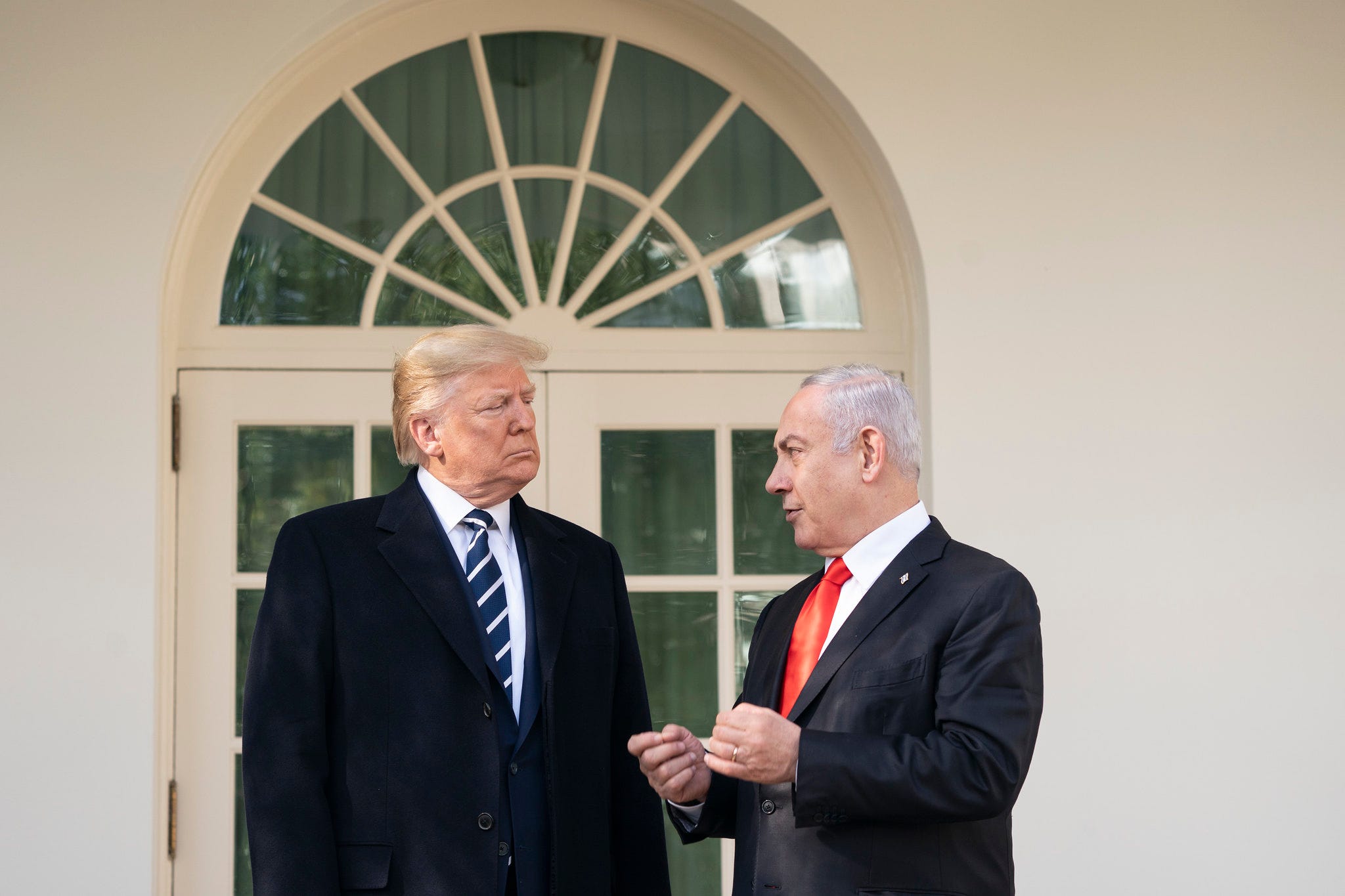
Israeli Prime Minister Benjamin Netanyahu is set to meet with US President Donald Trump at the Mar-a-Lago resort in Florida on Monday, December 29, bringing competing visions for Middle East policy into sharp focus. Netanyahu plans to advocate for additional military strikes against Iran’s ballistic missile program. This push directly contradicts Trump’s stated goal of reducing American military involvement in the region and fostering stability through economic partnerships.
Shifting Targets, From Nuclear Sites to Missile Facilities
The Israeli government has pivoted its strategic focus from Iran’s nuclear capabilities to its ballistic missile program following US-Israeli strikes that targeted Tehran’s nuclear infrastructure in June 2025. According to Trita Parsi, executive vice president at the Quincy Institute, this shift occurred because “Trump has declared the nuclear issue resolved—whether rightly or wrongly—Israel is now shifting its focus to missiles to sustain that pressure”.
Israeli officials warn that approximately 1,000 missiles remain of the 3,000 Iran previously possessed, despite June’s Operation Rising Lion effectively dismantling a significant portion of Iran’s ballistic missile capabilities, according to the American Israel Public Affairs Committee. An Israel Defense Forces official told the Israeli Knesset on December 8 that Iran has resumed large-scale production of ballistic missiles, making it a top priority for Tehran to restore the program.
Trump’s America First Doctrine Meets Israeli Regional Ambitions
The upcoming meeting exposes fundamental tensions between Trump’s foreign policy vision and Netanyahu’s regional objectives. Sina Toossi, senior fellow at the Center for International Policy, noted that “while Trump aims to enhance economic partnerships and establish diplomatic relations between Israel and Arab nations, Netanyahu is pursuing military supremacy in the region”.
Trump’s National Security Strategy explicitly states that Washington’s “historic reason for focusing on the Middle East will diminish” as the region advances toward greater cooperation and reduced conflict. However, Parsi warned that Netanyahu’s approach contradicts this vision: “This aspiration for ongoing US involvement and unending conflicts against Iran to genuinely destabilize the Iranian state mirrors Israel’s quest for uncontested dominance and expansion”.
Domestic Political Pressures Mount on Both Leaders
Trump faces competing pressures as he approaches the 2026 midterm elections, with his popularity declining amid affordability concerns and conservative divisions over foreign policy. Parsi explained that “the electorate is opposed to this. A substantial number of donors, however, support it. As we approach the midterm elections in November 2026, these contrasting pressures from two groups that Trump believes he must appease will be pivotal”.
Within Trump’s own coalition, prominent America First voices have criticized renewed military engagement with Iran. Tucker Carlson warned in his newsletter that if “Israel wishes to engage in this war, it has the sovereign right to do so. However, it should not do so with America’s support,” cautioning that military engagement could “result in the deaths of thousands of Americans due to foreign agendas”. Carlson recently commented on Netanyahu’s renewed push, stating: “It’s been less than six months since Trump risked a conflict with Iran on Israel’s behalf, but instead of expressing gratitude, the prime minister is already demanding more. This exemplifies a parasitic relationship”.
History of Coordination and Deception
According to The Washington Post, Netanyahu and Trump began planning for potential strikes on Iran’s nuclear program after their February 2025 meeting and developed an elaborate public deception program. During that meeting, Netanyahu presented Trump with four options for attacking Iran: an exclusively Israeli attack, an Israeli-led operation with minimal US help, full collaboration, and a US-led assault.
Despite Trump’s public statements expressing opposition to Israeli strikes before the June operation, two Israeli officials told Axios that Trump and his aides were “only pretending to oppose the Israeli attack on Iran in public, but in private, they didn’t express opposition,” with one official claiming “we had a clear US green light”.
Regional Implications and Future Scenarios
Parsi warned that Israel might initiate attacks on Iran unilaterally while relying on US air defenses in the region for support, gradually pulling the United States into conflict. He advised that Trump must prevent such action from the outset: “If they wish to avoid Israel starting that war, they need to communicate to Israel, ‘Do not initiate that war. And we will withdraw completely.’ That would embody the America First approach”.
Netanyahu is expected to present options for US involvement or support in forthcoming military initiatives against Iran’s missile facilities, according to sources familiar with the meeting agenda. Israel Defense Forces chief Eyal Zamir has hinted at readiness for new strikes against Iran “wherever required,” prioritizing production lines that Israel fears could produce 3,000 missiles annually.
Iranian President Masoud Pezeshkian warned on December 27 that if Israel and the United States were to attack Iran again, they would “face a more decisive response”. Iran has reportedly conducted ballistic missile drills in various cities on December 22, the second such exercise in recent months.