

Paxton probe into Dallas Islamic Tribunal will intensify fear and scrutiny in Texas Muslim communities
For many Muslims, the state’s latest investigation will likely be seen not as an isolated legal move, but as part of a wider pattern of scrutiny targeting Muslim institutions.

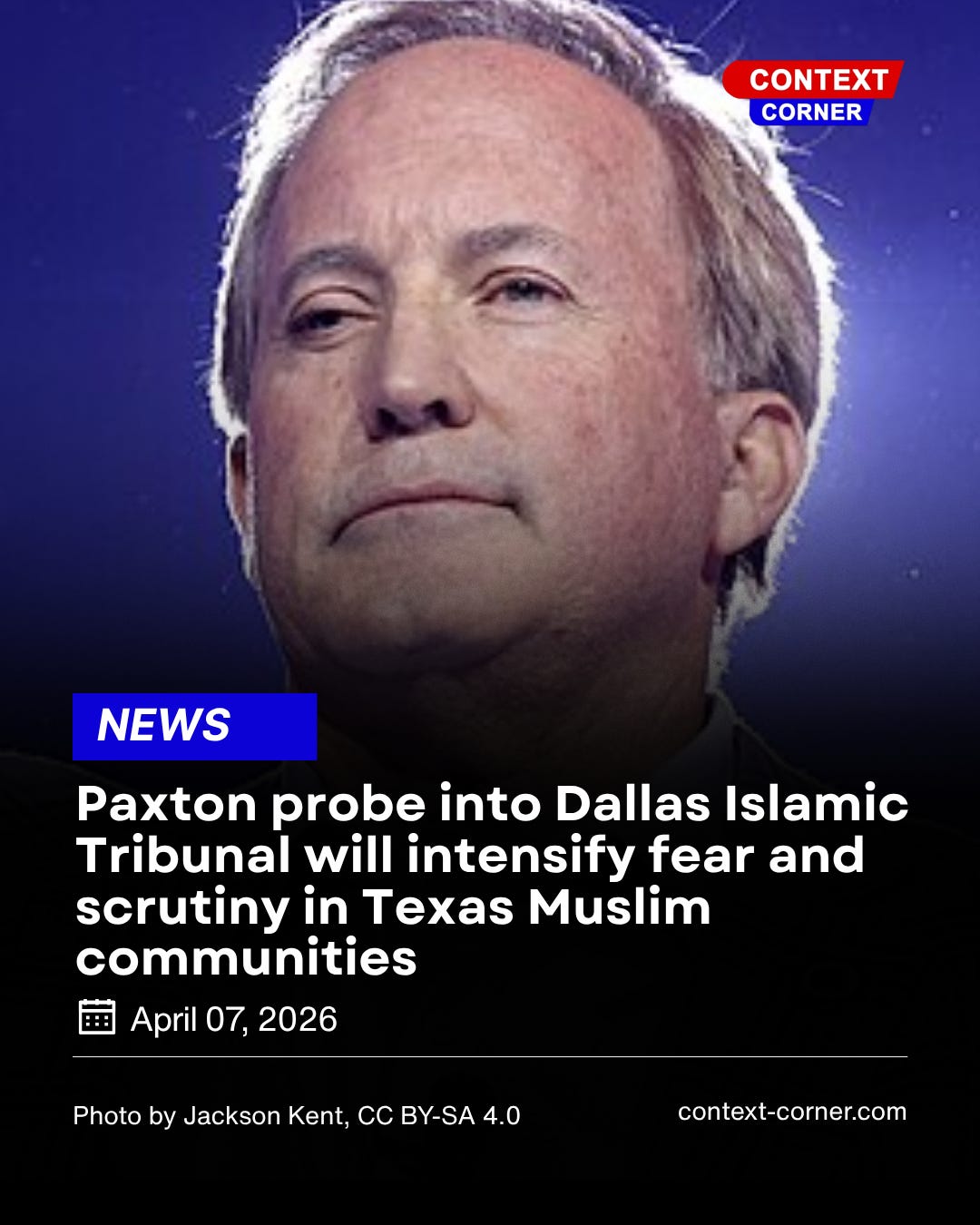
Texas Attorney General Ken Paxton said Monday that his office is demanding documents from the Dallas-based Islamic Tribunal, alleging the group may be unlawfully acting as a court and imposing “sharia law.”
According to, KERA News, the group has updated its website to say it is “strictly spiritual,” does not function as a court, does not issue legally binding decisions, and does not provide legal advice.
The likely response inside Muslim communities will be shaped by the broader context. KERA reported that the probe follows earlier state scrutiny of alleged “Sharia courts,” and comes after other high-profile actions by Texas officials involving Muslim-linked groups and projects.
In that setting, many Muslims are likely to view this not simply as a records request, but as another sign that Muslim civic and religious spaces are being treated as suspect.
The reaction is also likely to split into two tracks. One will be legal and procedural: define the tribunal’s role clearly, stress that any guidance is voluntary and spiritual, and contest any claim that it operates as a court.
The other will be public and communal: push back against language from state officials that frames “sharia law” as a broader threat and argue that such rhetoric fuels fear around ordinary Muslim religious life. KERA also noted that faith-based mediation groups exist in other religious traditions, a point likely to become central in the response.
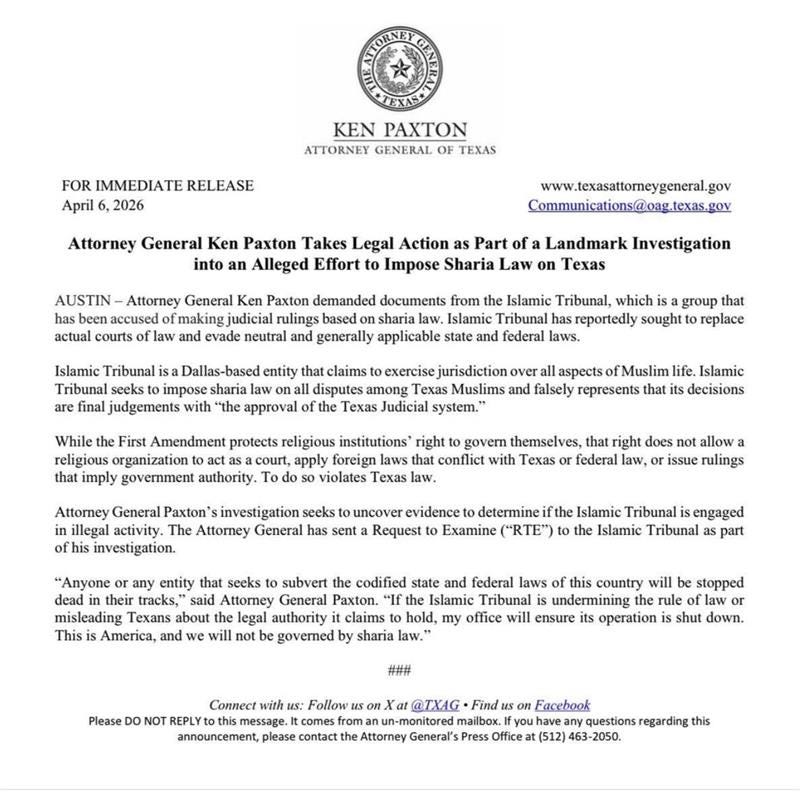
For many Muslims, then, the real significance of this development is not only what happens to one Dallas tribunal. It is whether Texas officials can separate a legal inquiry from a wider public narrative that many in the community already see as escalating and hostile.