


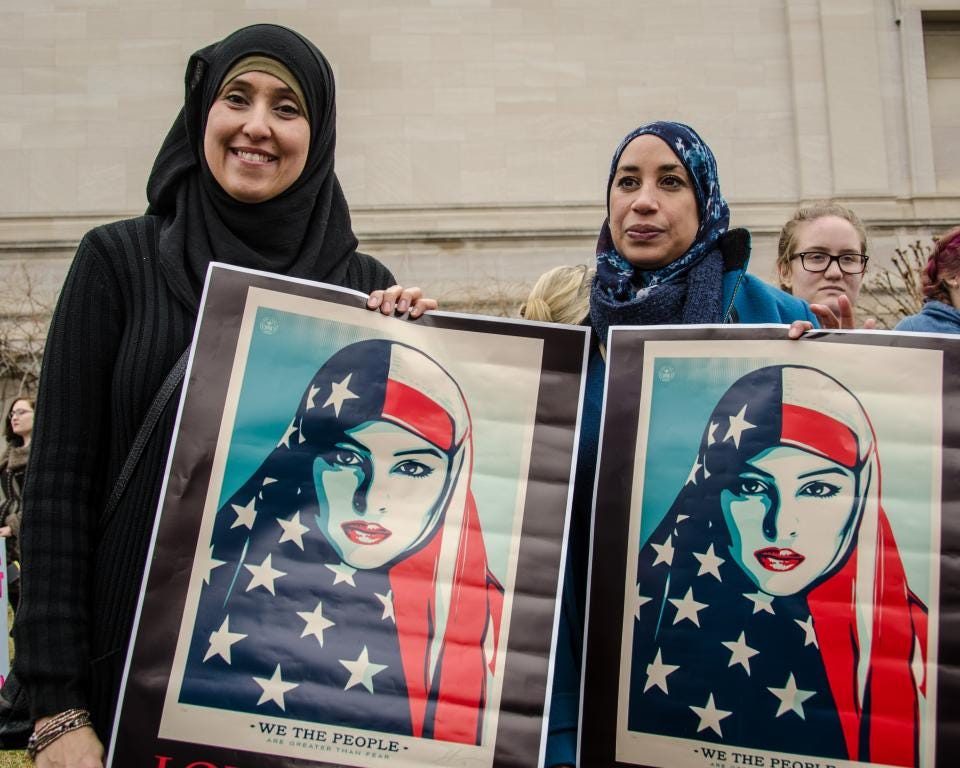
A new national survey led by University of Maryland scholar Shibley Telhami finds that 65% of Americans now hold a favorable view of Muslims, while 85% view Jews positively, highlighting both improved attitudes toward religious minorities and a persistent partisan divide over Islam in the United States, according to an analysis published by Middle East expert Juan Cole on his site Informed Comment. The poll, conducted by the University of Maryland’s Critical Issues Poll team in 2024–2025, tracks changes in public opinion over a decade and examines how events such as the October 7, 2023, Hamas attack and the Gaza war have shaped perceptions of Jews, Muslims, and related issues like antisemitism and Islamophobia.
Shifting Views on Muslims Since 2015
According to Cole’s summary of Telhami’s data, favorability toward “Muslim people” in the U.S. rose from 46% in 2015 to a peak of 78% in 2021, then fell to 67% in January 2024 and stabilized at 65% in 2025. Favorable views of Islam as a religion also increased over the decade, from 37% in 2015 to 57% by 2021, even as many respondents reported limited direct knowledge of the faith. Telhami’s Critical Issues Poll report notes that opposition to a hypothetical Muslim presidential candidate remains more than twice as high as opposition to a Jewish or Christian candidate, indicating underlying reservations despite overall positive trends.
“Most Americans don’t know any Muslims, and so they let very particular news stories influence how they see them,” Cole wrote, citing the poll’s finding that Americans who personally know a Muslim tend to have more favorable views of both Muslims and Islam.
Strong Partisan Split on Islam and Muslims
The poll reveals a pronounced partisan gap in attitudes toward Muslims. In 2025, 82% of Democrats expressed a favorable view of Muslims, compared with 43% of Republicans, down sharply from 71% among Republicans in 2021, according to Cole’s reading of Telhami’s data. The analysis also reports that Republicans who regularly watch Fox News are among the most likely to hold negative views of Muslims, while Americans who rely heavily on social media for news tend to express more positive views. These findings mirror earlier work by Telhami and colleagues documenting how media consumption patterns correlate with attitudes toward Muslims, Jews, and U.S. policy in the Middle East.
The Critical Issues Poll further notes that, even amid the Gaza war, majorities in both parties continue to distinguish between religious communities and political entities, with Americans viewing Muslims and Jews more favorably than they view Hamas, the Israeli government, or other political actors. A separate Pew Research Center survey in early 2024 similarly found that 44% of U.S. adults say there is “a lot” of discrimination against Muslims and 40% say the same about Jews, perceptions that rose after the Israel–Hamas war began.
High Favorability for Jews, Nuanced Views on Antisemitism
Cole reports that 85% of Americans in the 2025 survey hold a favorable view of Jews, and 76% view Judaism positively, with college-educated respondents even more favorable on average. The poll also explores how Americans define antisemitism: 73% say “attitudes against Jews” are antisemitic. In comparison, 55% say negative attitudes toward Judaism as a religion qualify as antisemitic, leaving substantial minorities who do not equate religious criticism with antisemitism. Only a minority of respondents believe that negative views of Zionism or criticism of Israeli government policies are inherently antisemitic, with 21% of Democrats and 39% of Republicans saying attitudes against Zionism are antisemitic, and similar or lower shares saying that criticism of Israeli policies meets that definition.
A recent data overview from Rice University’s Boniuk Institute found that, after October 7, 2023, 75% of Jewish respondents and 56% of Muslim respondents reported experiencing religious bias or hostility, even as the broader public maintained generally favorable views toward both groups. Lead author Elaine Howard Ecklund said the data suggest Americans “demonstrate more sympathy towards religious identities when compared to national identities and political entities,” underscoring the distinction many respondents draw between faith communities and governments.
Islamophobia Concerns and Future Research
Cole writes that the poll “knocks down” claims of an epidemic of antisemitism in the United States while underscoring what he describes as a “crisis of Islamophobia,” particularly among Republicans and frequent consumers of conservative media, based on Telhami and Hamner’s data. At the same time, the University of Maryland report documents rising perceptions of prejudice against both Jews and Muslims between 2022 and 2025, with perceived prejudice toward Jewish Americans increasing from 46% to 54% and toward Muslim Americans from 57% to 61% in that period. The Institute for Social Policy and Understanding’s forthcoming “American Muslim Poll 2025” is expected to add further detail on how American Muslims themselves assess discrimination, civic engagement, and interfaith relations in the current climate.
Researchers say continued tracking of public attitudes will be critical as U.S. politics, global conflicts, and media narratives evolve. Telhami’s team notes that surveys planned for 2026 will further examine how exposure to events in Gaza, rising campus tensions, and domestic political rhetoric influence Americans’ views of religious minorities, as well as support for policy responses to antisemitism and Islamophobia.