

MLFA Legal Director Says Texas Deportation Case Shows How the U.S. System Treats Muslim Leaders

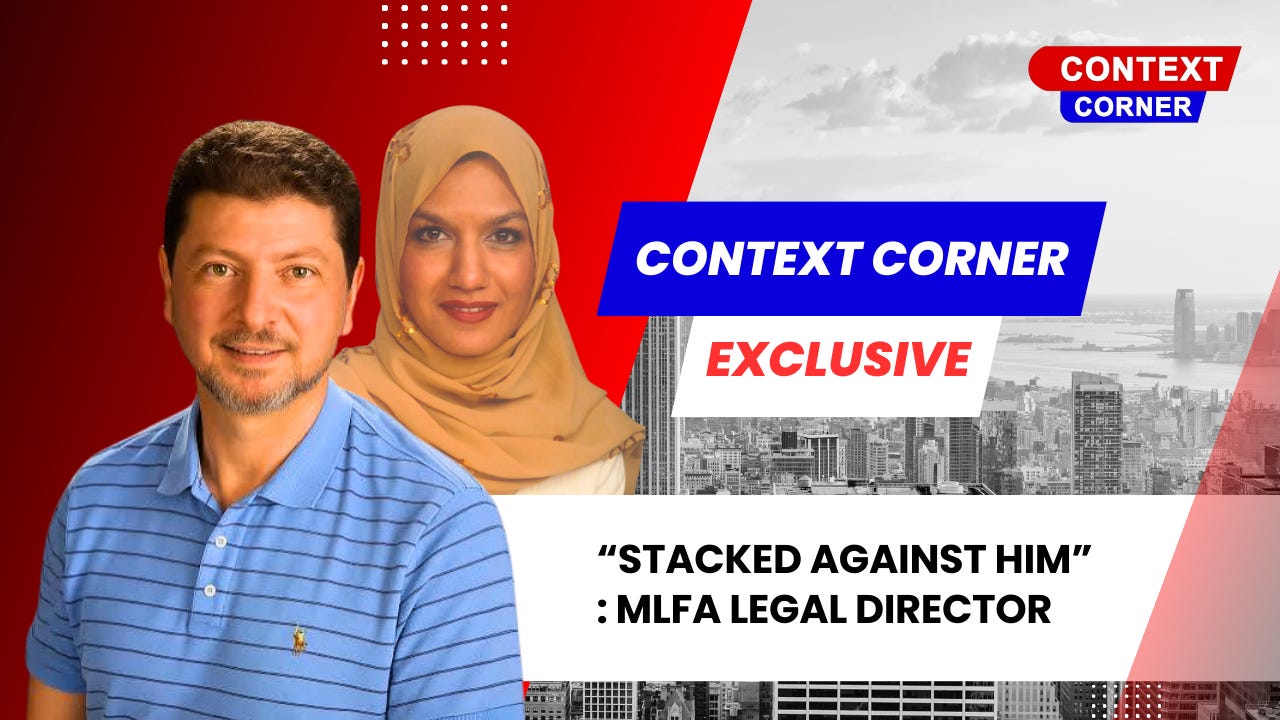
A Dallas-area Muslim community leader, Marwan Marouf, has been ordered deported to Jordan after a Texas immigration judge upheld allegations that he lacked valid travel documents and provided “material support” to terrorism, according to an exclusive interview with Muslim Legal Fund of America (MLFA) Legal Director Marium S. Uddin. Marouf was detained by U.S. Immigration and Customs Enforcement (ICE) on September 22, 2025, after his second green card application was denied, and he has since remained in ICE custody at a detention facility four hours west of Dallas while removal arrangements proceed. Uddin says the case illustrates how shifting charges, security labels, and new policy memos can combine to keep long‑time residents in detention and cut off meaningful forms of relief.
From Visa Overstay to Terrorism Allegation
In the interview, Uddin explains that Marouf first came to the United States about 35 years ago as a student, later held lawful work status, and in 2010 applied for a green card through his eldest U.S.-citizen son. After U.S. Citizenship and Immigration Services (USCIS) issued a 2014 denial referencing his volunteer work with the Holy Land Foundation (HLF), he reapplied in 2020; on September 22, 2025, while driving his youngest son to high school, ICE agents stopped him, handed him a new denial that closely mirrored the 2014 reasoning, and immediately took him into immigration custody.
Initially, ICE charged Marouf with visa overstaying. Still, within two to three weeks, the government dropped that allegation and substituted a claim that he had reentered the United States in 2011 without a valid visa or travel document, a change that, according to Uddin, helped strip the immigration judge of authority to grant bond under recent internal memos and Board of Immigration Appeals decisions. “The immigration judge simply washed his hands of the case by saying, ‘I’m not going to be allowed to consider whether or not to give Marwan a bond,’” she told, adding that this ensured “protracted custody” while the case moved forward.
Holy Land Foundation Links at Center of “Material Support” Charge
As the case progressed, government attorneys added a separate “material support for terrorism” charge, citing Marouf’s volunteer role in the HLF children’s program decades earlier and a modest family donation of about 65 dollars made during Ramadan, when Muslim charitable giving typically spikes. The allegation also drew on a family tie: Marouf’s wife’s sister is married to Ghassan Elashi, one of five HLF leaders convicted in a high‑profile federal prosecution that critics, including Human Rights Watch and other observers, have described as relying on secret intelligence witnesses and raising serious due‑process concerns.
Uddin says there is no evidence that Marouf ever took part in operational decisions or any violent or unlawful activity, describing the government’s approach as “stacking injustice upon injustice” by retroactively criminalizing charitable activity carried out when HLF was a registered U.S. nonprofit. In the November 20, 2025, merits hearing, however, the immigration judge sustained the terrorism-related charge, found Marouf ineligible for bond or voluntary departure, and ordered him removed to Jordan, effectively closing off the path to permanent residency he had pursued for more than a decade.
Health Risks and the Cost of Prolonged Detention
Beyond the legal issues, Uddin emphasizes that Marouf lives with Brugada syndrome. This life‑threatening cardiac condition previously caused a cardiac arrest and requires specialized monitoring of his pacemaker and leads. She says that detention has meant “built‑in delays” in accessing licensed physicians, limited treatment options, and the psychological strain of confinement far from family, all of which, in her view, raised unacceptable risks if appeals kept him in custody for months while the Board of Immigration Appeals reviewed the case.
Texas state representative Salman Bhojani and other public officials privately or publicly backed a humanitarian parole request, arguing that Marouf’s health and longstanding community record made him an ideal candidate for release. Still, Uddin says ICE’s congressional liaison operations temporarily shut down during a federal government funding standoff, leaving advocacy letters and requests unanswered. She describes the failure to act on the medical information as “a stain on our moral conscience,” noting that many detainees with severe conditions face similar obstacles in accessing care.
A Quiet Community Figure in a Harsh Climate
Marium S. Uddin portrays Marouf as a soft‑spoken, “beloved” figure known for mentoring youth, leading Boy Scout activities, volunteering with organizations such as the Red Cross, and supporting local mosques, rather than as a street protest leader or a prominent political activist. That profile, she argues, makes his detention striking in a broader context where some high‑visibility pro‑Palestine advocates have also faced immigration enforcement, including cases she has handled involving British commentator Sami Hamdi and Dallas‑area photojournalist Yaqub Aira, who ICE detained despite holding Deferred Action for Childhood Arrivals (DACA) status.
Her concerns echo broader data showing a deteriorating environment for Muslim communities in the United States. The Council on American-Islamic Relations (CAIR) reported 8,658 complaints of anti‑Muslim and anti‑Arab incidents in 2024, a 7.4 percent increase over 2023 and the highest figure since the organization began tracking such cases in 1996, according to CAIR’s 2025 Civil Rights Report and related coverage by USA Today and Al Jazeera. CAIR also documented at least 40 attacks or threats targeting mosques that year, underscoring what the group calls an “all‑time high” in Islamophobia across the country.
No Appeal, and a Departure on the Horizon
At the close of the November 20 hearing, Marouf’s legal team chose not to reserve appeal rights, a decision Uddin attributes to the likely two‑to‑six‑month delay before a Board of Immigration Appeals ruling and the impact that extended detention could have on his fragile health. She says that while a federal court challenge might, in theory, have offered a broader range of outcomes, “whatever it was that would need to have taken place for us to secure either release or relief would have necessitated…protracted custody,” which he and his lawyers judged too dangerous.
According to Uddin, Department of Homeland Security attorneys agreed in court to coordinate with ICE for a roughly two‑week window to arrange his departure to Jordan, a timeframe designed to limit further time in detention. As community supporters continue rallies and advocacy campaigns documented on social media and local platforms, civil rights groups point to Marouf’s case as a lens on how counterterrorism frameworks, immigration law, and a climate of rising anti‑Muslim sentiment can intersect in ways that profoundly shape the lives of long‑settled Muslim residents in the United States.