

Texas Leaders Sharply Divided Over Venezuela Military Strike as Partisan Rift Widens on Foreign Policy

Texas political leaders split sharply along party lines following the U.S. military’s unprecedented strike on Venezuela that resulted in the capture of President Nicolás Maduro on January 3, 2026, with Republicans praising President Trump’s decisive action while Democrats condemned the operation as unconstitutional and conducted without congressional authorization. The divergent reactions underscore deepening partisan divisions over executive war powers and military intervention in a state home to the nation’s second-largest Venezuelan immigrant population.
Republican Leaders Applaud “America First” Strike
Senator Ted Cruz emerged as one of the first Texas officials to publicly support the operation, issuing a statement Saturday morning that framed Maduro’s removal as essential to American security. “Maduro facilitated, enabled, and profited from flooding the United States with drugs that injured and killed hundreds of thousands of Americans,” Cruz stated, according to FOX 4 News. “Removing him from power will save countless lives and serve as a warning to all others targeting Americans,” he added, applauding Trump for his leadership and expressing gratitude to servicemembers who executed the operation.
Senator John Cornyn echoed Cruz’s sentiments, characterizing Maduro as more than merely an illegitimate president. “Maduro was not only an illegitimate President of Venezuela, but he was also the head of the Cartel de los Soles, a major drug trafficking network involving high-ranking Venezuelan military officers and government officials,” Cornyn said in a written statement reported by KUT.
“I applaud President Trump for his leadership, and I am deeply grateful to our servicemembers for their execution of this operation.” — Senator Ted Cruz.
Democrats Denounce Unilateral Military Action
Texas Democrats uniformly criticized Trump for bypassing congressional authorization, raising constitutional concerns about executive overreach. Democratic Congresswoman Sylvia Garcia, representing Houston, sharply rebuked the president in a statement reported by ABC13. “I strongly oppose Nicolas Maduro’s illegitimate government. But President Trump ordered military force in Venezuela without Congressional approval,” Garcia stated.
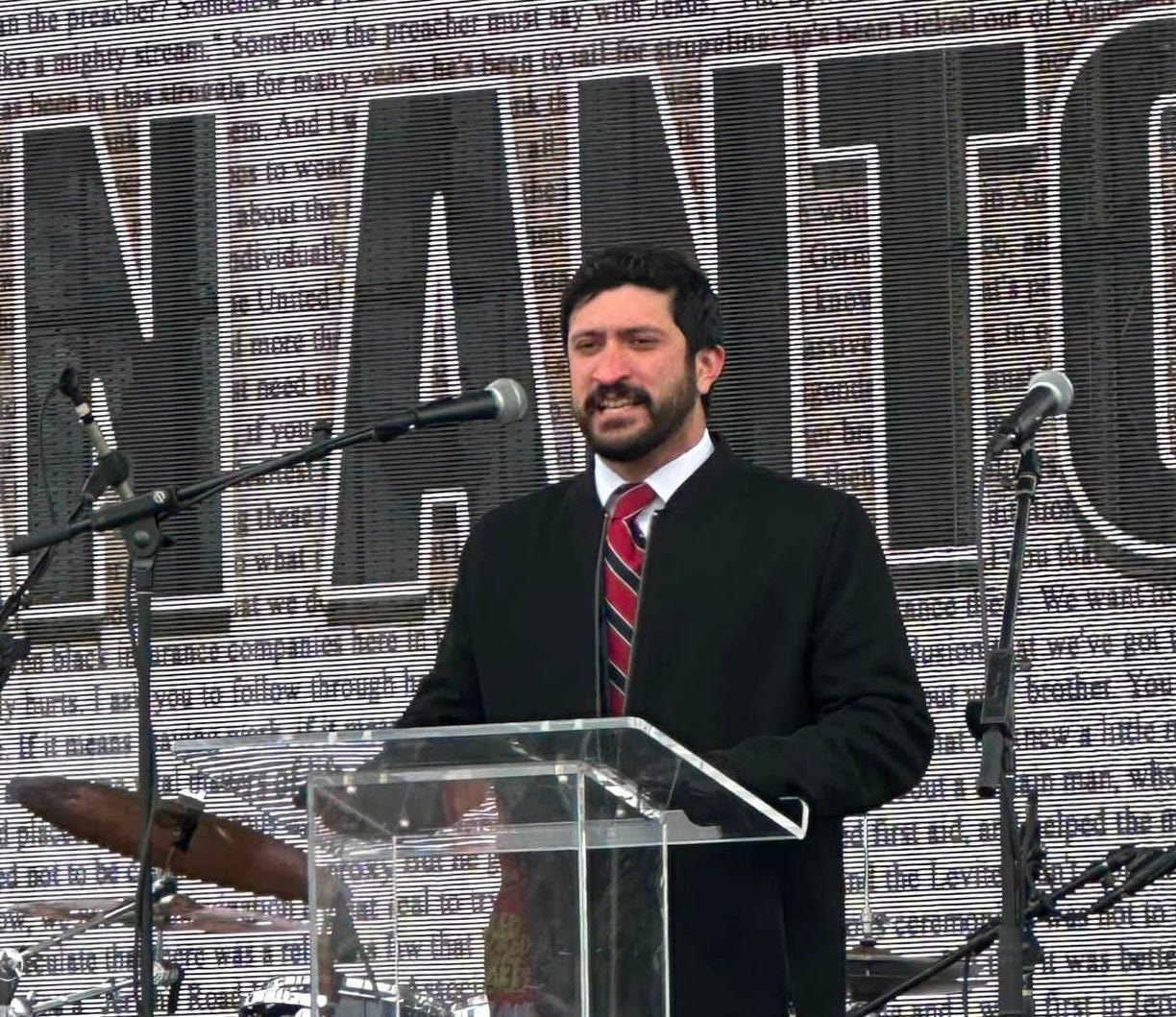
Representative Greg Casar went further, declaring the operation both “reckless and illegal”. “Trump has no right to take us to war with Venezuela,” Casar said, according to KSAT. “Congress should vote immediately on a War Powers Resolution to stop him,” he added.
San Antonio Mayor Gina Ortiz Jones expressed alarm over the absence of congressional notification and questioned the administration’s decision-making process. “The capture of Venezuelan President Nicolas Maduro and the declaration that the U.S. is now going to ‘run’ Venezuela, all absent Congressional notification and sufficient justification of vital national security interests at risk, raise serious concerns about how decisions affecting U.S. national security are being made,” Jones stated, according to KSAT.
Split Response Reflects Broader Constitutional Debate
Representative Marc Veasey, a Dallas-area Democrat, attempted to bridge the partisan divide by acknowledging Maduro’s brutality while condemning Trump’s unilateral approach. “Nicolás Maduro is a brutal dictator whose regime has terrorized the Venezuelan people for years. His corruption, violence, and repression have inflicted immense suffering, and he must be held accountable,” Veasey stated, according to FOX 4 News. “But President Trump does not have the authority to launch military action without congressional authorization unilaterally. Yet once again, Donald Trump chose to sidestep Congress entirely,” he added.
State Representative James Talarico, currently running for Cornyn’s Senate seat, characterized the operation as part of a “deeply corrupt” arrangement. Talarico suggested the military action served the interests of American oil executives rather than genuine national security concerns, according to FOX 4 News.
“Early this morning, President Trump escalated an unconstitutional war. Without the approval of, consultation with, or even notice to Congress, the Trump Administration invaded Venezuela and ousted Nicolás Maduro.” — State Representative James Talarico.
The Operation and Its Aftermath
U.S. forces carried out what Trump called a “large-scale strike against Venezuela” in the early morning hours of January 3, with explosions reported across Caracas and surrounding areas as Delta Force operatives seized Maduro and his wife, Cilia Flores, from the Fort Tiuna military compound. Trump announced on social media that Maduro had been “captured and flown out of the Country,” though the White House did not immediately respond to questions about their location.
According to The Associated Press, the Armed Services committees in Congress were not formally notified before the operation, a person familiar with the matter said. The legal authority for the strike and whether Trump consulted Congress beforehand were not immediately known, FOX 4 News reported. CBS News, citing U.S. officials, reported that more than 150 U.S. aircraft participated in bombing infrastructure across northern Venezuela.
At a news conference Saturday, Trump declared the U.S. would “run” Venezuela and that American companies would take over the country’s oil infrastructure. These claims intensified Democratic concerns about his true motives. “We’re going to run Venezuela,” Trump stated, though there were no immediate signs that the U.S. was actually governing the country, according to FOX 4 News.
Texas Stakes in Venezuelan Crisis
The debate holds particular significance for Texas, which has the second-largest population of Venezuelan immigrants in the United States, behind only Florida. Houston alone is home to more than 50,000 Venezuelan migrants, many of whom fled Maduro’s authoritarian rule and economic collapse.
The military action occurred after months of escalating U.S. pressure, including naval deployments, oil tanker seizures, and strikes on vessels linked to drug trafficking networks. In mid-December, Trump wrote on Truth Social that Venezuela was “surrounded by the largest Armada ever assembled in the History of South America”.
What Lies Ahead for U.S.-Venezuela Relations
As Texas leaders continue debating the operation’s legitimacy, questions remain about Venezuela’s political future and whether Congress will move to restrict Trump’s military authority in the region. A bipartisan coalition led by Senators Tim Kaine, Adam Schiff, and Rand Paul introduced a resolution in October 2025 requiring congressional authorization for military actions within Venezuela, though it faced significant Republican resistance, The New York Times reported.
Venezuelan Vice President Delcy Rodríguez, sworn in as interim president following Maduro’s capture, condemned the operation as an “illegal and illegitimate kidnapping” and called for Maduro’s immediate release. Regional allies, including Colombia, Cuba, Russia, and Iran, denounced the strikes as violations of Venezuelan sovereignty and international law.
The coming weeks will test whether Congress asserts its constitutional war powers authority or allows Trump to proceed with what he has framed as necessary action against narcoterrorism and drug trafficking. For Texas leaders, the divide reflects not only partisan loyalty but fundamental disagreements about executive power, military intervention, and America’s role in Latin America.