

Texas students tell education board: Put inclusion over politics in social studies rewrite
Testifying in Austin, students urged Texas’ State Board of Education to slow the process and teach a fuller history beyond Western-centric narratives.

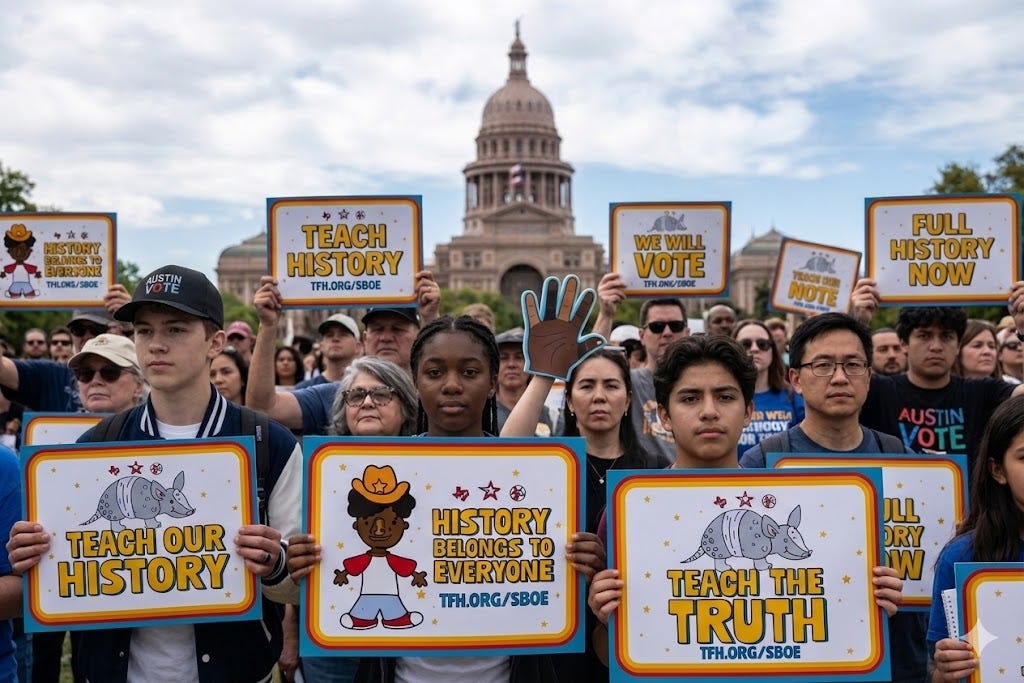
Students joined parents, teachers and activists this week to push back on proposed revisions to Texas’ social studies standards, warning the state’s plan is moving too fast and could narrow what young Texans learn about the world and about each other.
During the first of four days of State Board of Education meetings on Tuesday, students testified in support of instruction that includes diverse perspectives and asks them to think critically, not simply memorise dates and names, according to The Texas Tribune.
The majority-Republican board began redesigning the standards last year and is expected to finalize them this summer, with classroom implementation slated for 2030.
So far, board members have backed a shift that centers Texas and U.S. history while deemphasizing world cultures, world history and geography. Critics also object to the outsized role of a nine-member advisory panel — most without Texas K-12 classroom experience and some with ties to conservative activism — arguing that early drafts elevate rote memorization and oversimplify complex events.
Students told the board the overhaul leans too heavily on Western civilization, gives inadequate attention to the histories of people of color and women, and places Christianity above other major world religions. Several said they want lessons that confront the “good, bad and ugly” of the past — and they want more time and more public input before the board votes.
“We know when something is being left out,” said Caiden Davis, a high school junior from Humble. “What we need from our schools isn’t a watered-down version of history. We need the truth even when it’s uncomfortable, even when it challenges us.”
“We know when something is being left out,” said Caiden Davis, a high school junior from Humble. “What we need from our schools isn’t a watered-down version of history. We need the truth even when it’s uncomfortable, even when it challenges us.”
Houston student Zayra Espinoza urged the board to avoid omission and instead “focus on supporting teachers, investing in students and ensuring classrooms remain spaces for learning, not political control.”
Sixth-grader Jomeyra Sharif said students need to see themselves in the curriculum because “everyone deserves to be represented.” “Schools should do more to promote equality, respect different cultures, and making all students feel included,” she said, “so they can be proud to be American.”
The board is set to finalize the standards in June, and meetings have grown more contentious as the deadline approaches.
Democrats on and around the board have pushed for frank depictions of slavery and the contributions of people of color, while many Republicans have argued for emphasizing American exceptionalism and Christianity. Teachers have also criticized early drafts as rushed and said political actors are crowding out classroom expertise.
Students asked for more coverage of women, Hispanic and Black histories, as well as topics often treated as peripheral — from African kingdoms to the Middle East — and for standards that leave room for discussion and debate.
Seventh-grader Gannon Davis Keener, also from Humble, warned that when students are asked only to identify and describe events, “that means less analyzing, less questioning, and less discussion.”
“I want to learn history in a way that challenges me to think, not just remember,” Keener said. “I respectfully ask that you slow down and allow teachers and parents a greater role in revising these standards.”