


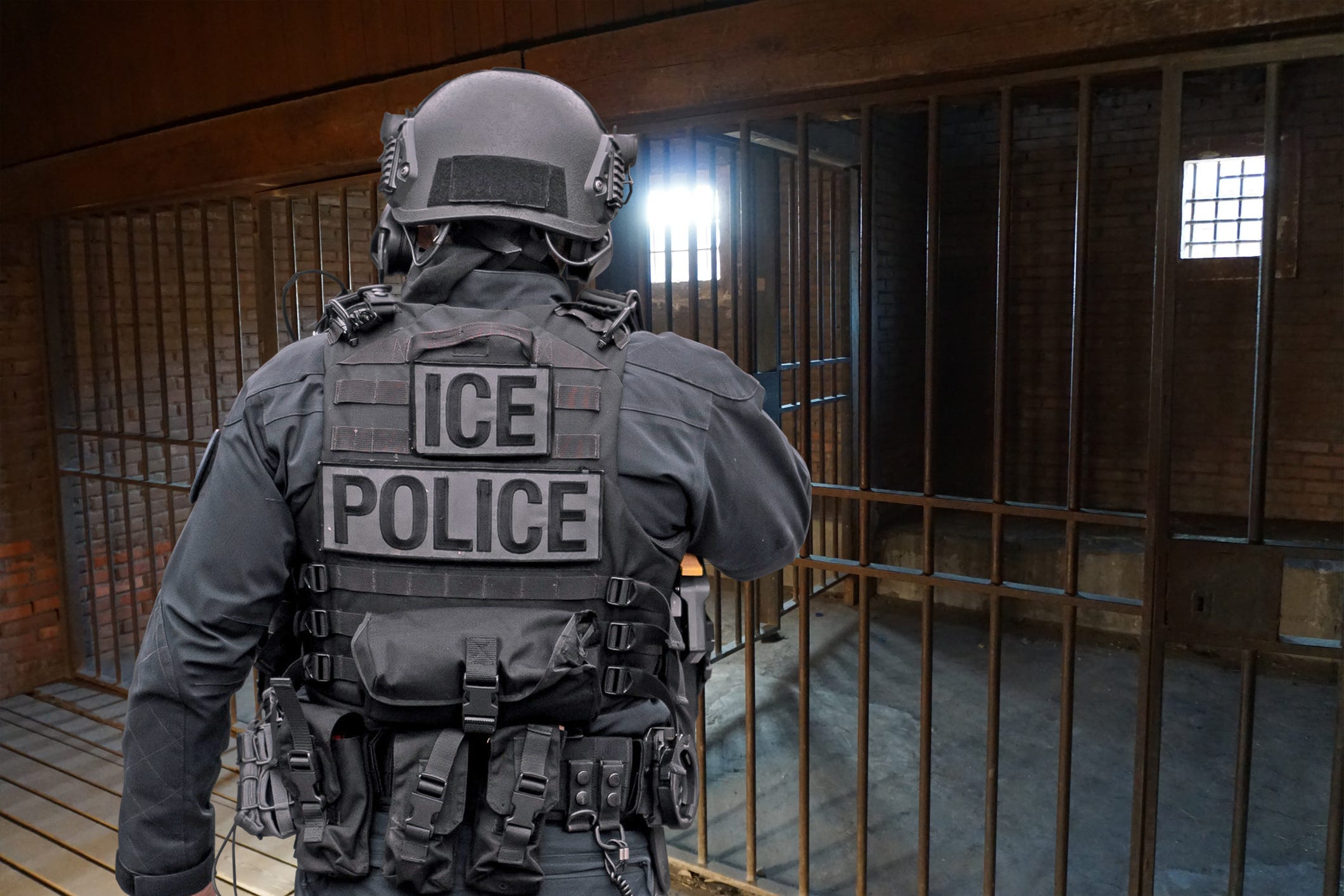
The Trump administration is moving forward with plans to detain more than 80,000 immigrants simultaneously in seven extensive warehouse facilities as part of an unprecedented expansion of the nation’s immigration detention system, according to internal Immigration and Customs Enforcement documents obtained by The Washington Post.
Warehouse Network to Streamline Deportations
Internal ICE documents reveal a draft solicitation seeking contractors to help overhaul the detention system by establishing what officials describe as a “deliberate feeder system,” according to The Washington Post. Under the plan, newly arrested immigrants would be processed at intake sites for several weeks before being transferred to one of seven large-scale warehouses holding between 5,000 and 10,000 people each, where they would await deportation.
The planned warehouse facilities would be located in Louisiana, Virginia, Texas, Arizona, Georgia, and Missouri, with most situated in Republican-led jurisdictions supportive of President Trump’s immigration policies, The Washington Post reported. Two of the most extensive facilities are planned for Stafford, Virginia, and Kansas City, Missouri—both areas with Democratic local governments.
Unprecedented Detention Expansion
The warehouse initiative represents the latest phase of a broader detention expansion following Congress’s approval of $45 billion in funding through Trump’s “One Big Beautiful Bill Act” signed into law in July 2025. That legislation allocated $70 billion for detention centers and an additional $110 billion for immigration law enforcement and expanding detention capacity.
“Eight months after the acting director of US Immigration and Customs Enforcement said at a border security conference that the Trump administration aims to carry out its mass deportation operation with the same efficiency as Amazon’s package deliveries, a draft document from ICE officials on Wednesday provided never-before-seen details of how the agency plans to do that using massive warehouses,” Truthout reported.
Bloomberg reported in December that ICE had moved forward with plans to dramatically expand detention capacity, potentially using up to two dozen warehouse “mega centers” across the country. The news outlet noted that initial plans included temporary tent structures, but the rollout had been slow, and allegations of poor conditions plagued existing sites.
Doubling Detention Capacity
When President Trump assumed office in January 2025, the United States already operated the world’s most extensive immigrant detention system with a capacity for nearly 50,000 individuals, according to The Washington Post. Internal ICE planning documents from July revealed strategies to double that capacity to more than 107,000 beds by establishing or enlarging 125 facilities within the year.
As of late June, ICE held a record 57,861 detainees despite only 41,500 beds officially allocated by Congress, leading to overcrowded conditions at many federal facilities, according to Reason magazine. The Brennan Center for Justice reported that the budget bill funds expansion to potentially double immigrant detention capacity from approximately 56,000 to more than 100,000 detention beds.
Private Prison Companies Benefit
The massive expansion benefits private prison contractors significantly. GEO Group, ICE’s largest contractor, is set to receive at least nine new or revised detention contracts with a total projected value exceeding $500 million annually, according to The Washington Post. Core Civic, another major operator, is expected to secure at least 12 contracts, totaling over $500 million annually.
Nearly 90 percent of people in ICE custody are currently held in facilities run by for-profit firms, according to the Brennan Center. Both companies were significant financial supporters of Republican congressional candidates and Trump’s campaign.
Enforcement Surge Drives Expansion
The detention expansion comes amid a dramatic escalation in immigration enforcement. NBC News reported on December 7 that ICE has arrested nearly 75,000 people with no criminal records since January 20, 2025. The New York Times found that ICE agents have made an average of 824 arrests daily since Trump took office—more than double previous rates.
NPR reported that ICE is reopening shuttered prisons as detention centers, many with troubled histories of poor conditions. La Voce di New York noted that with a $170 billion investment in ICE and Customs and Border Protection through 2029, the White House aims to revolutionize the detention system.
Implementation Challenges Ahead
If the government leases warehouses in localities with Democratic leadership, facilities would need to comply with local zoning laws and building codes, Pamela Yeung, a supervisor on Stafford, Virginia’s board, told The Washington Post. The logistics of rapidly scaling detention infrastructure while maintaining adequate staffing and humanitarian standards remain significant challenges as the Trump administration pursues what it has pledged will be the largest mass deportation effort in American history.