


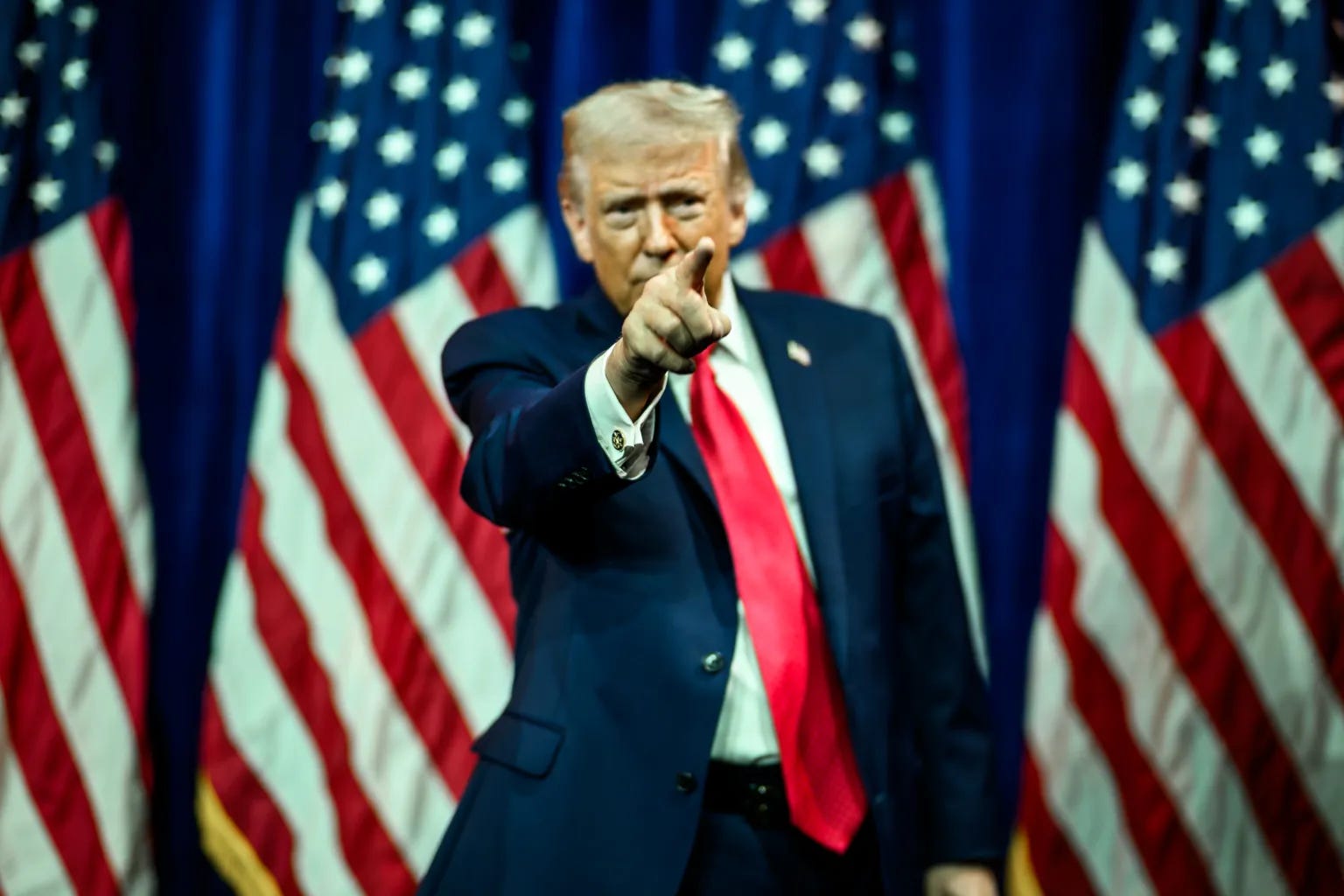
President Donald Trump has warned that the United States could conduct additional military strikes in Nigeria if violence against Christians persists, despite Nigerian government denials of systematic religious persecution. The warning came during an interview with The New York Times, published Thursday, January 8, 2026, following a controversial U.S. military operation on Christmas Day that targeted what Washington described as Islamic State militants in northwest Nigeria.
“One-Time Strike” or Beginning of Prolonged Campaign?
“I’d love to make it a one-time strike… But if they continue to kill Christians, it will be a many-time strike,” Trump told The New York Times, according to reports from CNBC. The statement signals a potential escalation in U.S. military involvement in Africa’s most populous nation, where more than 230 million people are roughly evenly divided between Christians in the south and Muslims in the north.
The Christmas Day operation, announced by Trump on Truth Social, involved what he described as “powerful and deadly strikes” against ISIS targets in northwestern Nigeria. U.S. Africa Command conducted the operation in coordination with Nigerian authorities, targeting what officials claimed were Islamic State camps in Sokoto state.
Muslims or Christians as Primary Victims?
Trump’s characterization of Christians as the primary targets of violence contradicts assessments from his own administration and independent analysts. When confronted with comments from his Africa adviser suggesting that Islamic State and Boko Haram militants kill more Muslims than Christians, Trump acknowledged Muslim casualties but insisted on a different narrative.
“I think that Muslims are also being killed in Nigeria. But it’s mostly Christians,” Trump stated, according to The New York Times interview.
However, experts dispute this framing. According to Democracy Now, organizations monitoring violence in the region report no evidence suggesting Christians are killed more than Muslims and other religious groups in Nigeria. Yinka Adegoke, Africa editor of Semafor, stated that “Nigeria has a very serious problem of insecurity that affects a wide range of Nigerians, especially those who live in the more remote parts of the country,” but noted that violence impacts “Muslims more so than Christians”.
Alarming Statistics and Contested Data
A report released December 30, 2025, by Release International painted a grim picture, claiming more than 7,000 Christians were killed in Nigeria during the first 220 days of 2025 alone. The Christian charity warned that without rapid intervention, Christian martyrdoms in Nigeria could double by 2026.
The Diocese of Kontagora reported that more than 40 people were killed in a January 3, 2026, attack in Kasuwan-Daji village in Niger State, with several children abducted. Attacks attributed to Fulani militants in Plateau and Benue states in June 2025 reportedly left more than 200 Christians dead and displaced thousands.
However, the BBC noted in November 2025 that “the alarming statistics regarding Christian fatalities cited by some in the U.S. are difficult to verify”. The complexity of Nigeria’s security crisis involves multiple actors, including Boko Haram, Islamic State West Africa Province, criminal syndicates, and conflicts between farmers and herders.
Nigeria Rejects “Religious Persecution” Narrative
Nigerian authorities have consistently rejected characterizations of the violence as religious persecution. Following Trump’s Christmas Day strikes, Nigeria’s information minister emphasized that the operation was targeting “terrorists” and stressed it had “nothing to do with a particular religion,” according to the attached file.
Nigeria’s Foreign Ministry acknowledged cooperation with the United States, including intelligence sharing, but officials maintain that extremist groups have killed both Muslims and Christians. They assert that violence is driven by terrorism and criminality rather than religious targeting.
The Nigerian government has said it is willing to cooperate with Washington in fighting militants but rejects language suggesting Christians are uniquely targeted.
Collateral Damage and Growing Concerns
The U.S. strikes raised concerns about civilian impact. Moromoke Saka, a Nigerian resident, told Democracy Now that her home was damaged during the airstrikes. “I could have been killed by now if the wall of the house that broke had collapsed on me. Praise to God Almighty, I survived,” she said.
Jennifer Kavanagh, director of military analysis at Defense Priorities, criticized the operation as “an unnecessary and unjustified use of U.S. military force that violates Mr. Trump’s promises to his supporters to put American interests first and avoid risky and wasteful military campaigns abroad”.
Political Motives and Evangelical Base
Analysts suggest Trump’s framing serves domestic political purposes. Adegoke noted that Trump’s religious framing “has more to do with U.S. culture wars and appeasing his base of evangelicals than seriously reckoning with issues of poverty and violence in Nigeria”. Trump began publicly warning in late October 2025 that Christianity faces an “existential threat” in Nigeria, threatening U.S. military intervention.
As Trump’s second term unfolds, his Nigeria policy reveals an increasingly interventionist approach toward Africa, framed through religious protection rhetoric. Whether this leads to sustained military engagement or remains limited strikes will depend on violence trends in Nigeria’s volatile northern regions—and how both governments interpret those developments through vastly different lenses.