


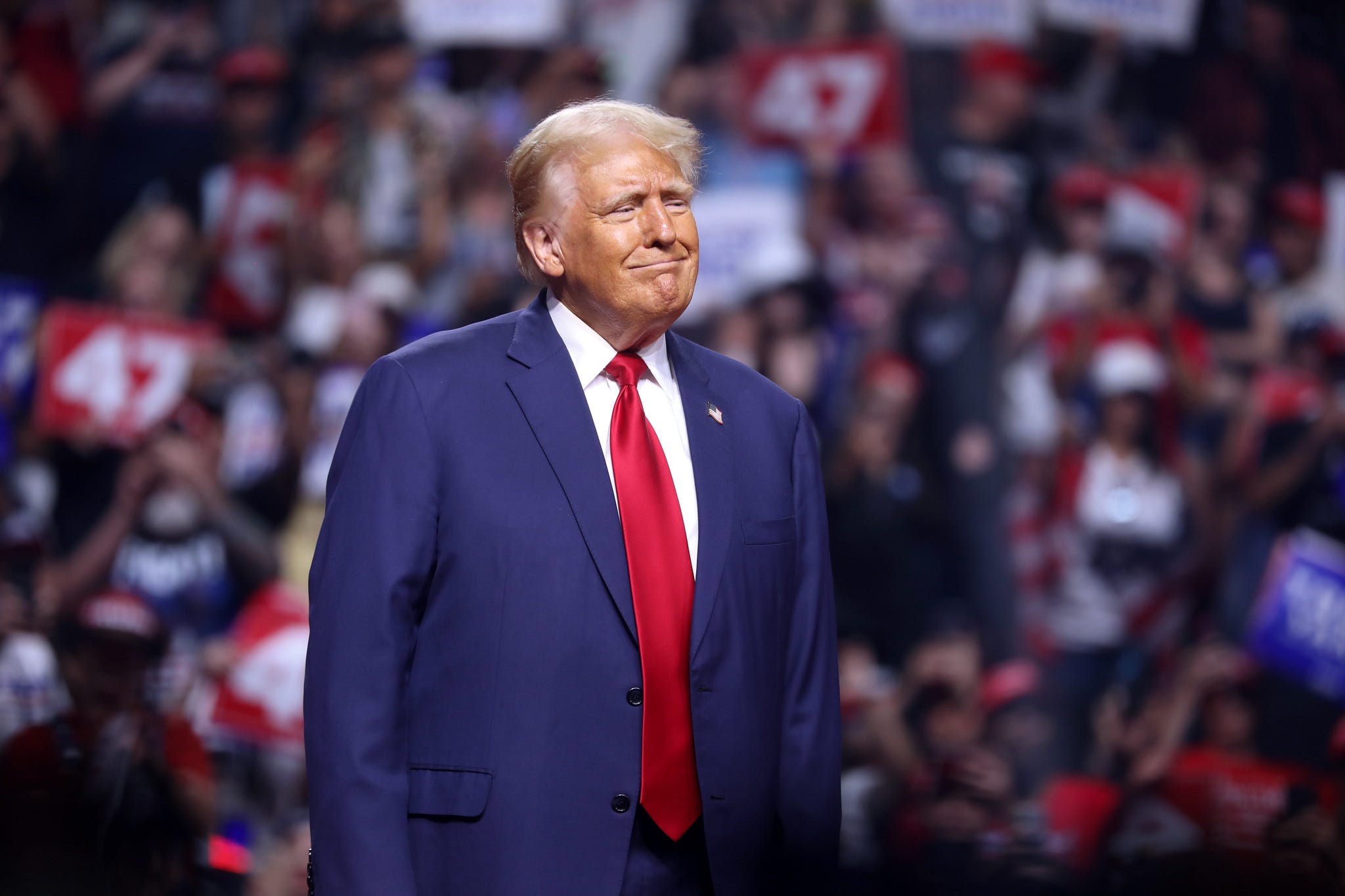
US President Donald Trump said he is not prepared, for now, to follow Israel in recognizing Somalia’s breakaway region of Somaliland as an independent state, telling the New York Post on Friday that Washington will instead “study” the issue after Israel’s surprise move to extend formal recognition earlier the same day. His comments came as Israeli Prime Minister Benjamin Netanyahu announced historic mutual recognition and full diplomatic relations with Somaliland, and pledged to raise the matter with Trump at a meeting scheduled for Monday at Mar-a-Lago, focusing on Gaza and the Abraham Accords framework.
White House Caution After Israel’s Historic Step
In his phone interview with the New York Post, Trump flatly rejected the idea of rushing toward US recognition of Somaliland, replying “No” when asked whether Washington would follow Israel’s lead, according to Asharq Al-Awsat and other outlets that cited the original interview. He added that “everything is under study” and remarked, “Does anyone know what Somaliland is, really?”, signaling both skepticism and a desire to keep options open.
Trump also appeared dismissive of Somaliland’s reported offer to provide the US access to a port on the Gulf of Aden, responding “Big deal” when asked about the strategic proposal, Anadolu Agency reported, citing the New York Post conversation. He said his upcoming talks with Netanyahu would prioritize arrangements for a Gaza ceasefire and reconstruction under a UN-backed framework rather than Somaliland’s diplomatic status.
“Everything is under study … We’ll study it. I study a lot of things and always make great decisions, and they turn out to be correct,” Trump told the New York Post, according to Anadolu Agency’s account of the interview.
Israel-Somaliland Recognition Fuels Regional Tensions
Israel on Friday became the first country to formally recognize Somaliland’s separation from Somalia, with Netanyahu and Somaliland President Abdirahman Mohamed Abdullahi signing a joint declaration of mutual recognition and full diplomatic relations, Israeli and international media reported. Netanyahu hailed the decision as “seminal and historic” and framed it as being in the “spirit of the Abraham Accords,” the Trump-brokered normalization agreements between Israel and several Arab states in 2020.
Abdullahi, also known as Abdirahman Cirro, called the recognition a “historic moment” and pledged that Somaliland would seek to join the Abraham Accords, positioning the move as a step toward regional and global peace and economic cooperation. Somaliland, which declared independence in 1991 and has a population of roughly 3–4 million people, has operated as a de facto state for more than three decades but has lacked formal recognition from UN member states until Israel’s announcement, according to background figures cited by the BBC and other outlets.
In a video call with Abdullahi, Netanyahu said the new partnership would boost “economic fields, agriculture and social development” and invited the Somaliland leader for an official visit, according to an Israeli government statement reported by the Times of Israel.
Arab and African Backlash to Recognition
Israel’s decision has triggered swift condemnation from Arab and African actors, who argue that recognition of Somaliland threatens Somalia’s territorial integrity and regional stability. Saudi Arabia, Egypt, Qatar, Kuwait, Iraq, Jordan, and Palestine all rejected the move as illegal and contrary to international law, Anadolu Agency reported. At the same time, Somalia’s federal government denounced it as a “calculated assault” on the country’s sovereignty and demanded that Israel reverse its position.
African regional organizations have also pushed back. The African Union and the Intergovernmental Authority on Development (IGAD) reiterated long-standing support for Somalia’s unity. They warned that accepting Somaliland’s secession could set a precedent for other separatist regions on the continent, according to statements summarized by NBC News and regional media.
Strategic Stakes in the Gulf of Aden
Analysts note that Somaliland’s reported offer of port access on the Gulf of Aden, one of the world’s busiest maritime corridors, gives the issue a strategic dimension that extends beyond symbolism. Control and access in this corridor are central to counterpiracy operations, Red Sea security, and trade routes linking Europe, Asia, and the Middle East, making any potential US basing or access agreement geopolitically significant, regional experts told various outlets.
At the same time, Trump’s focus on Gaza in his upcoming meeting with Netanyahu suggests that Somaliland will compete for attention with other high-priority files, including the ceasefire he brokered in October and a proposed reconstruction plan coordinated with the UN and regional partners. How Washington balances its ties with Somalia, its alliance with Israel, and its broader Red Sea strategy will likely shape whether the US eventually moves closer to or further away from recognizing Somaliland’s claims to statehood.
As regional backlash builds and diplomatic lobbying intensifies, Trump’s decision to “study” Somaliland’s case, rather than immediately endorse or reject Israel’s recognition, keeps the door open but underscores that US recognition—if it comes at all—may be a longer-term and more contentious process.