


President Donald Trump has intensified a controversial campaign against Somali immigrants, calling them “garbage” and declaring he does not want them in the United States. At the same time, federal immigration authorities have launched enforcement operations targeting undocumented Somalis in Minnesota’s Twin Cities. The remarks, delivered during a Cabinet meeting on Tuesday, December 2, 2025, have sparked outrage among civil rights groups and local officials who condemned the statements as racist and xenophobic, even as Immigration and Customs Enforcement (ICE) began operations in the Minneapolis-St. Paul area—home to the nation’s largest Somali population.
Presidential Rhetoric Escalates Against Somali Community
During a televised Cabinet meeting at the White House, Trump made explicit his opposition to Somali immigration, stating, “I don’t want them in our country, I’ll be honest with you,” adding that “their country is no good for a reason”. The president characterized Somalia as “barely a country” where people “run around killing each other” with “no structure,” while Vice President JD Vance reportedly struck the table in approval. Trump further claimed that accepting Somali immigrants would lead the United States “the wrong way if we keep taking garbage into our country,” dismissing concerns about political correctness.
The inflammatory rhetoric extended to personal attacks on Representative Ilhan Omar, a Minnesota Democrat and Somali-born congresswoman who arrived in the United States as a refugee at age 12. “She shouldn’t be allowed to be a Congresswoman, and I’m sure people are looking at that. She should be thrown out of our country,” Trump declared, mockingly suggesting she should “go back to your own country and figure out your own constitution”.
Federal Enforcement Operations Target Minneapolis-St. Paul
The Trump administration has directed ICE to conduct immigration enforcement operations specifically targeting undocumented Somali immigrants in the Minneapolis-St. The Paul metropolitan area, according to federal officials and documents obtained by The New York Times. Hundreds of individuals are expected to be affected when the operation, which began this week, unfolds in the Twin Cities. A senior law enforcement official told NBC News that while ICE officers are not specifically singling out Somali immigrants based on ethnicity, they may detain individuals suspected of violating immigration laws during the operation.
Minnesota’s Somali Population, A Thriving American Community
Minnesota is home to approximately 80,000 to 107,000 residents of Somali heritage, representing the largest Somali population in the United States. The Census Bureau’s American Community Survey estimates that nearly 84,000 Somalis reside in the Minneapolis-St. Paul region specifically, with the majority holding U.S. citizenship. Remarkably, nearly 58 percent of Somalis in Minnesota were born in the United States, while 87 percent of foreign-born Somali residents have become naturalized citizens.
The Somali community began establishing roots in Minnesota following Somalia’s devastating civil war that erupted in 1991, which forced 3.8 million people to flee their homeland. Many refugees were initially attracted to Minnesota for employment opportunities and the state’s supportive social services, settling primarily in the Twin Cities area, where they have built hundreds of businesses and contributed significantly to the local economy.
Temporary Protected Status Faces Termination
On November 21, 2025, Trump announced his intention to terminate Temporary Protected Status (TPS) for Somalia, a program that has provided emergency refuge for individuals from nations in crisis since 1991. Approximately 705 Somalis are currently enrolled in the TPS program, which was initially granted due to Somalia’s civil war, governmental collapse, and widespread violence. The termination follows a pattern of the Trump administration ending TPS designations for multiple countries, including Afghanistan, Cameroon, and Syria.
Representative Omar condemned the TPS termination announcement, stating, “All of these people we are talking about have lives. They own homes, they own businesses, they are a vibrant part of our communities, and we are going to make sure their new home stays their home”.
Local Leaders Respond With Defiance and Support
Minneapolis Mayor Jacob Frey expressed solidarity with the Somali community during a press conference, declaring, “To the Somali community, we love you, and we are with you. Minneapolis is proud to be home to the largest Somali population in the entire country”. Both Frey and St. Paul Mayor Melvin Carter emphasized that their police departments would not participate in federal immigration enforcement actions and highlighted legal resources available for immigrants.
Trump responded to Frey’s support by calling him a “fool” during an Oval Office appearance on Wednesday, claiming that “these Somalians have taken billions of dollars out of our country” and accusing the community of “destroying” Minnesota. Jamal Osman, a Minneapolis City Council member and Somali immigrant, reassured fearful families that “the city of Minneapolis stands behind you,” noting that while the community has “lived in fear in the past, we are not going to let that divide us”.
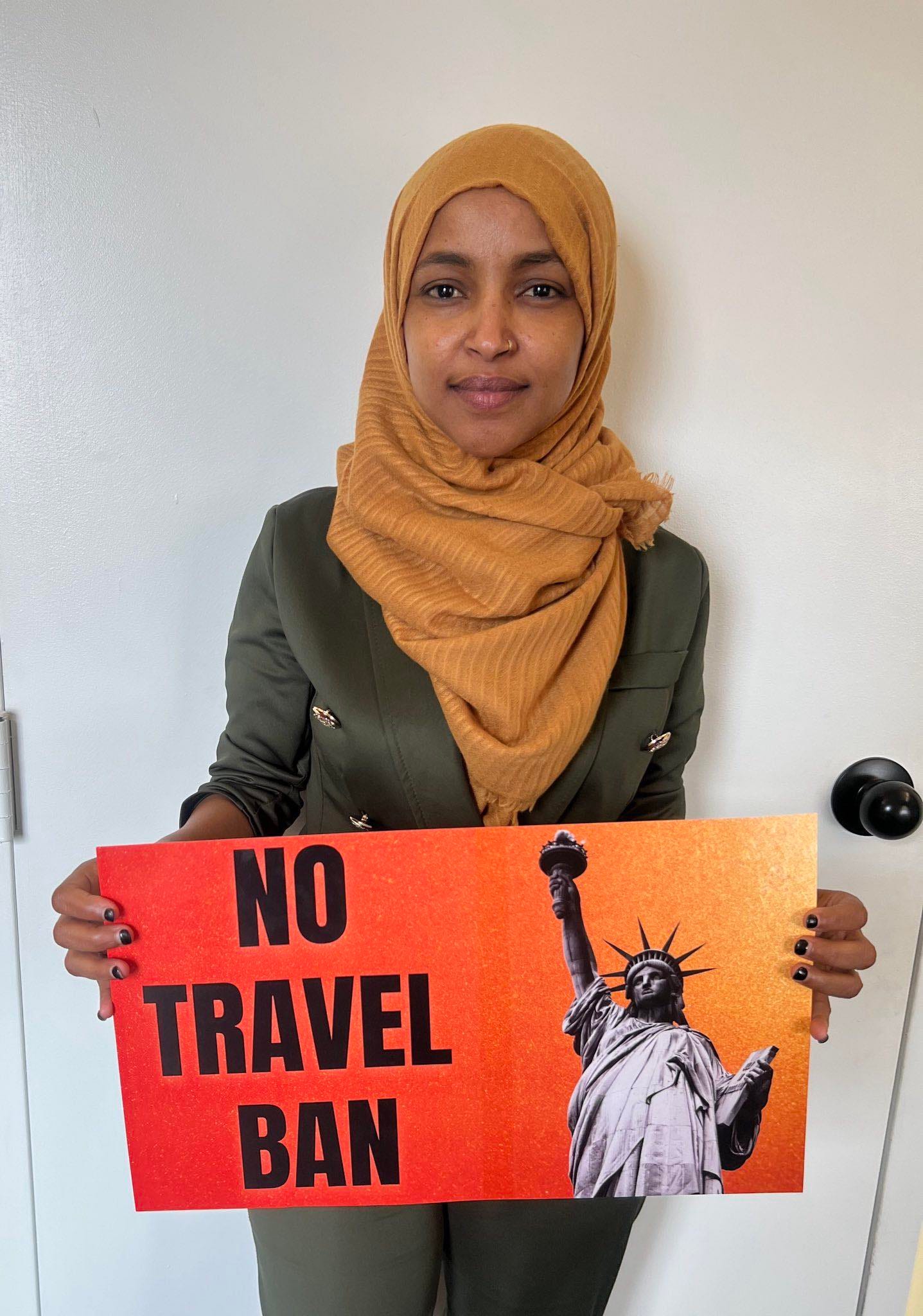
The targeting of Somali immigrants coincides with Trump’s expanded travel ban affecting 19 countries, which took effect on June 9, 2025. The proclamation entirely prohibits entry for nationals of 12 countries, including Somalia, citing “deficiencies in screening and vetting processes.” Civil rights organizations led by the Council on American-Islamic Relations Los Angeles (CAIR-LA) staged major protests at Los Angeles International Airport, with Executive Director Hussam Ayloush condemning the policy as “a cruel attack on immigrants and their families” that scapegoats “entire countries, regions, and communities based on their religious, racial, or national identity”.