


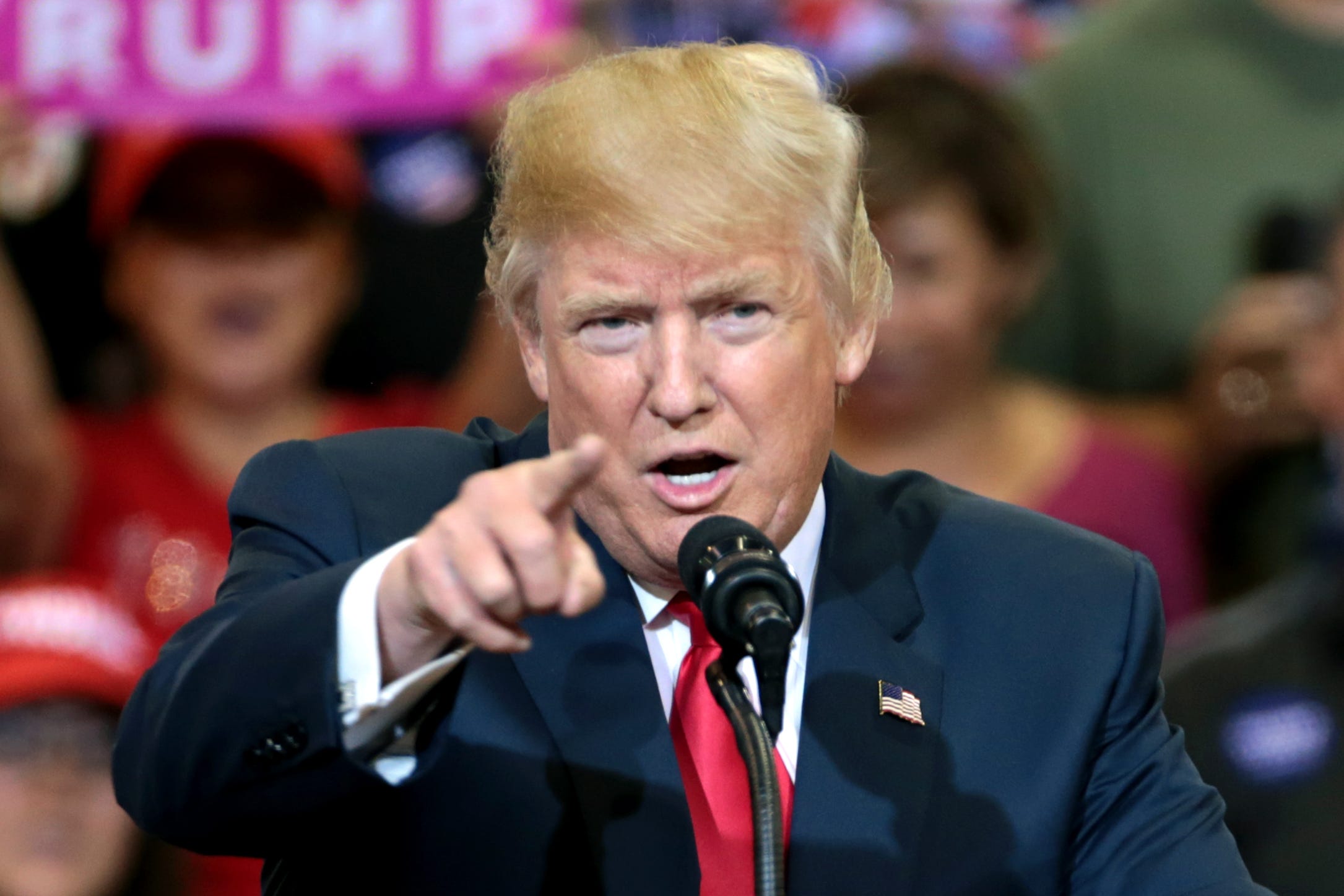
President Donald Trump declared multiple national emergencies throughout 2025, invoking sweeping executive powers to justify military action against drug cartels, mass deportation operations, and trade restrictions that critics warn represent an unprecedented expansion of presidential authority. The second Trump administration has deployed emergency declarations under the National Emergencies Act and the International Emergency Economic Powers Act to bypass traditional legal constraints, designating immigration as an “invasion” and drug trafficking organizations as “narcoterrorists” threatening national security.
Border Emergency Unleashes Military Deployment
On January 20, 2025, his first day back in office, Trump signed an Executive Order declaring a national emergency at the southern border, proclaiming that America’s sovereignty faced an existential threat. The proclamation invoked Article IV, Section 4 of the Constitution, which guarantees federal protection against invasion, characterizing the flow of migrants as a hostile incursion.
The emergency declaration directed the Secretary of Defense to deploy additional military personnel, including Armed Forces and National Guard members, to assist the Department of Homeland Security in obtaining “full operational control” of the southern border. According to law firm Mayer Brown’s analysis, the order authorized reallocating government resources and funds while setting the stage for expedited removal, border security enhancements, and suspension of refugee assistance programs.
The declaration came despite a dramatic decline in border encounters. Forum Together, a nonprofit research organization, reported that December 2024 saw only 47,300 encounters at ports of entry—the second-smallest figure since August 2020 and an 81 percent decrease from December 2023. Nevertheless, the Trump administration suspended the entry of all migrants across the southern border, including asylum seekers, until the president determines the “invasion” has ceased.
Cartels Rebranded as Terrorist Threat
Simultaneously on January 20, Trump issued a separate executive order declaring a national emergency under the International Emergency Economic Powers Act, designating MS-13, Tren de Aragua, and other criminal organizations as “foreign terrorist organizations” threatening the “national security, foreign policy, and economy of the United States”. Law firm Akin Gump explained that the order required the Secretary of State, Attorney General, and Secretary of Homeland Security to prepare operational plans to invoke the 1798 Alien Enemies Act in response to what the administration termed a “qualifying invasion or predatory incursion”.
In February, the administration formally designated Mexico’s Sinaloa Cartel and the Venezuelan Tren de Aragua gang as global terrorist entities. This legal reclassification provided the framework for what would become direct military action against targets in Latin America.
By August, The New York Times reported that Trump had covertly issued a directive to the Pentagon instructing military action against specific Latin American drug cartels newly classified as terrorist organizations. The newspaper noted this represented “the most assertive action taken by the administration to date”. It highlighted Trump’s readiness to deploy military resources for what had traditionally been considered law enforcement matters aimed at reducing fentanyl trafficking.
From Rhetoric to Military Strikes
The administration’s militaristic approach escalated throughout the year. In September, senior U.S. national security officials announced that military operations against cartels would continue, establishing what Reuters described as “a sustained military campaign in Latin America”.
By November, Trump publicly stated he might broaden military actions to encompass Mexico itself. According to Al Jazeera, Trump told reporters in the Oval Office: “We know every route. We know the addresses of every drug lord. We know their families. We know their front doors”. He characterized the drug crisis as “like a war,” citing cartel responsibility for “hundreds of thousands” of American deaths from cocaine, heroin, methamphetamines, and fentanyl.
NBC News reported two weeks prior that the White House was preparing initial phases of a ground operation in Mexico, to be conducted alongside U.S. intelligence agencies, focusing on drone strikes targeting drug laboratories and cartel members. Mexico’s government firmly rejected any such intervention as a violation of sovereignty.
Expanded Enforcement and Expedited Deportations
The emergency declarations provided legal justification for dramatically expanded immigration enforcement. Voice of America reported that by February, the Department of Homeland Security had significantly expanded expedited removal procedures, allowing immigration officials to deport certain noncitizens who had been in the United States for less than 2 years without court hearings. The directive instructed officers to prioritize expedited removal for those who failed to apply for asylum within legal deadlines.
Forum Together documented that the administration established “the most formal framework for mass deportation proposed to date,” with executive actions directing DHS to significantly expand its workforce by hiring additional ICE agents and CBP officers. The organization noted uncertainty about whether military forces would play limited support roles or directly carry out arrest, detention, and removal functions.
Critics Warn of Executive Overreach
Legal experts and civil rights organizations have raised concerns about the administration’s expansive use of emergency powers. Just Security, a national security law and policy publication, noted that Trump’s cartel-related executive order unnecessarily declared a national emergency under IEEPA when authority to sanction cartels already existed under various declarations, including one issued by President Joe Biden in 2021.
Matthew Duss, executive vice president of the Center for International Policy, told Al Jazeera: “We must view this in the context of multiple administrations from both parties abusing executive authority to engage in warfare effectively,” noting this practice intensified during the post-September 11, 2001, “global war on terror”.
The administration’s rhetoric has extended beyond policy implementation to symbolic rebranding, with Trump renaming the Department of Defense as the “Department of War” and consistently framing Latin American criminal organizations as existential threats rather than law enforcement challenges.
As 2025 concludes, the full implications of Trump’s emergency declarations remain uncertain. The administration has established legal frameworks that could enable sustained military operations in Latin America, accelerated deportations of millions, and trade restrictions justified through national security claims—all implemented through executive authority with minimal congressional oversight. Whether courts will impose limits on these powers or whether future administrations will reverse these precedents represents the next chapter in this constitutional stress test.