

Tucker Carlson Sparks Firestorm After Claiming OnlyFans Is ‘More Dangerous’ to Americans Than Radical Islam

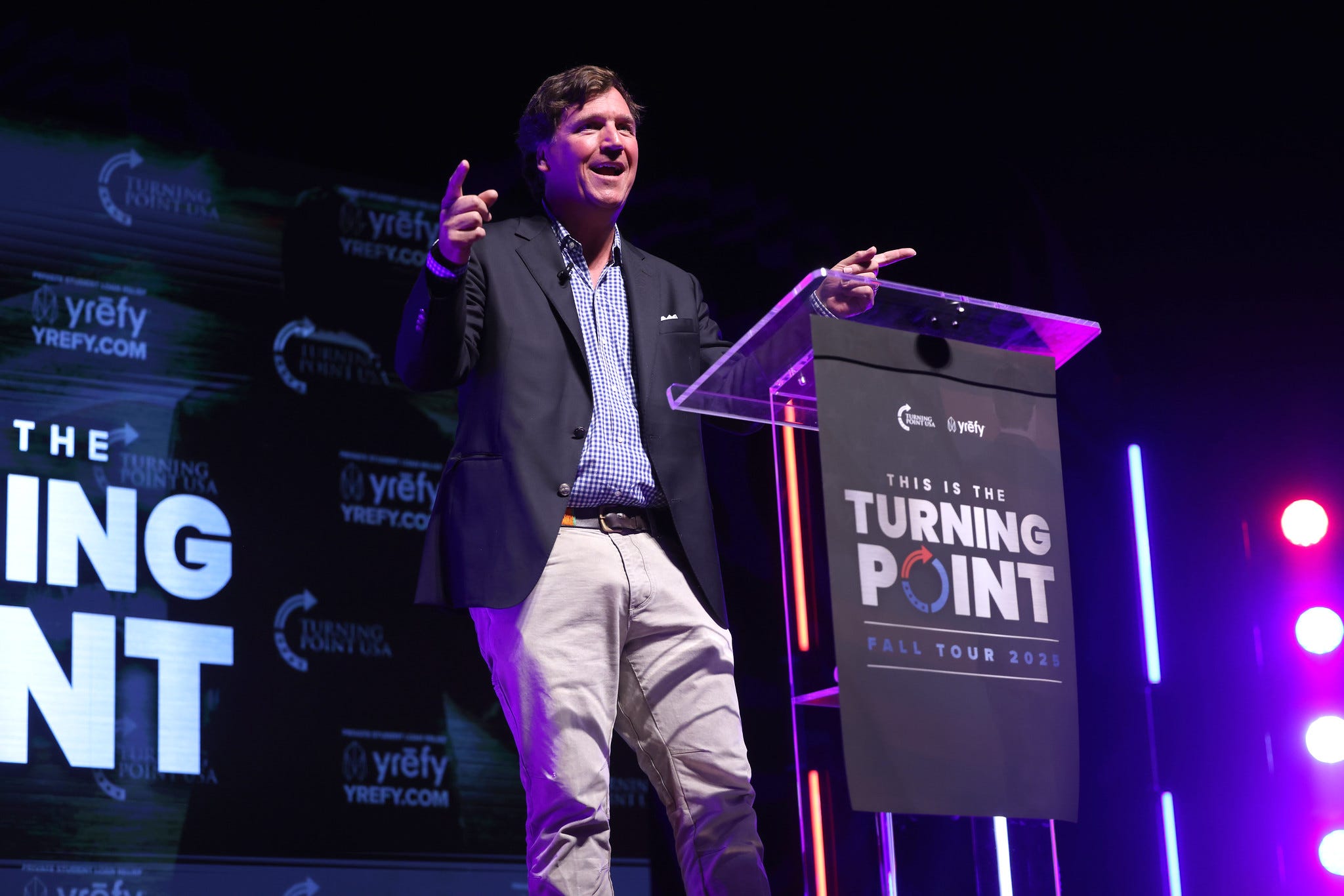
Tucker Carlson is facing intense cross‑party criticism after arguing in a 26 December interview with The American Conservative that subscription platform OnlyFans poses a greater threat to Americans than radical Islam, challenging a recent Turning Point USA poll in which conservative activists named “radical Islam” the most significant danger facing the United States. The interview, recorded around the America Fest 2025 conference in Phoenix, Arizona, quickly triggered backlash from security analysts, conservative commentators, and victims’ advocates, who accused Carlson of dismissing the impact of jihadist terrorism and misrepresenting recent U.S. threat assessments.
Carlson’s Claim And The America Fest Backdrop
In the interview, Carlson reacted to a Turning Point USA America Fest straw poll that asked thousands of attendees to rank the most significant threat facing the country, where 31,008 respondents chose “radical Islam,” narrowly ahead of socialism and Marxism at 30,387, followed by mass migration and economic concerns. Fox News Digital first reported the poll results from the Phoenix gathering, describing it as an “official America Fest straw poll” of conservative youth activists.
Carlson rejected that ranking, telling The American Conservative that he “does not know anyone in the United States in the last 24 years who’s been killed by radical Islam,” a framing that excluded the 11 September 2001 attacks. He instead linked what he sees as America’s real crisis to social and economic decay, citing unemployment, drug overdoses, and online pornography as forces “destroying” young men.
“Is Radical Islam More Dangerous Than OnlyFans?”
Carlson’s most contentious comments came as he compared jihadist extremism to digital sex‑work platforms, asserting that cultural and moral harms outweigh physical security risks.
“I see millions of Americans being destroyed, and none of it is at the hands of radical Islam. Is radical Islam more dangerous than OnlyFans? It’s not even close,” Carlson said in the interview, first published by The American Conservative and later amplified across social media.
He went on to describe OnlyFans creators as “prostitutes,” claiming the site is “turning some huge percentage of American women into prostitutes.” He argued that young Americans “playing video games and watching porn” face a far more immediate threat than terrorism.
Security Data And Expert Assessments
Terrorism researchers and security commentators responded that Carlson’s empirical framing omits both the 9/11 attacks and subsequent jihadist plots and attacks on U.S. soil. USA Facts, using the Global Terrorism Database maintained by the University of Maryland’s START center, reports that 2,908 people were killed on 11 September 2001, and a further 549 Americans have died in terrorist attacks since then, from 2002 through 2019. A START fact sheet similarly notes that 3,066 Americans were killed in terrorist attacks from 9/11 through the end of 2014, including 2,902 deaths on 9/11 alone.
A 2025 analysis by the Center for Strategic and International Studies (CSIS) found that jihadists conducted or plotted 140 reported attacks in the United States between 1994 and early 2025, with two significant spikes in activity linked to the early Obama years and the rise of the Islamic State’s “caliphate” from 2014 to 2019. CSIS concluded that while jihadist plots have declined in recent years and average lethality has fallen since 2017, religiously motivated terrorism remains a component of a broader, evolving threat landscape.
Conservative Backlash And Intra‑Right Tensions
The most substantial early criticism of Carlson came from within the conservative movement. The International Business Times, which first detailed the interview’s fallout, reported that Daily Signal correspondent Tony Kinnett accused Carlson on X of ignoring “common Americans killed by Islamic terror,” calling him a “coward” and pointing to “hundreds killed in the West by jihadist terror” as evidence that his comments were “insane.”
Newsweek described the controversy as triggering a “MAGA feud,” noting that some right‑wing influencers and lawmakers defended the America Fest poll’s focus on “radical Islam”. In contrast, others echoed Carlson’s concern about cultural and digital harms. Middle East Eye highlighted a clip where Carlson suggested that positioning radical Islam as the primary American threat amounted to a “psyops” shaped by Israel and its U.S. supporters, a claim the Jerusalem Post reported as part of his broader allegation that Israeli influence distorts U.S. threat perceptions.
Broader Debate Over Threat Perception
The dispute unfolds amid a broader debate within U.S. national security circles over which ideologies pose the greatest danger. A 2020 CSIS study concluded that white supremacist extremists represented the most significant domestic terror threat, even as religiously motivated groups continued to operate. At the same AmericaFest 2025 gathering, U.S. Director of National Intelligence Tulsi Gabbard warned that “Islamist ideology threatens Western freedom,” according to coverage by the Times of India and Fox News, underscoring how senior officials still frame Islamist extremism as a key concern.
At the same time, policy and health organizations have documented rising deaths from drug overdoses and increasing worries about the mental‑health impact of social media and online pornography, though there is limited empirical research isolating the specific effects of platforms like OnlyFans. Critics argue that setting cultural harms against terrorism as competing threats risks oversimplifying complex, overlapping challenges.
Debate Continues
Carlson’s comments are likely to fuel continuing arguments inside conservative media and politics over whether national security or cultural transformation poses the greater long‑term risk to the United States. Analysts say the episode may also sharpen scrutiny of how polls like AmericaFest’s straw survey shape public perceptions of danger and how politicians, media outlets, and foreign policy actors influence those narratives.
Further analysis from terrorism databases and social‑harm research is expected as scholars and policymakers weigh quantifiable risks from extremist violence against harder‑to‑measure cultural trends, ensuring that future debates over threats—from radical Islam to digital platforms—are informed by data as well as ideology.