

Two Churches, Two Paths: How Faith Shaped Jasmine Crockett and James Talarico’s Politics
In Texas’ Democratic Senate primary, James Talarico centers a theology of radical love, while Jasmine Crockett turns to Black churches as engines of political power

Religion, long more visible in Republican campaigns, has emerged as a defining force in Texas’ Democratic primary for U.S. Senate — though in strikingly different ways for its two leading contenders.
At St. Andrew’s Presbyterian Church in North Austin, longtime congregant Laura Landsman sees a faith that feels freeing rather than confining. Raised Southern Baptist and once deeply immersed in evangelical Christianity, Landsman said she eventually felt lost in a tradition that no longer aligned with her beliefs. At St. Andrew’s, she found something else: a progressive church grounded in inclusion and compassion.
“We didn’t have to continue to pretend to believe what didn’t feel right,” she said. “It makes it clear that we’re all just one big family.”
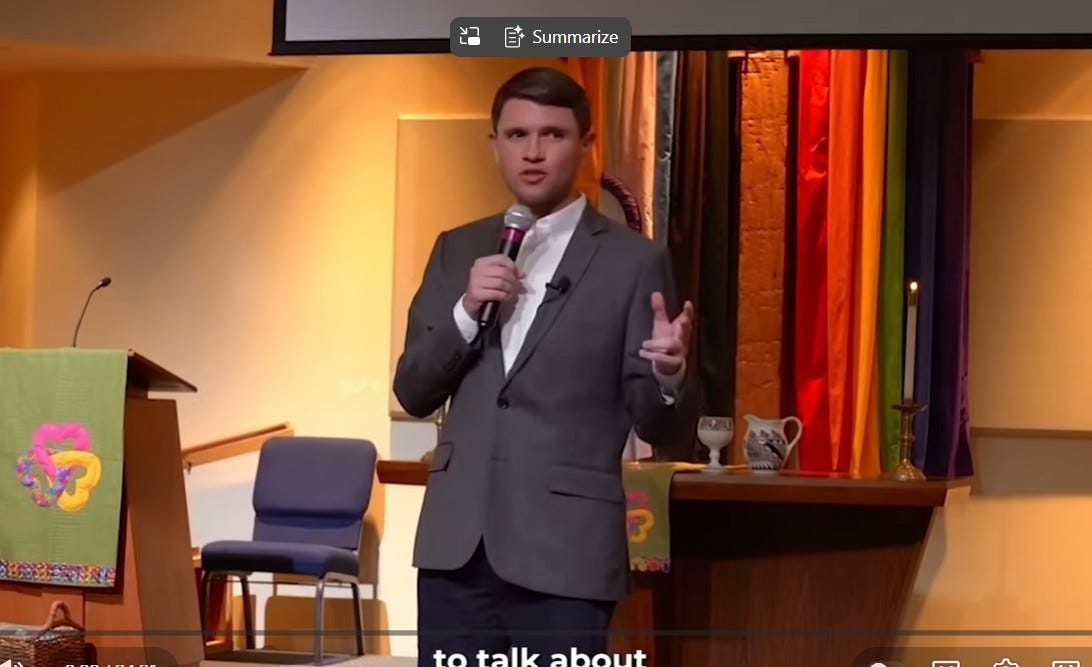
That ethos has profoundly shaped James Talarico, a 36‑year‑old state representative and aspiring Presbyterian minister now running for U.S. Senate. A longtime member of St. Andrew’s, Talarico has made faith — and Jesus’ commandment to love one’s neighbor — central to his progressive political identity. His viral rise came from using Biblical language to counter Christian nationalism and to defend liberal causes such as abortion access and LGBTQ+ rights in debates that spread widely online.
“In my faith, love is the strongest force in the universe,” Talarico told supporters at a recent Austin rally. “A new kind of politics is possible.”
Talarico’s politics were forged early at St. Andrew’s. His pastor, the Rev. Dr. Jim Rigby, baptized him, married his parents and spoke at his swearing‑in to the Texas House. The church has a long history of activism — from ordaining gay clergy in the 1990s to sheltering undocumented immigrants and running a food pantry guarded by congregants watching for immigration agents. Rigby rejects rigid theology in favor of compassion, describing Christianity as “putting compassion before everything else.”
That philosophy flows through Talarico’s campaign. He frames his populist, top‑versus‑bottom message in the cadence of a sermon, betting that faith can open doors with independents and religious voters who feel alienated from the Democratic Party. It has also drawn fierce backlash. Republicans have previewed attacks over Talarico’s statements that God is beyond gender and his use of scripture to oppose restrictions on transgender children and abortion. Even some Democrats question whether a politics centered on love is tough enough for the moment.
Talarico remains undeterred. “We will not defeat the politics of division with more division,” he said.
If Talarico brings religion into secular campaign spaces, his chief rival, U.S. Rep. Jasmine Crockett, is doing something different: harnessing the political power of the pews. Crockett, 44, has held packed campaign events at more than a dozen Black churches across Texas, drawing on a tradition that has long made houses of worship central hubs of civic organizing.
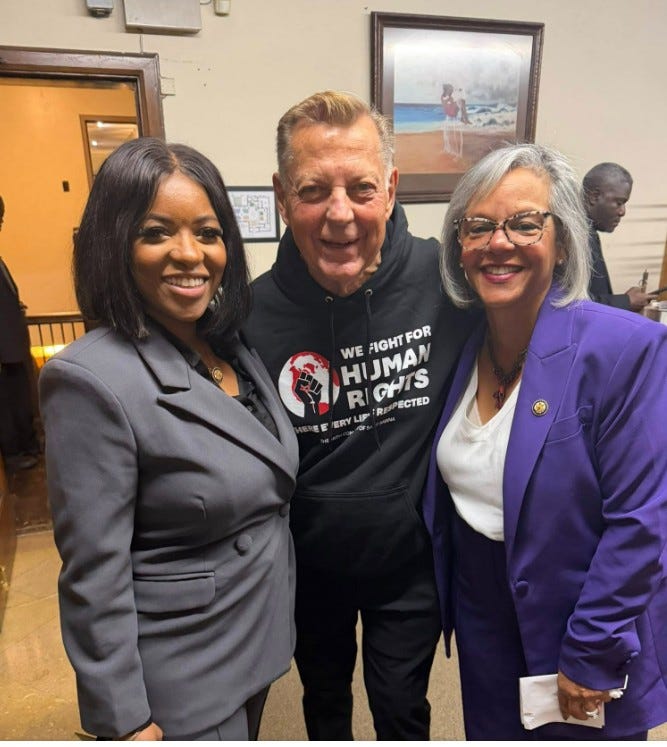
The daughter of a pastor, Crockett calls the Black church a grounding force and a historic engine for social justice. “It’s going to be integral in the general election to have those relationships,” she said, pointing to the church’s role in liberation movements and Democratic mobilization.
At Friendship‑West Baptist Church in Dallas, Crockett’s home congregation, worship and politics blend seamlessly. Services draw thousands. QR codes link worshippers to voter registration forms. Banners remind congregants: “We stay registered.” The church’s pastor, the Rev. Frederick Haynes III, describes a faith committed to both Jesus and justice.
Crockett’s strategy is less about preaching theology than turning moral authority into turnout. She argues that faith itself isn’t what flips elections — connecting policy to people’s pain is. Recent polling suggests her approach resonates: Black voters form the backbone of her support, drawn as much to her sharp, combative style as to her roots in the church.
“The way that my tongue works — that doesn’t come out of the Bible per se,” Crockett said, laughing. “I’m going to fight back.”
Together, the two campaigns show how religion is reemerging among Texas Democrats — not as a single message, but as two distinct traditions. For Talarico, faith is a moral language meant to heal divides. For Crockett, the church is a political force, mobilized to win.