

Understanding Sharia in the American Context: Unpacking fears and misconceptions
Sharia law is not coming to America, and no Muslim American is trying to bring it here. Myth is politically used, writes renowned academic Dr M. Basheer Ahmed
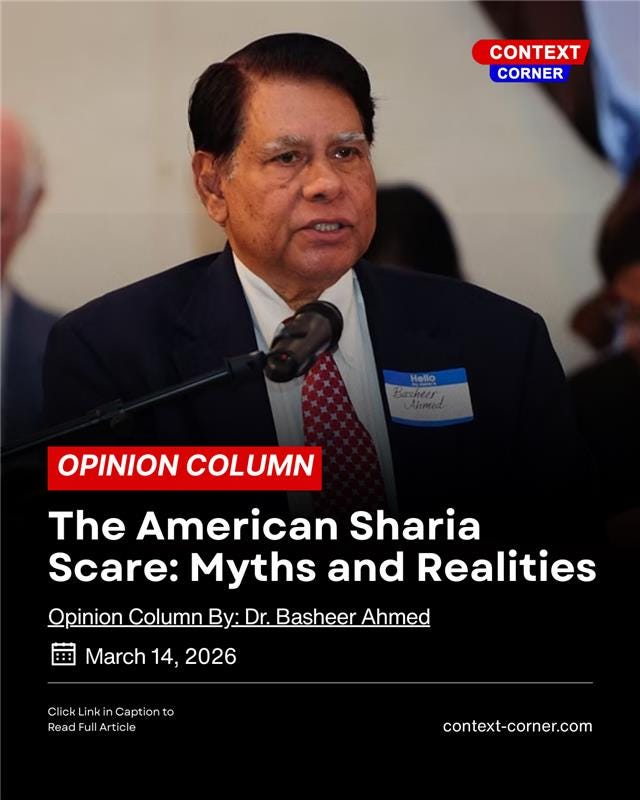
Most people do not distinguish between Sharia and the Sharia laws passed by Muslim-majority countries. Sharia is a personal guide for the daily lives of Muslims, including everyday interpersonal relationships, observing the five daily prayers, fasting during Ramadan, giving charity, eating halal food, abstaining from alcohol, and wearing the hijab or dressing modestly. It is like biblical teachings and avoiding investing in certain industries such as narcotics, gambling, and pornography. It guides believers in every sphere of life, from society to commerce to the sanctity of human life. Many believe that giving up even a part of it means giving up Islam.
Sharia and the U.S. Constitution
The US Constitution guarantees religious freedom, and American Muslims are not attempting to replace the US legal system. Sharia, as a personal practice, is similar to Jewish law (Halakha) in that it covers matters such as marriage and dietary law.
Components of Sharia
Sharia has two components: personal and public.
• Personal Sharia refers to the relationship between an individual and God, providing personal guidelines for daily life as described above.
• Public Sharia applies to society at large, including areas such as marriage, dowry, divorce, inheritance, and business contracts. It also includes punishments for crimes like rape, theft, and murder.
Brutal Practices and Cultural Distinctions
Certain brutal practices (cutting off a thief’s hand, stoning adulterers) are enforced in very few countries today—most notably Saudi Arabia—and only a minority of Muslims condone these primarily culture-based practices. It is crucial to distinguish between Islam, the religion, and the culture of whatever country claims to practice it.
Public Sharia law cannot be implemented in the USA. It would be blatantly unconstitutional. It needs to be clarified that Sharia law, which represents the selective opinions of Muslim jurists during Islam’s early centuries, is not divine and thus can be reinterpreted to meet the needs and realities of the time and location.
American Fears and Misconceptions: Roots of Fear
American concerns and fears regarding Sharia law are rooted in a combination of misconceptions and media portrayals of extreme examples in foreign nations. Many Americans associate Sharia primarily with harsh, criminal punishments such as stoning, amputation, or public lashing, which are often practiced in a few authoritarian Muslim-majority countries.
Most politicians are falsely spreading the fear of the implementation of Sharia law (legal system) in this country, which is virtually impossible. You most probably have never heard of amputation of hands as punishment for thieves or stoning for sexual misconduct in many Muslim countries.
The primary fear is that Sharia aims to replace the U.S. Constitution and legal system with a “barbaric” penal code. How could 2% of US citizens change the US Constitution? It is only a fear tactic to harass the Muslim community. False and exaggerated claims have generated fear and animosity toward fellow Americans, as well as a surge of harassment of fellow Americans who happen to be Muslim on the streets, in schools, and in other public places.
David Yerushalmi, the lawyer and anti-Muslim activist, has written reports and drafted model legislation emphasizing that Sharia law is one of the greatest threats to American freedom. His legislation, which consciously discriminates against Muslims, may also affect followers of other faiths. Some legislators and public officials endorsed his message. Such legislation only creates fear and panic among Americans.
Anti-Sharia Movements and Legislation
Anti-Sharia movements are pushed by a network of organizations and politicians who promote Islamophobia, creating the false impression that Sharia is a “creeping” threat seeking to take over American courts.
Fear of Inequality
There is significant concern that Sharia law would limit women’s rights and oppress LGBTQ+ individuals. In the USA, fundamentalist Christians are leading this movement, not Muslims.
Anti-Sharia Legislation in the United States
In recent years, increased concern and widespread misconceptions about Sharia law and its role in American society have prompted a significant legislative response.
Driven by hysteria and fear surrounding Islam and the perceived spread of Sharia, a few states have enacted bans on Sharia law. These legislative measures are reactions to the perceived threat, even though the fundamental principles of Sharia practiced by American Muslims reflect core American values such as honesty, morality, and community service.
Legislative Actions and Media Representation
Since 2010, more than 200 bills banning “foreign law” or Sharia have been introduced across various states. This movement has been described as government-sanctioned Islamophobia, fueled by misinformation, racism, and fearmongering. Television and social media often portray every individual as a potential criminal or terrorist, and some narratives claim Republicans are poised to commit genocide against anyone not descended from Mayflower passengers. The media has falsely asserted that “Islam is incompatible with America” and that Islam poses a danger.
Sharia Practices and American Values
Muslims who practice Sharia are guided by principles of honesty, moral and ethical conduct, honoring one’s parents, helping the poor, and serving the community. These practices do not threaten America; rather, they embody American values.
Legal Perspectives on Sharia
Legal scholars, imams, Muslim lawyers, and others in the legal system have suggested that courts could directly apply Islamic law to Muslims in cases of marriage and divorce, as allowed by the U.S. Constitution.
Marriage, Divorce, and Religious Observance
One of the most widely observed aspects of Sharia is the practice of Muslim marriage and divorce customs, marking significant life passages such as birth, marriage, divorce, and death. Muslim couples sign a marriage contract (nikah) after registering with the court, and may seek approval from an imam or religious leader for divorce, either before or after obtaining a civil decree.
All Muslims understand the necessity of obeying the law of the land. Consequently, Muslims typically marry and divorce twice: once according to Islamic tradition and once under the legal system. Religious marriage and divorce are practiced by American Muslims alongside civil law.
Muslims must abide by the laws of the country in which they live. Muslim minorities cannot implement aspects of Sharia that involve governmental action, such as criminal punishments.
Religious Contracts and Legal Limitations
Members of various faiths, including Jews, Christians, and Muslims, can enter into private contracts, write wills, or draft business agreements influenced by their religious teachings. However, such agreements cannot be enforced by courts if they violate the law or U.S. public policy.
The Myth of a Future Sharia-Compliant America
Fearmongering about Sharia does not protect American values; rather, it distracts from the fact that many of these values are already shared. No Muslim individual, group, or organization seeks to replace American law with Sharia law. Sharia mandates respect for the laws of the country, a reality accepted by the vast majority of U.S. Muslims.
The First Amendment prohibits the implementation of religious laws. Muslims represent less than 3 percent of the American population, and most do not wish to see Sharia laws (as practiced in Iran or Saudi Arabia) enacted in the United States.
Implications of Banning Sharia Practices
If states banned Sharia practice, Muslims would be unable to observe daily prayers, fast during Ramadan, give charity, eat halal food, abstain from alcohol, wear hijab or dress modestly, and avoid certain industries such as narcotics, gambling, and pornography—all practices aligned with biblical teachings and American values.
Compatibility of Sharia with American Values
Are the Sharia practices of American Muslims truly a threat to America? Are these practices incompatible with American values? Why should politicians and anti-Muslim movements spread misinformation that disrupts relations between law-abiding Muslims and non-Muslim Americans?
Conclusion
The truth is simple: Sharia law is not coming to America, and no Muslim American is trying to bring it here. Yet the myth persists because it is politically useful. Fear is a powerful tool, and some have learned to wield it with precision—turning a peaceful religious tradition into a manufactured menace
Sharia, as practiced by American Muslims, is a personal moral framework that aligns with core American values: honesty, charity, family responsibility, and service to one’s community.
But this fear has real consequences. It isolates Muslim children in classrooms, fuels harassment on the streets, and fractures communities that should be working together. It distracts Americans from genuine challenges by inventing an enemy that does not exist.
American Muslims are not trying to change the Constitution; they are living under it, contributing to it, and benefiting from it—just like everyone else.
What deserves our vigilance is not a fictional Islamic takeover, but the spread of misinformation that weakens national unity and undermines the values that make America worth defending.
Dr. M. Basheer Ahmed is a psychiatrist, interfaith advocate, and founder of the Muslim Community Center for Human Services and American Muslims for Human Rights. He is a former professor of psychiatry at UT Southwestern Medical school Dallas TX.