

Federal judge blocks Florida Gov. DeSantis’s attempt to criminalize Muslim-led advocacy
The decision is more than a legal victory—it is a defense of constitutional rights and a pushback against Islamophobia, reaffirming that Muslims have same rights as any one in America.

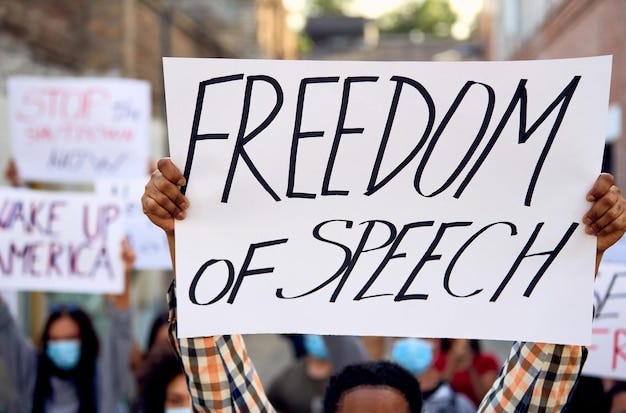
A federal judge has struck down Florida Governor Ron DeSantis’s attempt to criminalize Muslim-led advocacy, ruling that free speech cannot be silenced under the guise of “counterterrorism.”
The decision is more than a legal victory—it is a vital defense of constitutional rights and a powerful pushback against Islamophobia, reaffirming that Muslim voices in America have the same right to organize, protest, and advocate without fear of being branded as threats.
There have been mixed reactions to the Federal Judge Blocking Gov. Ron DeSantis’s terrorist labelling of Muslim Groups.
The federal judge’s decision on March 4–5, 2026, to temporarily block Florida Governor DeSantis’ executive order—labeling the Council on American‑Islamic Relations (CAIR) and the Muslim Brotherhood as “foreign terrorist organizations”—has generated significant reactions across civil rights groups, government circles, and the broader public.
CAIR (Council on American-Islamic Relations)
CAIR and other civil rights organizations welcomed the ruling, having sued DeSantis shortly after the order was issued. Their lawsuit argued the governor’s move was unconstitutional, violated their First Amendment rights, and usurped the federal government’s exclusive power to designate terrorist entities.
CAIR reiterated in filings that it has always condemned terrorism and violence, and argued that the order targeted them for defending free speech in support of Palestinian human rights.
Other Civil Rights Organizations
These groups framed the ruling as a victory for constitutional protections, noting that anti-Muslim bias has escalated since the Gaza conflict and that the order could have deepened harmful Islamophobic narratives.
Reaction from the Federal Judge
U.S. District Judge Mark Walker
Judge Walker criticized the governor’s order as a politically motivated overreach violating First Amendment protections.
He emphasized the central constitutional question: whether a governor can unilaterally label a major civil rights organization as a terrorist group in a non‑emergency context. His answer: “This Court finds he cannot.”
Walker described the executive order as continuing a “troubling trend” of using state power in ways that potentially infringe on constitutional rights.
Reaction from Gov. Ron DeSantis and the Florida Government
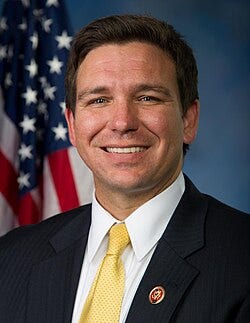
As of the reporting dates, the governor’s office did not respond to inquiries for comment on the injunction.
State Officials
The Florida Attorney General previously signaled aggressive enforcement of the order, contributing to organizations distancing themselves from CAIR even before the injunction. For example, a Florida Muslim federation withdrew CAIR Florida from an event citing state pressure.
4. Reaction from Muslim Community Organizations
The South Florida Muslim Federation publicly disassociated CAIR Florida from a conference due to warnings from state officials. This supports the lawsuit’s claim that the order chilled organizations’ associations, something the judge referenced in his ruling.
Islamophobia and National Climate
Reports noted an increase in Islamophobic sentiment amid global tensions and the war in Gaza. Critics argued that DeSantis’ order risked amplifying anti‑Muslim rhetoric nationwide.
Federal vs State Authority
Legal experts and civil liberties groups highlighted that only the federal government has the authority to designate foreign terrorist organizations—bolstering the judge’s view that the executive order exceeded state power.
Public and Media Analysis
Media coverage largely framed the ruling as a significant check on executive power in Florida, with parallels drawn to other recent cases in which federal courts have pushed back against state-level overreach.
Summary
The reaction to the federal judge’s move is sharply divided:
Civil rights groups and Muslim organizations: Applauding the ruling as a vital defense of constitutional rights and a pushback against Islamophobic policymaking.
Governor’s office: No immediate public response, but previous actions suggest intent to enforce the order aggressively.
Federal judiciary: Strongly reaffirming First Amendment protections and federal authority over terrorism designations.
Wider public discourse: Focused on concerns that the executive order improperly conflated civil rights advocacy with terrorism labels, setting a dangerous precedent.