

When Compassion Becomes a Crime
Former MLFA legal director Marium Uddin exposes the machinery of government overreach—and why Muslim civil rights can no longer be defended in whispers

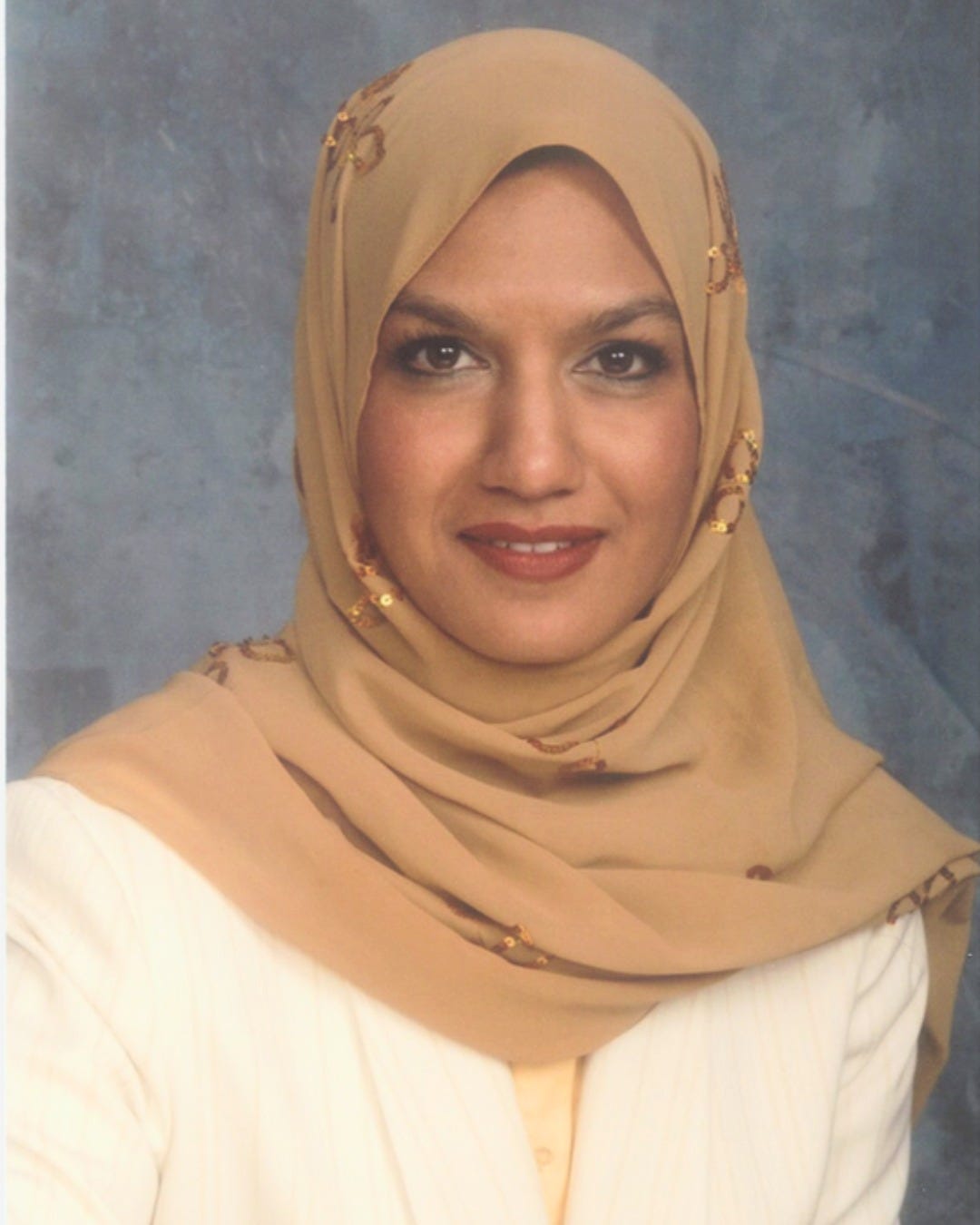
At a moment when fear is increasingly deployed as policy, Marium Uddin, former Legal Director of the Muslim Legal Fund of America (MLFA), says the role of fact-based journalism has never been more urgent. Platforms like Context-Corner, she argues, are vital not only for informing the public but for challenging the narratives that have been weaponized against communities striving to participate fully in American democracy.
Reflecting on her 15-month tenure at MLFA, from November 2024 to February 2026, Uddin describes the most difficult part of the role as bearing witness to a system of government overreach operating at full throttle.
The targets, she says, were often individuals whose only “crime” was being visibly Muslim or Palestinian while living out their ethical and political commitments.
“When you’re defending someone like Marwan Marouf—detained after 35 years of lawful residence essentially for sponsoring an orphan in Palestine—or Sami Hamdi, arrested by ICE for his journalism criticizing Israeli policies, you’re not just litigating individual cases,” Uddin explains. “You’re confronting a system designed to criminalize compassion and recast human decency as danger.”
Despite the toll, Uddin says the work was deeply clarifying. The satisfaction came from staying the course, building power, and fighting back.
“What satisfied me most was proving that Muslim Americans don’t have to choose between excellence and authenticity, between professional prestige and political conviction,” she says. “We can be both the face in the courtroom and the voice in the public square. We can build institutions that don’t just react to crisis but shape the terms of engagement.”
Uddin’s understanding of what is at stake is rooted in place as much as principle. Home, for her, is Irving, Texas, in the Dallas–Fort Worth metroplex—a city she says reflects both the promise and the contradictions of America.
“It’s where I’ve raised my family, where I’ve watched my community grow and contribute,” she says. “I’ve seen immigrants and Muslim Americans build businesses, serve on school boards, coach little league, and show up for their neighbors. And I’ve also seen that same community live under the shadow of suspicion—where charitable giving is scrutinized as terrorism-adjacent, and civic leadership is met with ICE detention rather than recognition.”
For Uddin, Irving is home not despite these contradictions, but because of them. It is where the stakes are real, where the law cannot be abstracted from lived experience.
Born in New York to Bangladeshi immigrant parents, Uddin credits her upbringing with shaping both her moral compass and her career. Her parents, physicians who served for many years in El Paso, instilled in her a belief that privilege carries responsibility.
“I followed them around hospitals and clinics as a child,” she recalls. “I watched them consistently serve those who were less fortunate. Those experiences, along with witnessing global atrocities—from Rwanda and Bosnia to Palestine—made it clear to me early on that I had a role to play in alleviating the suffering of the oppressed.”
That commitment has guided her for more than two decades. A graduate of Rice University, Uddin earned her law degree from the University of Texas and went on to work across nearly every corner of the justice system: as a prosecutor, a public defender, and a U.S. Immigration Judge.
“This 360-degree view of how government operates—and where it overreaches—has been essential,” she says. “I know how prosecutors build cases, how ICE manufactures terrorism allegations, how judges navigate constrained authority, how detention and deportation function. That knowledge is what allows me to dismantle it.”
At MLFA, she worked alongside legal teams that secured Sami Hamdi’s release and built a record in Marwan Marouf’s case that she says will endure as evidence of the administration’s moral failure.
“Our success wasn’t just in individual wins,” Uddin says. “It was in what we built—partnerships with civil liberties organizations and Congressional leaders, the capacity for high-stakes litigation, and a public presence that refuses to let our community’s stories be erased or distorted.”
What concerns her now is less the rhetoric than the infrastructure being assembled to operationalize it.
“When lawful organizations like CAIR, our mosques, and our schools are targeted—with the help of unreliable AI and groups like Betar US—we have to understand the well-funded machinery behind that weaponization,” she warns.
Uddin describes this as strategic lawfare: a coordinated effort to exclude Muslim Americans from civic life. She points to political candidates pledging to use consumer protection laws, environmental enforcement, financial seizures, and other regulatory tools to “starve out” Muslim communities until they “self-deport or go to jail.”
“This isn’t regulation,” she says. “It’s systematic exclusion.”
Still, she notes a shift. “We’re no longer scrambling on the back foot. We’re smarter, more organized, and stronger. Muslim civil rights organizations are fighting unconstitutional actions in court—and winning.”
History, Uddin says, offers both warning and perspective. Every marginalized community in America has eventually been vindicated, but only after devastating costs: massacres, enslavement, exclusion acts, internment camps. The pattern is familiar—and instructive.
“Our growing sophistication in fighting back gives me hope,” she says. “Like those before it, this chapter will one day be taught as a cautionary tale about what happens when fear masquerades as security.”
Today, Uddin remains closely aligned with organizations advancing this work and serves as a mentor in a legislative drafting initiative focused on protecting First Amendment rights at the intersection of immigration law and political speech. Her goal is to prevent removal or visa revocation based on expression and to ensure national security authorities are not used to sidestep constitutional protections.
Asked whether social cohesion in America can be rebuilt, Uddin challenges the premise.
“The question assumes that cohesion existed and was lost,” she says. “I’d argue it was always fragile, always conditional.”
What is needed, she insists, is not rebuilding but building something that has never fully existed: a democracy that does not require marginalized communities to choose between identity and citizenship.
“Cohesion doesn’t come from forced assimilation or strategic silence,” Uddin says. “It comes from solidarity—when those with power choose to stand with those without it. That kind of cohesion is always possible. But only if we stop whispering and start acting like we believe what we say about democracy, dignity, and the law.”