

When Political Rhetoric Turns Dangerous from Oak Creek to Christchurch and Frisco
How Islamophobic narratives—from “sharia caucus” claims to online hate—are heightening fear and risk for Muslim, Sikh, and South Asian communities.

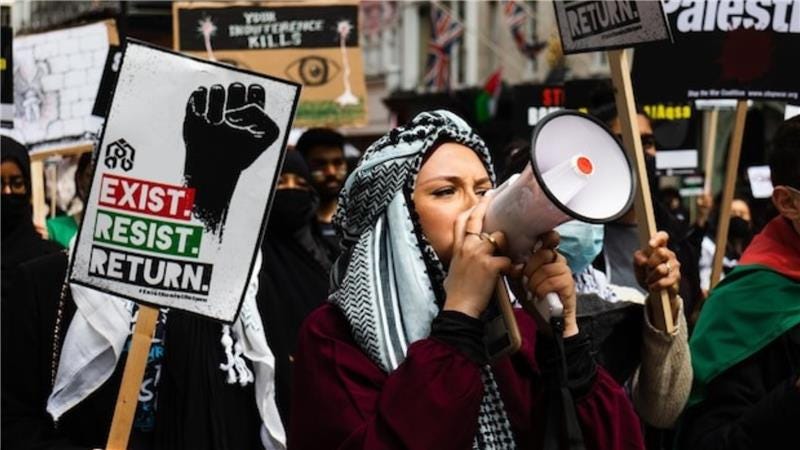
Islamophobic rhetoric in U.S. political discourse is not occurring in a vacuum. It is unfolding in a country where hate-motivated violence against Muslims, Sikhs, and South Asian communities has repeatedly followed periods of inflammatory speech. History shows a troubling pattern: when political actors cast entire communities as threats, online hostility often escalates into real-world harm.
Recent claims about a so-called “sharia caucus” underscore how quickly misinformation can harden into a narrative with dangerous implications. The phrase has no factual basis, yet it has long been used to cast Muslim Americans as infiltrators or extremists. Civil rights groups warn that such language encourages audiences to view their neighbors not as fellow citizens, but as ideological enemies. In a polarized election cycle, that framing becomes especially combustible.
The risks are not theoretical. The past decade offers stark reminders of how anti-Muslim and anti-South Asian sentiment can turn deadly. In 2012, a white supremacist stormed a Sikh gurdwara in Oak Creek, Wisconsin, killing six worshippers after consuming online content portraying South Asians as enemies of America. In 2019, a gunman in Christchurch, New Zealand, murdered 51 people at two mosques after immersing himself in conspiracy theories about Muslim “takeovers.” Even when attackers claim other motives, families and communities often point to a broader climate of dehumanization that made such violence imaginable.
These attacks share a common thread: the flattening of identity. To someone radicalized by hate, a Sikh man in a turban, a Muslim woman in a hijab, or a South Asian student walking home from school can become interchangeable targets. That dynamic is resurfacing today in communities far from national political stages. In Frisco, Texas, members of the Indian and South Asian community report a surge in online hostility, including posts that conflate them with extremist groups or accuse them of hidden political agendas. Parents describe children being taunted at school, while business owners say they have received anonymous threats. The rhetoric may begin with Muslims, but its impact radiates across communities perceived—often incorrectly—as part of the same group.
Three high-profile incidents highlight what can happen if political leaders do not address hate and Islamophobia.
2015 Chapel Hill Shooting
On February 10, 2015, Deah Shaddy Barakat, Yusor Mohammad Abu-Salha, and Razan Mohammad Abu-Salha were killed in their home in Finley Forest Condominiums on Summerwalk Circle in Chapel Hill, North Carolina, United States.
Barakat was a second-year student at the University of North Carolina at Chapel Hill School of Dentistry; his wife, Yusor, was a North Carolina State University (NCSU) graduate planning to enter UNC Dentistry School in the fall; and her sister, Razan, was a student at NCSU majoring in architecture and environmental design.
Their neighbor, Craig Stephen Hicks, who killed the three people in a single attack, turned himself in to Chapel Hill police later that day and was arrested. Hicks was charged with three counts of first-degree murder. On February 16, Hicks was indicted by a Durham County grand jury on three counts of first-degree murder and one count of discharging a firearm into an occupied dwelling. The Federal Bureau of Investigation and the United States Department of Justice also launched their own investigations into the shooting. The trial was scheduled for the summer of 2019. On June 12, 2019, Hicks pleaded guilty to the murders and was sentenced to three consecutive terms of life imprisonment. This incident raised serious concerns about anti-Muslim hate and its deadly consequences.
Murder of Wadea al-Fayoume

On October 14, 2023, six-year-old Palestinian American Wadea al-Fayoume was murdered in Plainfield Township, Illinois. The attack, considered a hate crime, highlighted the dangers of inflammatory rhetoric during times of global conflict. 71-year-old Joseph Czuba murdered the little boy in Plainfield Township, Illinois, United States. His mother, Hanaan Shahin, was also stabbed and throttled, leaving her critically injured. The murder was a hate crime motivated by Islamophobia and anti-Palestinianism, and an extremist reaction to the contemporaneous Gaza war. Czuba, who was Shahin’s landlord, was arrested and charged with five counts. His trial was February 24–28, 2025. He was convicted of all charges, including murder and hate crimes. On May 2, 2025, he was sentenced to 53 years in prison.[3] Czuba died in prison on July 24, 2025.
Assault of a 7-year-old Muslim Girl in Detroit
A seven-year-old Yemeni-American Muslim girl in Detroit was attacked in what has been labelled a hate crime. According to news reports, Saida Mashra was playing in a busy park near her home when a 73-year-old white man, Gary Lansky, approached her without warning, lifted her head and sliced her throat with a knife. Saida ran home and was taken to the hospital, where she received treatment and was released. The assailant was arraigned on two separate charges the following day in Detroit’s 36th District Court. This incident underscores growing hostility facing Muslim children in the U.S.
What must politicians do now?
Political leaders play a critical role in interrupting this cycle. Analysts note that Democratic officials, while often vocal on issues of racial justice, have been slower in recent months to confront rising Islamophobic narratives. Their silence leaves room for misinformation to spread unchecked. At the same time, Republican leadership faces its own test: whether it will draw clear boundaries against rhetoric that paints entire religious or ethnic groups as suspects. Historically, bipartisan condemnation has been one of the most effective tools for de-escalating hate-fuelled narratives. When only one side speaks, the message loses force.
The stakes extend beyond electoral politics. Communities under threat report a growing sense of vulnerability—feeling watched, judged, or blamed for global events beyond their control. Faith leaders warn that the erosion of trust between neighbors is itself a form of harm, even before violence occurs. Researchers tracking hate crimes note that online harassment often precedes physical attacks by months, not days. The warning signs are visible long before the headlines.
A responsible political response requires more than statements of solidarity. It demands rejecting conspiracy-driven language, committing to accuracy, and recognizing that words from public figures carry weight far beyond their intended audiences. The lessons of Oak Creek, Christchurch, and countless smaller incidents are clear: when communities are demonized, violence becomes more likely. When leaders speak with clarity and restraint, the temperature drops.
In light of these escalating incidents—from Chapel Hill to Plainfield to Detroit—the urgency of political action cannot be overstated. Silence from leaders, whether Democrat or Republican, does not create neutrality; it creates a vacuum in which hate can grow unchecked.
At a moment when inflammatory rhetoric spreads rapidly online and vulnerable communities, including children, face rising risk, moral clarity is essential. Both major parties must reject fear-based narratives, condemn hate unequivocally, and remind the country that targeting any community undermines the safety and values of all. History shows that when leaders speak out early and forcefully, the temperature drops—and lives can be saved.
Evidently, the Republicans are looking desperate to get their MAGA base out to vote, and the only option they are seeing is stoking Muslim-hate, which is a very low point in politics. One senses that a real fear of defeat in the 2026 congressional elections in November is driving this rhetoric.
Unfortunately, when there’s weakness at the polls, there appears to be strength through fear. The rhetoric has real‑time consequences, including death threats and a measurable spike in online hate.
Republican leadership has not intervened, despite calls from civil rights groups. This silence contrasts with the urgency of the moment and reinforces your argument that political leaders must act before violence escalates further.
The question is no longer whether the danger is real, but whether those in power will act with the urgency this moment demands.
Edwin Naidu is the Managing Editor of Context-Corner.