

World leaders condemn the escalating violence after Iran launches retaliatory strikes
War Spreads Across Middle East as Iran Strikes Gulf States After US‑Backed Israeli Attacks at the weekend

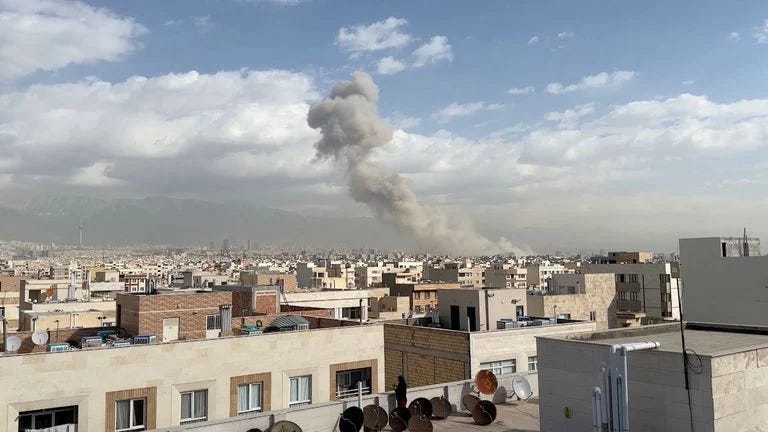
World leaders have condemned Israel’s US-backed attacks on Iran at the weekend, and Iran has launched retaliatory strikes across several Gulf states, sparking fears of escalation of the conflict.
Iran hit targets in Dubai, Bahrain, Kuwait and Jordan as the conflict triggered by US and Israeli attacks rapidly spreads across the Middle East.
In Dubai, an Iranian missile struck the Fairmont hotel on the Palm Jumeirah, igniting fires near the entrance of the five‑star property and injuring at least four people, according to local reports. Social media footage showed missile interceptions over the city as residents described widespread fear and confusion.
In Bahrain, an Iranian drone hit a high‑rise building, causing a large fire, while other strikes reportedly targeted the country’s national security agency and the US naval base. In Kuwait, a drone crashed into the main airport, wounding several employees and damaging infrastructure. Missile debris was also reported to have fallen in Qatar and Jordan.
Iran’s regional proxies warned they could join the fighting, raising fears of a wider regional war. Civilians across the Middle East rushed to stock up on fuel and food as flights were cancelled and airspace closures spread.
Arab states condemned the attacks as violations of their sovereignty, while Iran said it was targeting American bases in what it described as an act of self-defence.
Global reactions at a glance
Western allies: Support for preventing Iran from acquiring nuclear weapons, but concern about escalation.
Russia and China: Condemnation of U.S. and Israeli strikes; alignment with Iran.
Middle powers (UK, France, Germany): Strong criticism of Iranian retaliation, coupled with calls for negotiations.
Domestic U.S. political leaders: Deeply split, with Republicans praising the operation and Democrats warning of another prolonged conflict.
Reactions inside the U.S. are sharply divided:
Senate Majority Leader John Thune praised Trump’s actions, arguing Iran posed an “unacceptable threat” and commending U.S. servicemembers.
Senate Minority Leader Chuck Schumer warned that Americans “do not want another endless and costly war” and criticized the administration for not providing sufficient details about the threat.
House Speaker Mike Johnson said Iran is facing “severe consequences” and confirmed congressional leaders had been briefed on the likelihood of military action.
These reactions show a familiar pattern: Republican leadership backing Trump’s posture, Democrats urging caution and transparency.
Europe: support mixed with alarm
· European leaders are walking a tightrope—supporting non-proliferation goals while warning against a spiralling conflict.
UK Prime Minister Keir Starmer, French President Emmanuel Macron, and German Chancellor Friedrich Merz issued a joint statement condemning Iranian retaliatory attacks and urging a return to negotiations.
The UK emphasized it “does not want to see further escalation” even as it deployed RAF Typhoons to protect regional bases.
Europe’s stance is essentially: stop Iran’s nuclear ambitions, but avoid a regional war at all costs.
Russia and China: firm condemnation
Both Moscow and Beijing quickly aligned themselves with Iran:
Russia condemned the U.S. and Israeli strikes, framing them as destabilizing and illegitimate.
China echoed similar sentiments, calling for de-escalation but placing blame on Washington and Tel Aviv.
Their responses reflect broader strategic competition with the U.S. and longstanding ties with Tehran.
Canada, Australia, and Ukraine: backing the U.S.
These governments expressed support for the U.S.–Israeli operation, emphasizing Iran’s nuclear threat and regional destabilization.
Inside Iran: fury and mobilization
Iranian leaders and state media have framed the attack as an assault on national sovereignty, especially after the killing of Ayatollah Ali Khamenei. Protests and calls for resistance have intensified.
What this means for the region
The reactions reveal three major fault lines:
U.S.–Europe alignment on nuclear concerns, but disagreement on military escalation.
Russia–China–Iran axis strengthening in opposition to U.S. power.
Middle East volatility, with Hezbollah entering the conflict and U.S. casualties rising.
The risk of a prolonged, multi-front conflict is real, especially as Trump signals the campaign may last “around a month” and warns of a coming “big wave” of strikes.